Harvest & curing
by Roller Extractor
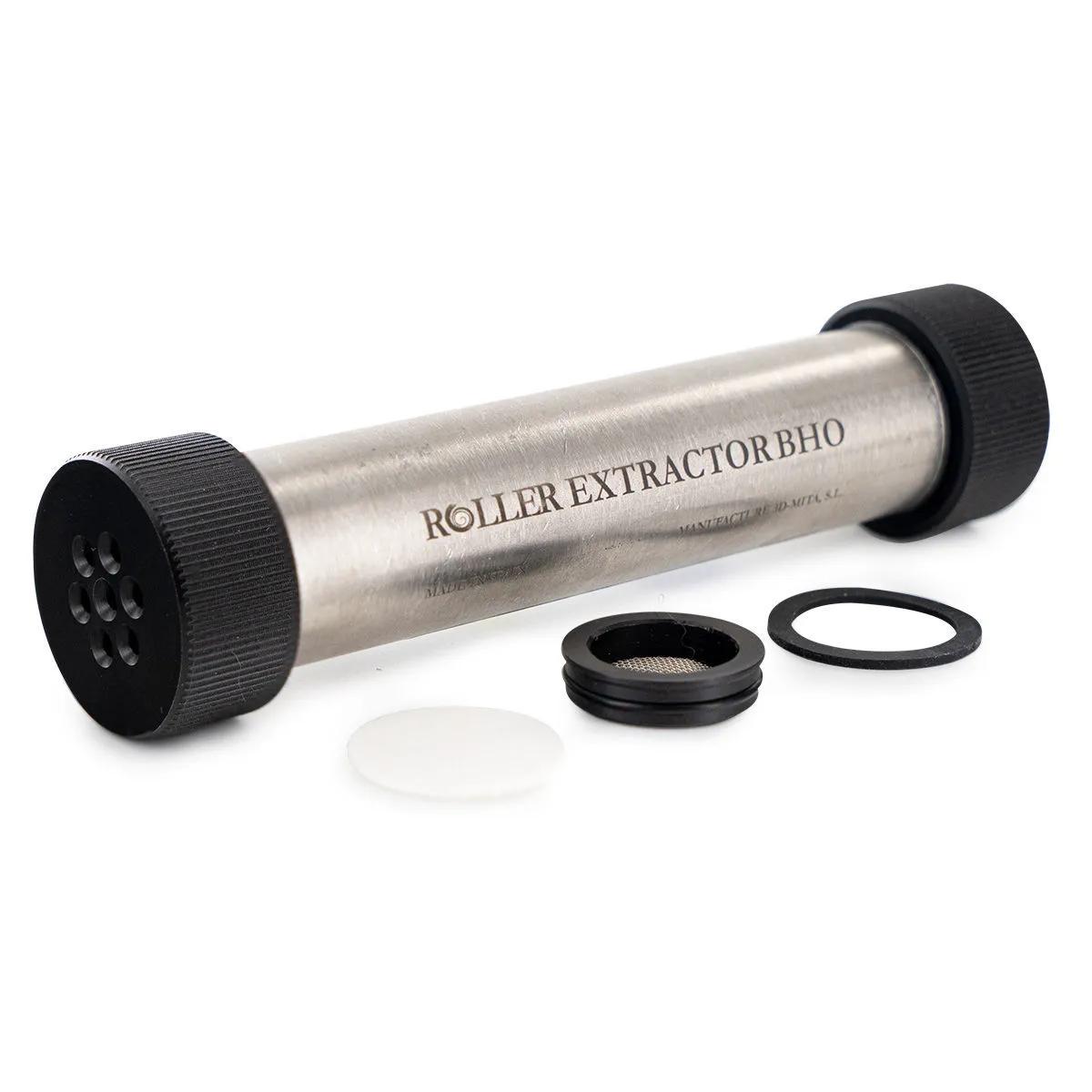
The BHO Roller Extractor is a stainless steel extraction tube designed for producing butane hash oil (BHO) at home. Pack it with crushed flower, run highly refined butane through it, and collect concentrated resin on the other side. Two sizes — 15 cm for 10 grams of material, 30 cm for 20 grams — both 33 mm in diameter, both built from brushed stainless steel that won't corrode or react with your solvent. If you've been scraping together mediocre yields with a glass tube, this is the upgrade that actually makes a difference.
| Variant | Length | Capacity | Best For |
|---|---|---|---|
| Medium (15 cm) | 15 cm | ~10 grams | Small batches, personal use, testing new material |
| Xtra Large (30 cm) | 30 cm | ~20 grams | Larger runs, more efficient use of butane per session |
Both share the same 33 mm diameter, so if you already own Roller Extractor accessories or upgrades, they're cross-compatible. We'd lean towards the 30 cm if you plan to extract regularly — running 20 grams in one pass is more efficient than doing two separate 10-gram runs, and you waste less butane in the process. The 15 cm is handy if you're just starting out or want to test a small amount of trim before committing a larger batch.
The Roller Extractor is made from food-grade stainless steel with a brushed finish — pick it up and you'll notice it has genuine heft to it, not the tinny lightness of cheaper aluminium tubes. Stainless steel matters here because butane is a solvent, and you absolutely do not want it pulling aluminium or plastic residues into your extract. The brushed surface isn't just cosmetic either; it gives a better grip when you're working with cold butane cans and slippery fingers.
The design is described as "upgradeable," meaning the Roller Extractor system uses modular components. You can add clamps, screens, and gaskets to improve your workflow as your technique develops. That's a genuine advantage over one-piece glass tubes that crack if you look at them wrong and can't be modified at all.
One honest limitation: the extractor doesn't come with a vacuum purge setup. You'll need a separate purging solution — a vacuum chamber and pump, or at minimum a hot water bath and patience — to remove residual butane from your finished product. The Roller Extractor handles the extraction step brilliantly, but purging is a separate process you'll need to sort out yourself.
| Specification | Detail |
|---|---|
| Material | Stainless steel, brushed finish |
| Diameter | 33 mm |
| Length (Medium) | 15 cm |
| Length (Xtra Large) | 30 cm |
| Capacity (Medium) | ~10 grams of crushed material |
| Capacity (Xtra Large) | ~20 grams of crushed material |
| Design | Upgradeable, modular-compatible |
| SKU (Xtra Large) | HS0577 |
| SKU (Medium) | HS0578 |
Complete your extraction setup with a silicone dab mat to collect your BHO safely, and a set of dabbing tools for handling the sticky concentrate. If you don't have a vacuum purge chamber yet, grab one — proper purging is what separates clean, flavourful concentrate from harsh, butane-tainted wax. A can of highly refined butane (at least 5x or 7x filtered) is also non-negotiable for decent results.
We've seen people try to make BHO with PVC pipes, modified turkey basters, and — memorably — a rolled-up piece of sheet metal held together with duct tape. Every single one of those setups is a problem waiting to happen. Plastic can leach into your extract when exposed to butane. Glass tubes crack under pressure changes or if you fumble them with cold hands. And improvised metal tubes? You've no idea what alloys or coatings you're forcing a solvent through.
The Roller Extractor solves all of that with a single piece of kit. Stainless steel doesn't react with butane, doesn't crack, and doesn't leach mystery chemicals into your concentrate. The 33 mm diameter is well-matched for the capacity — wide enough for decent flow without channelling (where butane cuts a path through the material and misses half your trichomes), narrow enough to maintain contact time with the plant matter.
According to research published in Substance Abuse: Research and Treatment, amateur BHO extraction has been tied to burns and flash fires when performed with inadequate equipment or in enclosed spaces (Jensen et al., 2018). A proper stainless steel extractor with secure fittings reduces leak risk compared to improvised setups. That said — and we cannot stress this enough — always extract outdoors or in a very well-ventilated area, away from any ignition source. Butane is heavier than air. It pools on the floor. A single spark from a light switch can ignite it. No extractor, no matter how well-built, makes indoor extraction safe.
Compared to glass extraction tubes, the Roller Extractor is more durable, easier to clean, and won't shatter if it slips out of your hands mid-run. Compared to closed-loop systems costing hundreds of euros, it's a fraction of the price and far simpler to operate — though closed-loop systems do recapture butane and are inherently safer for larger-scale work. For personal-use quantities of 10–20 grams, the Roller Extractor hits the sweet spot between cost, safety, and quality of output.
BHO concentrates are significantly more potent than dried flower. According to research cited in E-Cigarettes: A Review of New Trends in Cannabis Use, medicinal-grade cannabis flower typically contains around 17% total THC (Giroud et al., 2015). BHO concentrates, by contrast, routinely test between 60% and 90% THC. That's a 4–5x increase in potency gram-for-gram.
If you're new to concentrates, dosing guidance from experienced sources suggests starting with a piece no larger than a single grain of rice. That might look laughably small, but with THC concentrations this high, a rice-grain-sized dab can deliver a stronger effect than an entire joint of flower. You can always take more; you can't take less.
According to research in the Journal of Cannabis Research, data are still lacking on the long-term effects of high-potency concentrates, particularly in vulnerable populations (Meacham et al., 2023). This isn't a reason to avoid BHO — it's a reason to respect it. Start small, wait at least 15 minutes between dabs, and don't assume your flower tolerance translates directly to concentrate tolerance.
We've been selling extraction equipment since the early days, and the number one mistake we see is people skipping the purge step. They run the butane, watch the golden liquid collect, see the bubbling slow down, and think "close enough." It's not. Unpurged or poorly purged BHO tastes harsh, irritates your throat, and defeats the entire purpose of making your own concentrate. If you're not willing to invest in at least a basic vacuum chamber — or spend a few hours doing hot water bath purges — you're better off buying pre-made concentrate.
The second most common mistake: using cheap butane. Those generic lighters-refill cans from the corner shop are loaded with impurities. Your butane should be specifically labelled as highly refined — 5x filtered minimum, 7x preferred. The difference in taste and colour of the final product is dramatic. We've seen side-by-side comparisons where cheap butane produced dark, foul-smelling wax while the same starting material with premium butane yielded clear, golden shatter.
BHO stands for butane hash oil. It's a cannabis concentrate produced by forcing liquid butane through plant material to dissolve the trichomes (resin glands containing cannabinoids and terpenes), then evaporating the butane to leave behind a concentrated extract. The result can range from shatter to wax to budder, depending on how you handle and purge it.
The stainless steel construction is chemically inert with butane, so the extractor itself is safe. The risk comes from the butane — it's extremely flammable and heavier than air. Always work outdoors, away from ignition sources. According to Jensen et al. (2018), amateur BHO extraction injuries are tied to enclosed spaces and improvised equipment, not to proper stainless steel extractors used in ventilated areas.
Yes. Both models share the same 33 mm diameter, so screens, clamps, and other Roller Extractor accessories are cross-compatible between sizes. The upgradeable modular design means you can start with the Medium and add the Xtra Large later without replacing your existing kit.
For the 15 cm model packed with 10 grams, one 300 ml can of refined butane is usually sufficient. The 30 cm model with 20 grams typically needs 1.5 to 2 cans. Using too little butane leaves cannabinoids behind in the plant material; using too much just means more evaporation time without much extra yield.
Use highly refined butane — minimum 5x filtered, ideally 7x or higher. Standard lighter-refill butane contains impurities that end up in your concentrate, affecting taste, colour, and purity. Premium extraction-grade butane costs a bit more but the difference in your final product is immediately obvious.
Almost always a purging issue. Residual butane left in the concentrate causes a harsh, chemical taste and throat irritation. Use a vacuum purge chamber or an extended warm water bath to remove remaining solvent. According to Seltenrich (2019), residual solvent contamination is a documented concern in home-produced concentrates.
That depends on your source material, purging method, and temperature during collection. Lower temperatures and gentle purging tend to produce shatter (hard, glass-like). Higher temperatures and agitation during purging yield budder or wax (softer, opaque). The Roller Extractor doesn't determine consistency — your post-extraction handling does.
Disassemble it and soak the components in 99% isopropyl alcohol for 15–30 minutes. Rinse thoroughly and let everything air-dry completely before reassembling or storing. Stainless steel won't corrode, but resin residue builds up over time and will taint your next batch if left uncleaned.
Both work. Buds produce higher yields because they have more trichomes per gram. Trim and sugar leaf still contain plenty of resin and make excellent extraction material — it's actually one of the best uses for trim that would otherwise go to waste. Just make sure your material is thoroughly dried before packing the tube.
Last updated: April 2026