Banisteriopsis Caapi
by Unbranded
We'll only email you about this product — no marketing.
Banisteriopsis caapi is a woody climbing vine native to the Amazon basin that has held a central place in indigenous South American traditions for centuries. This yellow variety — available in both whole and shredded form — is one of the most sought-after ethnobotanical specimens for collectors and researchers interested in the rich plant culture of the rainforest. At 50 grams, it's a solid starting point for anyone building a serious collection.
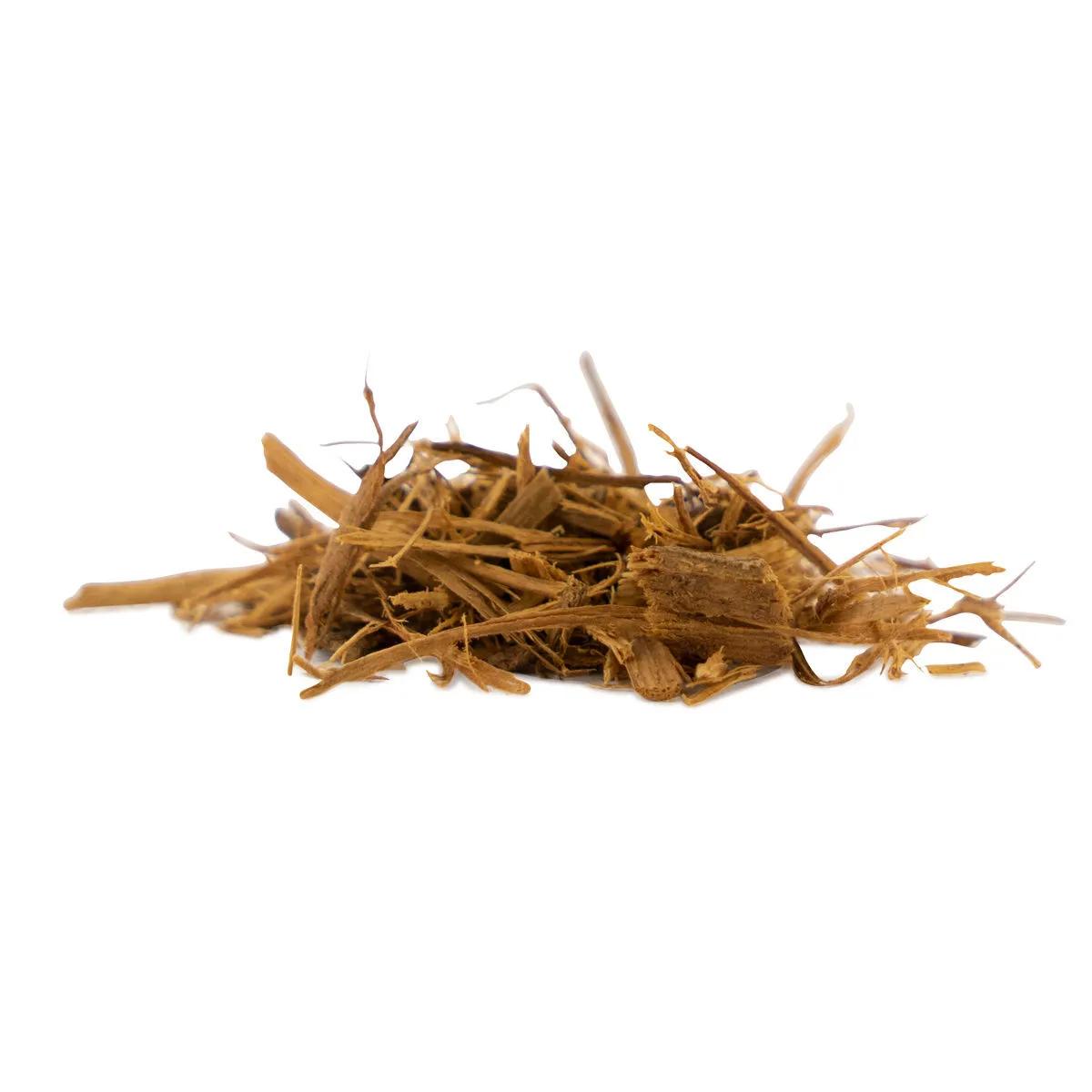
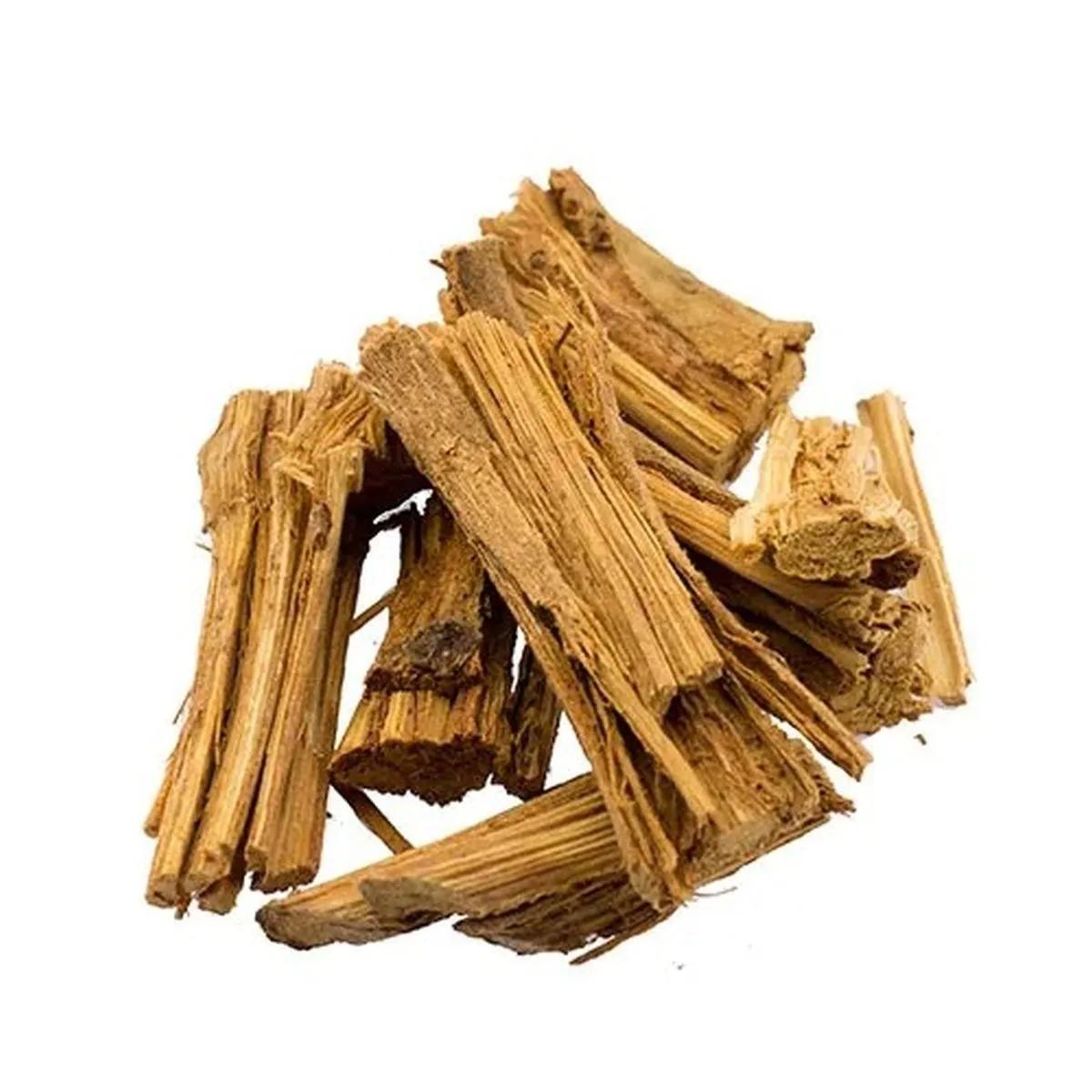
This product ships in two variants, both at 50 grams. The whole vine (SM0917) preserves the natural structure of the Banisteriopsis caapi stem — thick, fibrous, and satisfyingly dense in the hand. It's the form most collectors prefer for display or long-term storage. The shredded form (SM0918) is pre-cut into smaller pieces, which makes it easier to work with if you're preparing specimens for study or herbarium mounting. Both store identically: cool, dry, away from direct sunlight.
The yellow variety of Banisteriopsis caapi is one of several colour-typed cultivars recognised by indigenous communities in the Amazon. Each type — yellow, red, white, black — carries its own cultural associations and traditional significance. The yellow is often considered the most accessible and widely traded variety, making it the go-to for ethnobotanical collections.
Pick up a piece of the whole vine and you'll notice the woody, bark-covered exterior with a slightly rough texture. Snap a section and the interior reveals a pale, fibrous cross-section with a faintly earthy, vegetal smell — not unpleasant, somewhere between damp forest floor and dried tea leaves. The shredded version carries the same scent but more intensely, since more surface area is exposed. Both forms weigh surprisingly light for their volume; 50 grams of whole vine fills more of the bag than you'd expect.
One honest note: if you're after a pristine display piece, the whole vine can vary in diameter and curvature from batch to batch. That's the nature of a wild-harvested botanical — no two sections look the same. Some collectors love that. If uniformity matters to you, the shredded form sidesteps the issue entirely.
| Specification | Detail |
|---|---|
| Botanical name | Banisteriopsis caapi |
| Variety | Yellow (Cielo) |
| Weight | 50 grams |
| Available forms | Whole vine (SM0917), Shredded (SM0918) |
| Plant family | Malpighiaceae |
| Origin | Amazon rainforest, South America |
| Storage | Cool, dry place away from sunlight |
| Shelf life | Maintains qualities for 12+ months when stored properly |
Banisteriopsis caapi is arguably the most culturally significant plant in the entire Amazon basin. For generations, indigenous communities across Peru, Brazil, Colombia, and Ecuador have regarded this vine as sacred — a bridge between the physical and spiritual worlds. The vine is central to ceremonial practices that have been documented by ethnobotanists since the 19th century, with some traditions stretching back hundreds of years further.
The plant contains a group of beta-carboline alkaloids — primarily harmine, harmaline, and tetrahydroharmine — which are the subject of ongoing pharmacological research. These compounds act as monoamine oxidase inhibitors (MAOIs), a mechanism that has attracted significant scientific interest. We've been stocking Banisteriopsis caapi since the early days of the shop, and it remains one of the most frequently asked-about botanicals we carry. Customers range from university researchers cataloguing Amazonian ethnobotany to private collectors who simply appreciate the cultural weight this vine carries.
A word from behind the counter: we get asked at least once a week whether all caapi varieties are the same. They're not. The yellow, red, and black types are distinguished by indigenous practitioners based on observable characteristics and traditional use context. The yellow variety is the most commonly available and the best starting point for a collection. If you want to compare varieties side by side, we also carry other Banisteriopsis caapi types in the shop.
Ethnobotanical specimens aren't like other collectibles. They degrade if stored poorly, they vary batch to batch, and the good ones are getting harder to source as demand from researchers and collectors grows. Banisteriopsis caapi yellow is the best entry point for anyone interested in Amazonian plant culture — it's the variety most referenced in ethnobotanical literature, the most widely traded, and the easiest to identify and authenticate.
The 50-gram quantity gives you enough material to examine, compare, and store without committing to a larger purchase. If you're building a herbarium or reference collection, 50 grams of the whole vine provides 3-5 distinct sections depending on diameter. The shredded form gives you a larger number of smaller pieces — useful if you're distributing samples across multiple display frames or study sets.
Compared to Banisteriopsis caapi red or black varieties, the yellow is generally more uniform in appearance and easier to source consistently. That makes it the practical choice for a first specimen. The red variety tends to have a slightly darker bark and is less frequently available; the black is the rarest of the three. Start with the yellow, and branch out from there.
Building an Amazonian ethnobotanical collection? Pair Banisteriopsis caapi yellow with Psychotria viridis (Chacruna) leaves for a complete representation of the two most culturally significant plants in Amazonian tradition. We also carry Syrian Rue (Peganum harmala) seeds, another beta-carboline-containing botanical that makes for an interesting comparative specimen from a completely different continent and cultural context.
After 25-plus years of selling ethnobotanicals from our Amsterdam shop, we've noticed a pattern: the people who buy Banisteriopsis caapi tend to come back. Not because they need more of the same, but because this vine opens the door to an entire category of Amazonian botany they didn't know existed. It's a gateway specimen, if you like.
The most common question we hear is about authenticity — how do you know it's genuine Banisteriopsis caapi and not a random tropical vine? Fair question. The fibrous cross-section, the characteristic bark pattern, and the distinct earthy scent are reliable identifiers. The yellow variety specifically tends to have a lighter bark colour compared to the red or black. We source from established suppliers who work directly with harvesters in South America, and we've been vetting these supply chains since 1999.
One thing we're honest about: 50 grams of shredded material is harder to authenticate visually than the whole vine, simply because the structural features are less intact. If verification matters to you — and for serious collectors it should — go with the whole form.
Banisteriopsis caapi yellow is a colour-typed variety of the Amazonian vine Banisteriopsis caapi, belonging to the Malpighiaceae family. It's one of several cultivar types recognised by indigenous communities, distinguished by lighter bark colouration. The yellow variety is the most widely available and commonly referenced in ethnobotanical literature.
Whole vine preserves the natural stem structure — bark, cross-section, and fibrous interior intact. Shredded is pre-cut into smaller pieces for easier handling and study. Both are 50 grams of the same yellow variety. Whole is better for display; shredded is more practical for herbarium mounting or distributing across multiple samples.
Keep it in an airtight container with a silica gel packet, stored in a cool, dry spot away from sunlight. Room temperature around 18-22 degrees Celsius is fine. Check every few months for moisture or mould. Properly stored, it lasts well over 12 months without noticeable degradation.
The vine contains beta-carboline alkaloids, primarily harmine, harmaline, and tetrahydroharmine. These compounds are monoamine oxidase inhibitors (MAOIs) and are the focus of ongoing pharmacological research. The alkaloid profile is one reason this species holds such significance in both traditional practices and modern ethnobotanical study.
Yes. Indigenous practitioners distinguish varieties by bark colour, growth characteristics, and traditional context. The yellow variety has lighter bark and is the most commonly traded. Red tends toward darker bark and is less frequently available. Black is the rarest. For a first specimen, yellow is the standard starting point.
Look at the fibrous cross-section, the characteristic layered bark, and smell it — genuine caapi has an earthy, slightly vegetal scent. Whole vine sections are easier to authenticate than shredded material because the structural features remain intact. We source from vetted suppliers with direct harvester relationships in South America.
This listing is for 50 grams, which gives you enough for 3-5 whole vine sections or a generous amount of shredded material. Check our shop for larger quantities if you're building a more extensive collection or need material for comparative study across multiple specimens.
Last updated: April 2026
Medical disclaimer. This content is for informational purposes only and does not constitute medical advice. Consult a qualified healthcare provider before use of any substance.