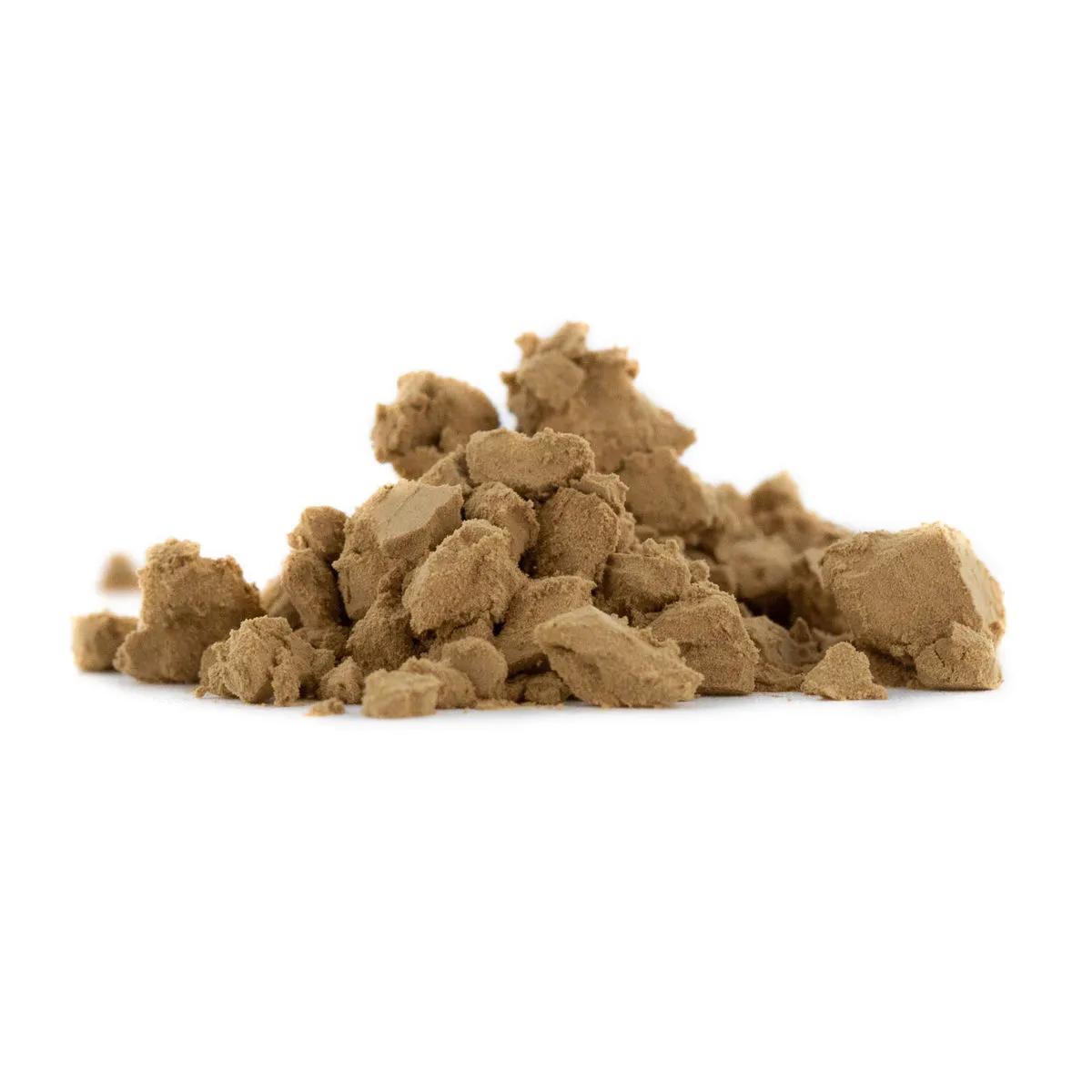
Damiana
by Indian Spirit
Damiana 10x extract is a concentrated botanical preparation of Turnera diffusa — a shrub native to Central America, Mexico, and the Caribbean that has been traditionally used as an aphrodisiac and tonic for centuries. This 10x concentration means you need far less material per dose compared to raw leaf, making it one of the most practical ways to work with this classic herb. Each pouch contains 5 grams of extract, equivalent to roughly 50 grams of dried damiana leaf.
Damiana has one of the longer track records of any aphrodisiac herb — indigenous peoples across Mexico and Central America have brewed it into teas and used it as incense material for generations. The 10x extract concentrates the active compounds so that a small 0.5–1 gram dose in hot water delivers what you'd otherwise need a much larger quantity of raw leaf to achieve.
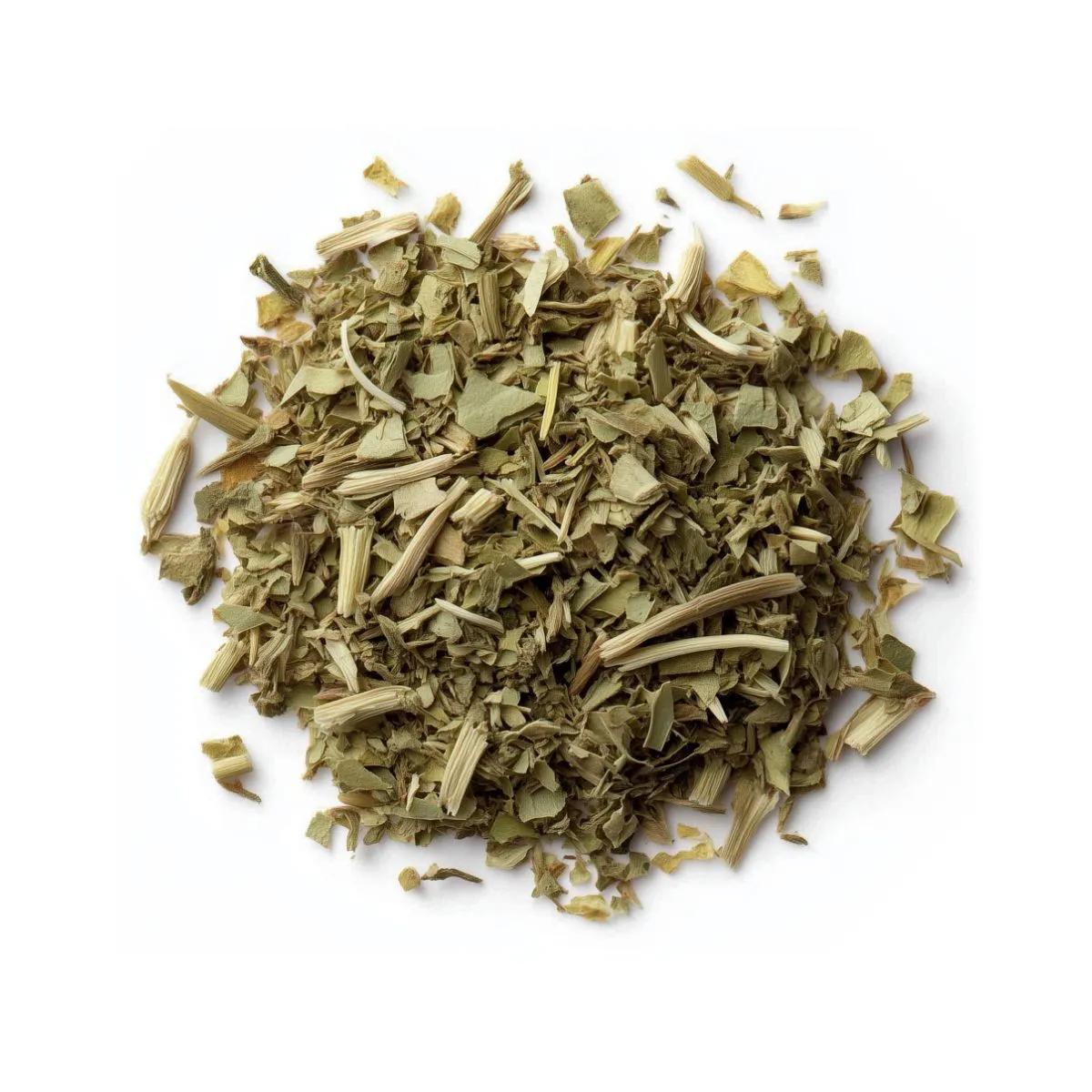
The aroma when you open the pouch is distinctly herbal and slightly bitter, with a warm, resinous quality that's actually pleasant once you get used to it. The extract itself is a fine, dark material — noticeably more potent-smelling than standard dried damiana leaf. Brewed as a tea, it has a smooth bitterness that sits somewhere between green tea and chamomile, with an earthy, slightly sweet finish. Not unpleasant at all, though adding honey doesn't hurt.
One honest note: damiana is a subtle herb. If you're expecting something dramatic from a single cup, you'll be underwhelmed. The traditional use involves regular consumption, and the effects tend to build over time. According to a review published in the Journal of Ethnopharmacology, Turnera diffusa at 80 mg/kg significantly increased the percentage of males achieving ejaculatory series in animal studies (Estrada-Reyes et al., 2009). That's animal research, not a guarantee for humans — but it does support what traditional use has suggested for hundreds of years.
| Spec | Value |
|---|---|
| Botanical Name | Turnera diffusa |
| Plant Family | Passifloraceae (Turneraceae) |
| Extract Ratio | 10:1 (10x concentrated) |
| Content | 5 grams |
| Equivalent Raw Material | ~50 grams dried leaf |
| Origin | Central America / Mexico |
| Preparation | Brew as tea infusion |
| SKU | SM0122 |
The scientific literature on damiana is growing, though still limited compared to more mainstream herbs. Here's what stands out from published studies — no exaggeration, no hype, just what the data actually shows.
According to a review in Pharmacognosy Reviews, Turnera diffusa is considered an aphrodisiac in folk medicine, and Estrada-Reyes et al. conducted studies to determine its effects on sexual behaviour (Chauhan et al., 2014). A separate review on the genus Turnera noted that among the pharmacological effects reported, antioxidant, hepatoprotective, neuroprotective, hypoglycaemic, and aphrodisiac activities appear most promising (PMC, 2023).
Research also suggests that a methanolic extract of T. diffusa shows an antifibrotic effect by decreasing profibrotic and mitochondrial markers, according to a study on hepatoprotective herbal compounds (PMC, 2022). And in a study on cytotoxic activity, the methanolic extract displayed activity on MDA-MB-231 breast cancer cells with an IC50 of 30.67 microg/mL (PMC, 2015). These are early-stage findings — interesting, but not conclusions you should build your health decisions around.
According to a review on plants used for improvement of sexual performance, Turnera diffusa leaf extracted in 30% ethanol was found to stimulate sexual behaviour (PMC, 2014). We've been stocking damiana in one form or another since the early days of the shop, and customer feedback over 25+ years has been consistently positive — particularly from couples who use it together.
We've had damiana on the shelves since the early 2000s, and the number one thing we tell people is: manage your expectations on the first cup. This isn't a substance that hits you over the head. It's more like a warm background shift — a loosening, a slight increase in sensitivity. The people who get the most out of it tend to use it regularly over a week or two, not as a one-off.
The 10x extract is our pick over raw leaf for one simple reason: convenience. Brewing 5–10 grams of dried leaf into a drinkable tea is a bit of a project — the flavour gets intense and the volume of plant material is awkward. With the extract, half a gram in a cup does the job. Compared to damiana tinctures, the tea preparation gives you more control over strength and is gentler on the wallet. If you prefer tinctures, we carry those too, but for the price, the 10x extract stretches further.
One limitation worth mentioning: in larger doses, damiana has a mild laxative effect. This is well-documented in traditional use and isn't dangerous, but it's worth knowing before you decide to double the dose "just to see." Stick to the 0.5–1 gram range and you'll be fine. There is limited clinical information regarding adverse reactions at standard doses (Duke 2002, Rowland 2003), and no psychiatric or neurologic adverse effects have been reported in the literature at typical dosages.
| Consideration | Detail |
|---|---|
| Standard Dose (10x extract) | 0.5–1 gram brewed as tea |
| Timing | 30–60 minutes before desired effect |
| Stomach | Most effective on an empty stomach |
| Laxative Effect | Possible at higher doses |
| Pregnancy / Breastfeeding | Avoid — insufficient safety data |
| Diabetes | Use caution — may affect blood sugar levels |
| Adverse Reactions | Limited clinical reports; mild at standard doses |
According to WebMD's overview of damiana, neurobehavioural and toxicological effects have been studied in aqueous extracts (WebMD). The takeaway: at normal doses, damiana has a solid safety profile. Large doses or long-term heavy use haven't been studied enough to make firm statements about, so don't treat this as something to megadose.
Damiana pairs well with other traditional aphrodisiac herbs. Muira Puama bark and Catuaba are both stocked in our smartshop and have a long history of combined use with damiana in South American herbal traditions. For a different approach to relaxation before intimacy, Kanna (Sceletium tortuosum) extract offers a complementary mood-lifting profile that some customers prefer to layer with damiana tea.
At standard doses of 0.5–1 gram brewed as tea, damiana has a well-established safety profile. There is limited clinical information regarding adverse reactions at normal doses (Duke 2002, Rowland 2003). Avoid if pregnant, breastfeeding, or managing diabetes without professional guidance.
Most people notice effects within 30–60 minutes when taken on an empty stomach. Eating beforehand slows things down considerably. The aphrodisiac and tonic effects tend to become more noticeable with regular use over several days rather than a single dose.
Brewed as tea, it has a warm, earthy bitterness with a slightly sweet, resinous finish. It's smoother than you'd expect from a concentrated extract. Adding a spoonful of honey rounds it out nicely if the bitterness isn't your thing.
Traditionally, damiana leaves were used as incense material. The 10x extract is designed for tea preparation — it's concentrated and not ideal for smoking. If you want to use damiana in a herbal smoking blend, raw dried leaf is the better choice.
Start with 0.5 grams and work up to 1 gram per cup. Clinical studies on standard damiana preparations have used 750–1,000 mg daily, so 0.5–1 gram of a 10x extract is a concentrated equivalent. Use a small kitchen scale for accuracy.
According to research by Estrada-Reyes et al. (2009), Turnera diffusa significantly increased sexual behaviour markers in animal studies. Human clinical data is limited, but traditional use spanning centuries across Central and South America consistently points to aphrodisiac properties. We've had positive customer feedback on this for over two decades.
Each pouch contains 5 grams. At 0.5 grams per cup, that's roughly 10 servings. At 1 gram per cup, you'll get about 5 servings. Enough for a solid week of daily use at the lower dose.
Last updated: April 2026
Medical disclaimer. This content is for informational purposes only and does not constitute medical advice. Consult a qualified healthcare provider before use of any substance.