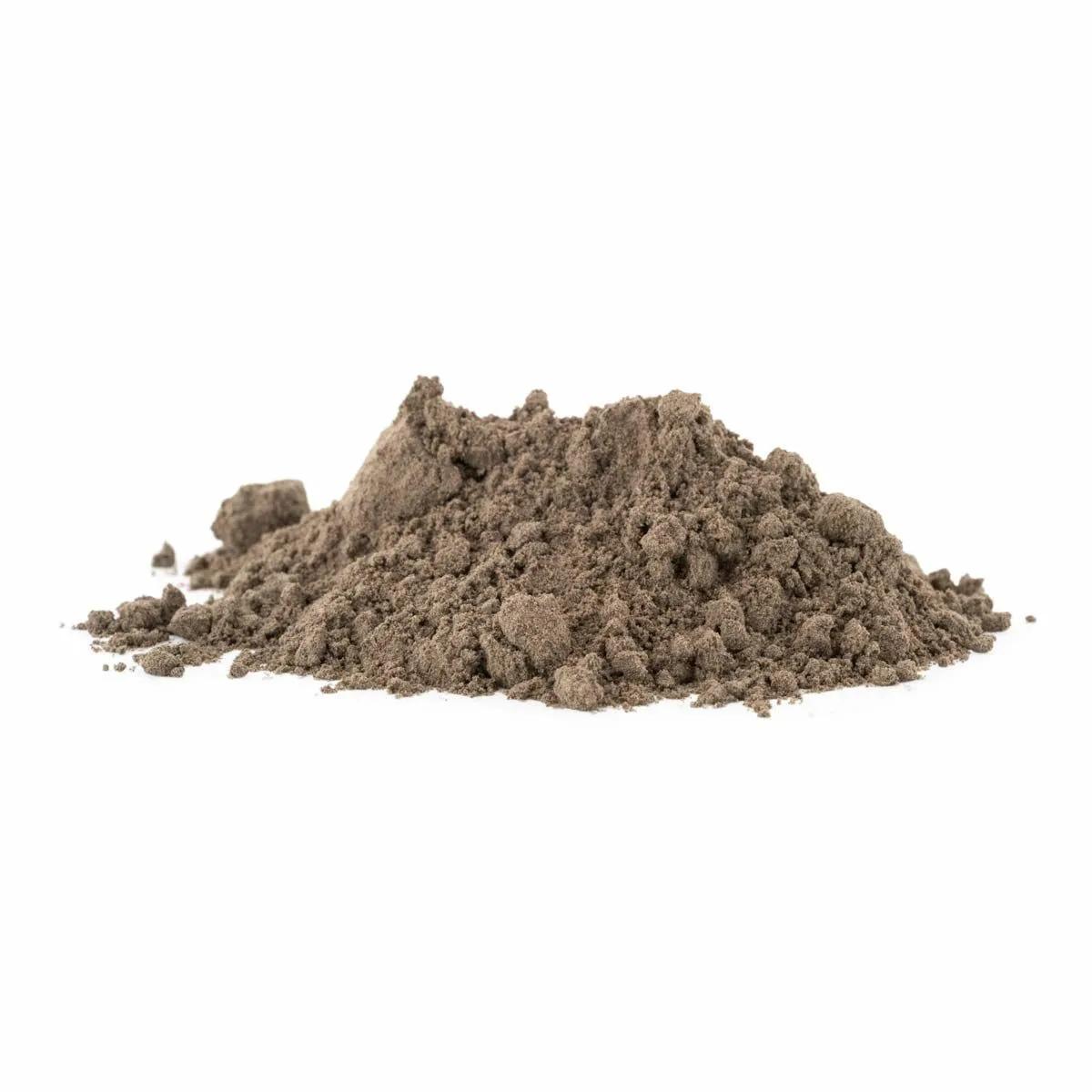
Auricularia judae jelly ear mushroom powder is a 100% organic fungal supplement made from dried, ground fruit bodies of the jelly ear mushroom — a gelatinous, ear-shaped species that's been part of Chinese kitchens and wellness cabinets for centuries. No additives, no fillers, no carriers. Just the mushroom, dried and milled to a fine grey powder you can stir into coffee, broth, smoothies, or porridge without it taking over the flavour.
What jelly ear mushroom powder actually is
Jelly ear (Auricularia judae, sometimes spelled auricula-judae) is the dark, rubbery fungus you've probably eaten in hot and sour soup without realising. The Latin name translates to "Judas's ear" — old folklore that the fungus grew on the elder tree Judas hanged himself from. Less dramatic in real life: it grows on dead and dying hardwood across temperate forests worldwide, and it's been cultivated in China for at least 1,400 years.
The powder version skips the chewy texture and gives you the mushroom in a form that disappears into whatever you're cooking. Grey, fine, virtually flavourless — which is the point. You're after the compounds, not a culinary moment.
Why people add this to their daily routine
Auricularia judae is studied mostly for its polysaccharides — long-chain sugars that show up repeatedly in the research literature. According to a 2023 review in the Journal of Fungi (PMC9861292), polysaccharides from Auricularia auricula have been observed in studies to regulate intestinal flora and modulate immune response. A separate trial reported in PMC11832288 noted that an intervention group showed significant improvements in waist circumference and blood triglyceride levels after supplementing with A. auricula-judae.
Research into the same mushroom has also looked at antitumor activity in extracts (Pubmed 23510178, comparing it alongside reishi and Phellinus gilvus), antimicrobial properties against bacterial and fungal pathogens (PMC7388757), and skin wound-healing potential of its polysaccharide fraction (PMC8064461). It's a busy little fungus on the research side.
None of this is EFSA-approved, so we won't tell you the powder will do anything specific for you. What we can say: it's a nutrient-dense food source with a long history of use, rich in dietary fibre and iron, and the studies that exist are mostly pointing in interesting directions.
Dosage — what the manufacturer recommends
The producer gives a clear weight-based dose, which is rare for mushroom powders and we appreciate it.
| Use | Dose |
|---|---|
| Daily recommended | 500mg powder per 15kg body weight |
| Maximum daily | 1g powder per 10kg body weight |
| Form | Loose powder, stir into food or drink |
For a 70kg adult that works out to roughly 2.3g per day at the standard dose. A small kitchen scale is your friend here — eyeballing fungal powder by the teaspoon is how people end up wildly over- or under-dosing.
Specifications
| Botanical name | Auricularia judae (syn. A. auricula-judae) |
| Common names | Jelly ear, wood ear, black fungus, Judas's ear |
| Ingredients | 100% jelly ear mushroom fruit bodies |
| Cultivation | Organic, cultivated fruit bodies (not mycelium-on-grain) |
| Form | Fine grey powder |
| Additives | None |
| Daily dose | 500mg per 15kg bodyweight |
| Storage | Room temperature, sealed, dark, dry |
How to use jelly ear mushroom powder
- Weigh out your daily dose with a 0.01g scale based on your bodyweight.
- Stir into coffee, hot chocolate, or tea. The powder dissolves into hot liquids without lumping if you whisk it briefly.
- Or add to broth, miso soup, ramen, or congee — this is where it shines, since the mushroom is already a soup staple in East Asian cooking.
- For cold use: blend into smoothies, yoghurt, or porridge. It won't fully dissolve in cold liquid but it disperses fine.
- Take daily for the most consistent effect. One-off doses don't really do anything with adaptogenic mushrooms.
- Reseal the pouch tight after each use. Keep away from light, humidity, and pantry insects.
Honest limitations — what this powder is not
This is a fruit-body powder, not a hot-water or dual extract. Extracts concentrate the beta-glucans and other polysaccharides; raw powder gives you the whole mushroom but at lower concentration of the active compounds. If you want maximum polysaccharide content per gram, an extract is the stronger choice. If you want the full nutritional profile of the mushroom (fibre, iron, minerals) at a friendlier price, powder wins.
Also: jelly ear is one of the milder functional mushrooms. It doesn't have the cognitive reputation of lion's mane, the energy reputation of cordyceps, or the calming reputation of reishi. People take it for general nutritional support and the polysaccharide profile, not for a noticeable felt effect.
Pairs well with our other organic mushroom powders if you're building a stack — lion's mane, reishi, and cordyceps all work alongside jelly ear without overlap. A small precision scale is also worth grabbing if you don't already have one; dosing mushroom powder by eye is a waste of good powder.
Safety and interactions
Jelly ear mushroom has a long food history and a clean safety record in culinary doses. A few notes worth flagging: the mushroom has mild anticoagulant properties (it's one of the reasons it shows up in cardiovascular research), so if you're on blood thinners like warfarin, talk to your doctor before supplementing. Same goes for anyone scheduled for surgery — stop a week or two before.
Digestive discomfort can happen if you overshoot the dose, especially at the upper end of the range. Start low, build up over a week or two. As with any nutrient-dense supplement, it's not a substitute for a varied diet, and pregnant or breastfeeding users should check with a healthcare provider first.
Frequently Asked Questions
What is black fungus and is it the same as jelly ear?
Yes — black fungus, wood ear, cloud ear, and jelly ear are all common names for Auricularia mushrooms (mainly A. judae and the closely related A. polytricha). The powder you're looking at here is A. judae, the species most often used in Chinese cooking and herbal practice.
Does jelly ear mushroom powder have a strong taste?
No. The powder is virtually flavourless with a very faint earthy note — much milder than reishi or chaga. It disappears into coffee, soup, or smoothies without changing the taste, which is why it's an easy one to take daily.
Can I cook with the powder or does heat destroy it?
You can cook with it. The polysaccharides studied in the research literature are heat-stable up to normal cooking temperatures, and jelly ear has been used in simmered soups for over a thousand years. Stir it into broth, congee, or ramen without worry.
How long until I notice anything?
Honestly — you may not notice a felt effect at all. Jelly ear is taken for nutritional and long-term polysaccharide support, not for an acute experience. If you're after something with a clearer same-day feel, lion's mane or cordyceps powders are different animals.
Is this fruit body or mycelium powder?
Fruit body — the actual mushroom, not mycelium grown on grain. Fruit-body powders contain higher concentrations of the beta-glucans and other polysaccharides that the research focuses on, and don't have the grain-residue issue that mycelium-on-grain products sometimes do.
Can I take it with other mushroom supplements?
Yes, jelly ear stacks fine with lion's mane, reishi, cordyceps, chaga, or turkey tail. The compound profiles overlap a little but each species brings something different. Just keep total mushroom-powder intake reasonable — more isn't always more.
Last updated: April 2026