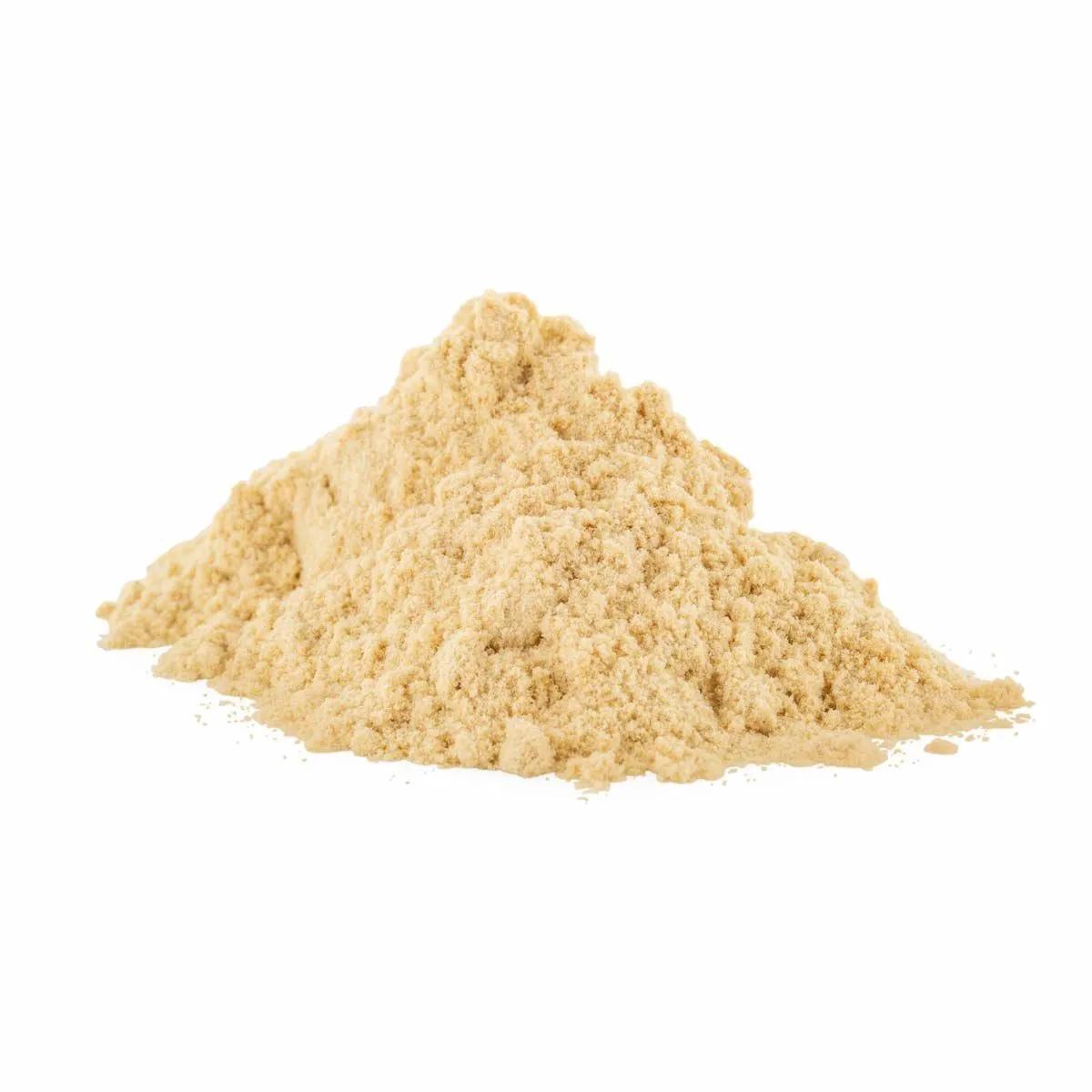
Shiitake
Organic shiitake powder is a 100% dried mushroom supplement made from Lentinula edodes — the same species that has been a staple in East Asian kitchens and traditional medicine for centuries. This fine powder delivers the full nutrient profile of whole shiitake mushrooms in a form you can stir into food, brew into broth, or pack into capsules for daily use. Sourced from organically grown shiitake in China and ground without fillers or additives, it is the most practical way to get a consistent daily dose of one of the world's most researched functional mushrooms.
Shiitake mushrooms pack a surprisingly dense nutrient profile for something so light. You get dietary fibre, non-animal protein, vitamin D, potassium, selenium, and essential amino acids — all from a single ingredient. The umami flavour is deep and savoury, somewhere between dried porcini and soy sauce, with an earthy undertone that rounds out soups, stews, and grain bowls without overpowering them.
But the real interest in shiitake goes beyond the kitchen. According to a study published in the Journal of the American College of Nutrition, regular Lentinula edodes consumption resulted in improved immunity, as seen by improved cell proliferation and activation and increased secretory immunoglobulin A (sIgA) production (Dai et al., 2015). That study had 52 healthy adults consuming shiitake daily for four weeks — a straightforward protocol that mirrors how most people would actually use this powder.
According to research in PMC, shiitake mushrooms have remarkable health properties that have been used in Far Eastern medicine for centuries, though the authors note there is still limited evidence for some of the broader claims (PMC, 2022). We appreciate that honesty. Not every mushroom supplement is a miracle — but shiitake has a genuine body of research behind it, and the nutrient density alone makes it worth the shelf space.
Shiitake stands out from other functional mushrooms because it delivers both culinary and supplemental value in one ingredient. The key bioactive compound is lentinan, a beta-glucan polysaccharide. According to research published in PMC, numerous bioactive compounds from functional foods, including glucans, were suggested to influence the intestinal microbiome and immune system (PMC, 2024). Beta-glucans are the reason shiitake keeps appearing in immune function studies — they are the active component doing the heavy lifting.
| Specification | Detail |
|---|---|
| Species | Lentinula edodes |
| Ingredients | 100% dried shiitake mushrooms |
| Certification | Organic |
| Origin | China (organically grown) |
| Form | Fine powder |
| Key Nutrients | Dietary fibre, vitamin D, potassium, selenium, essential amino acids |
| Key Bioactive | Lentinan (beta-glucan polysaccharide) |
| Shelf Life | 48 months after delivery |
| Storage | Airtight container, room temperature or lower, dry and dark |
We have been selling functional mushrooms since before they were trendy, and shiitake is still the one we point people to when they ask "where do I start?" It is the most approachable functional mushroom — no odd flavour, no acquired taste, just a rich umami that actually improves food. Lion's mane gets all the attention right now, and reishi has its devoted following, but shiitake is the one that people stick with long-term because it slots into cooking so naturally.
The honest limitation: this is a whole-mushroom powder, not a concentrated extract. That means you are getting the full spectrum of what is in the mushroom — fibre, nutrients, beta-glucans — but at whole-food concentrations. If you want a high-potency lentinan extract for targeted supplementation, that is a different product. This is closer to eating shiitake mushrooms every day, just without the prep work. For most people, that is exactly the right starting point.
One thing we have noticed: people who take it with a source of vitamin C — a glass of orange juice, a squeeze of lemon in their broth — tend to report feeling more benefit. The product instructions actually recommend this, and the logic tracks: vitamin C increases the absorption of several key components in the mushroom.
If you are browsing the functional mushroom section and wondering which one to grab, here is a quick comparison based on what each species is most researched for.
| Mushroom | Primary Research Focus | Flavour Profile | Best Format |
|---|---|---|---|
| Shiitake (Lentinula edodes) | Immune function, nutrient density | Rich umami, savoury | Powder for cooking or capsules |
| Lion's Mane (Hericium erinaceus) | Cognitive function, nerve growth factor | Mild, slightly sweet | Extract or capsules |
| Reishi (Ganoderma lucidum) | Stress response, sleep quality | Bitter, woody | Extract or tea |
Shiitake is the best functional mushroom for people who want something that doubles as a cooking ingredient. You will not wince adding this to food the way you might with reishi powder. If your goal is specifically cognitive support, lion's mane is the more targeted choice. But for general daily nutrition and immune support backed by research, shiitake is hard to beat.
The most cited human trial on shiitake and immune function comes from Dai et al. (2015). In that study, 52 healthy adults aged 21–41 consumed either 5g or 10g of dried shiitake mushrooms daily for four weeks. According to the researchers, regular Lentinula edodes consumption resulted in improved immunity, as seen by improved cell proliferation and activation and increased sIgA production (PubMed). The study also noted reduced C-reactive protein levels, suggesting a shift toward a less inflammatory immune profile.
A separate assessment in the Journal of Food Science noted that Lentinula edodes contains bioactive compounds including lentinan, eritadenine, and various polysaccharides, though the authors emphasised that studies relating to its complete nutritional and safety profile are still developing (PMC, 2018). This is worth keeping in mind — the research is encouraging, not conclusive. We would rather give you the real picture than oversell it.
According to a safety assessment published in 2025, medicinal mushrooms offer diverse therapeutic benefits, but proper administration is critical to avoid long-term health issues (PubMed, 2025). Translation: stick to the recommended dose, do not treat more as better, and talk to your GP if you are on medication or managing a health condition.
Here is something most mushroom brands will not tell you: raw or undercooked shiitake can cause a skin reaction called shiitake dermatitis — linear, whip-like rashes triggered by lentinan. According to a placebo-controlled study, dermatitis was observed in a small percentage of participants, approximately 6.7% in both low-dose and high-dose groups (PMC, 2025). This reaction is almost exclusively linked to raw or lightly cooked whole mushrooms, not to dried powder consumed in recommended amounts. Still, if you notice any unusual skin reaction, stop use and consult a doctor. Transparency matters more than a clean sales pitch.
Complete your functional mushroom setup: pair shiitake powder with Lion's Mane extract for cognitive support alongside immune support, or grab a bag of empty gel capsules to make your own shiitake supplements at home. A vitamin C supplement taken alongside shiitake powder increases absorption of key bioactive compounds — worth adding to your order.
The recommended daily dose is 500mg per 15kg of body weight. For someone weighing 75kg, that is about 2.5g daily. The maximum dose is 1g per 10kg of body weight. Clinical studies have used between 5g and 10g of dried shiitake daily for four-week periods (Dai et al., 2015).
Both. The umami flavour makes it a genuine cooking ingredient — sprinkle it into soups, stir-fries, risottos, or sauces. It dissolves easily into hot liquids. You can also pack it into gel capsules if you prefer a flavourless supplement approach.
Vitamin C increases the absorption of several key bioactive compounds in shiitake, including certain polysaccharides. A glass of orange juice or a vitamin C tablet alongside your dose is a simple way to get more out of the powder.
Side effects are very rare at normal dosages. A four-week daily consumption study in healthy adults reported no significant adverse effects. Stick to the recommended dose and consult your GP if you are on medication or have an existing health condition. Do not exceed the stated maximum.
Shiitake dermatitis is a skin reaction — linear, whip-like rashes — caused by lentinan, typically from eating raw or undercooked whole shiitake mushrooms. It is rare with dried powder at recommended doses. If you notice any unusual skin reaction, stop use and see a doctor.
Shiitake is most researched for immune function and nutrient density, lion's mane for cognitive support, and reishi for stress and sleep. Shiitake has the best flavour of the three — rich umami versus lion's mane's mildness and reishi's bitterness. It is the easiest to integrate into daily cooking.
The shelf life is 48 months from delivery when stored properly. Keep it in an airtight container at room temperature or cooler, in a dry and dark place. Moisture is the enemy — keep the lid tight and do not scoop with wet hands.
Last updated: April 2026


This product description was drafted with AI assistance and reviewed by Adam Parsons, Senior Writer & Reviewer. Editorial oversight by Joshua Askew.
Medical disclaimer. This content is for informational purposes only and does not constitute medical advice. Consult a qualified healthcare provider before use of any substance.