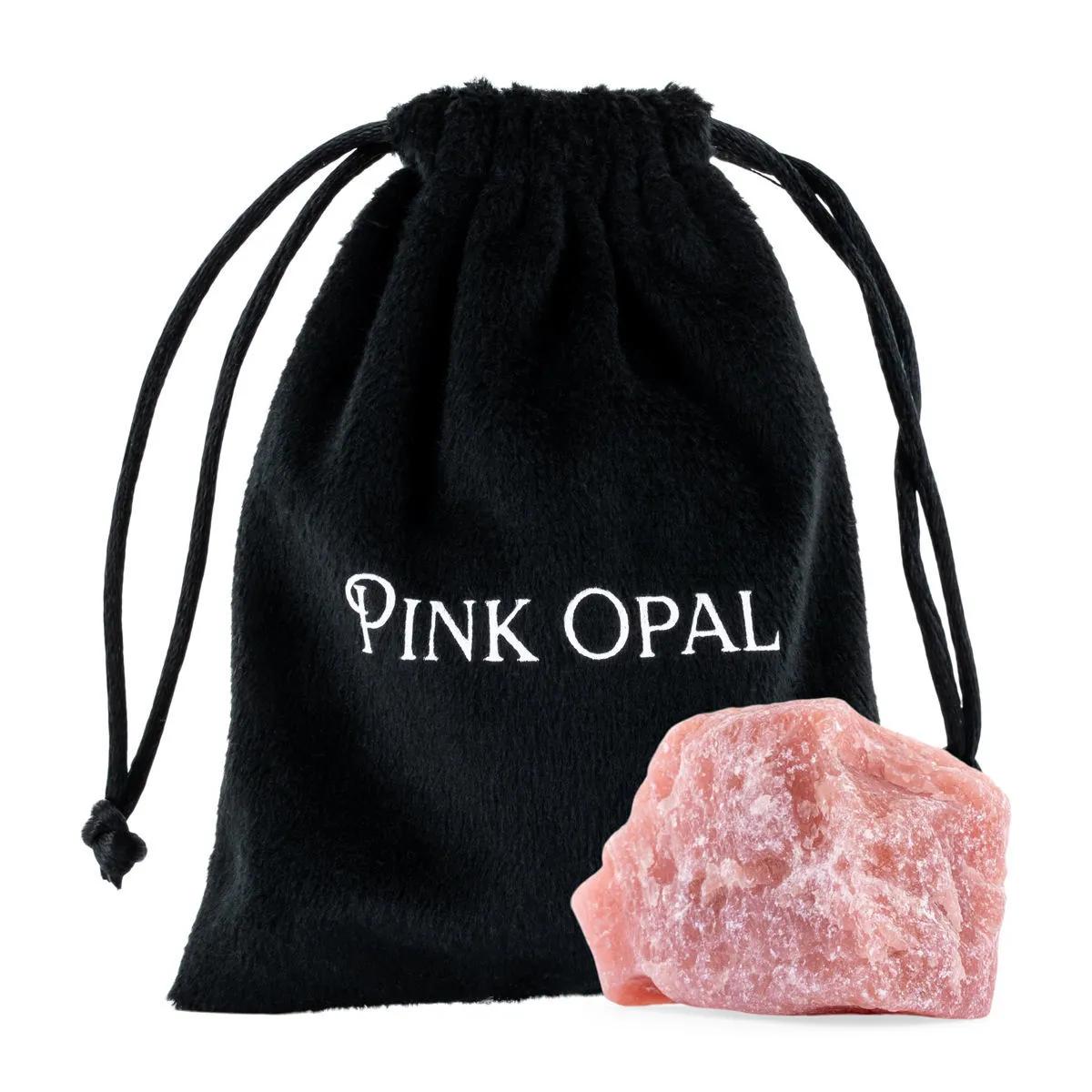
Pink Opal is a pastel-pink gemstone that brings a soft, calming colour to any crystal collection. Mined mainly in Peru — where it's the national gemstone — this natural-finish stone ranges from 3 to 5 cm and works as a pocket piece, a meditation companion, or a pretty addition to a shelf of tumbles and raw pieces.
Why Pink Opal stands out
Pink Opal is the softer, sweeter cousin of the fiery precious opals most people picture. No rainbow flash, no play-of-colour — just a milky pastel pink that ranges from opaque to semi-translucent depending on the piece. It's the kind of stone that doesn't shout for attention but quietly earns it once you've got it in your hand.
Most Pink Opal on the market comes from Peru, where it's recognised as the country's national gemstone. You'll also find deposits in Mexico, the USA and Australia, though Peruvian material tends to dominate the smartshop and crystal trade. Each piece is unique — colour intensity varies from pale rose to a deeper, creamier pink, and the surface can show subtle veining or matrix.
What you get with the natural variant
This listing is for a single Pink Opal piece in a natural, unpolished finish, sized between 3 and 5 cm. Natural finish means the stone keeps its raw character — no high-gloss polish, no tumbling marks, no shaped edges. You're getting it close to how it came out of the ground, which is what most crystal collectors actually want for display and meditation work.
Because each piece is hand-picked from natural rough, expect variation in exact size, shape, and shade of pink. Two stones from the same batch will never be identical — that's the trade-off (and the appeal) of buying natural over machine-cut.
Properties and traditional associations
Pink Opal is traditionally linked to the heart chakra and is the birthstone for those born in October. In crystal lore, it's associated with emotional calm, self-compassion, and mood — collectors often pair it with rose quartz or rhodonite for a "soft pink" trio focused on emotional work.
Honest note: these are traditional and metaphysical associations passed down through crystal practice, not clinical claims. We're not going to tell you a rock will fix your week. What we will say — from 25 years behind the counter — is that people who work with crystals tend to value them as anchors for intention and reflection. That's a real thing, even if it's not something you'll find in a peer-reviewed journal.
Specifications
| Stone | Pink Opal |
| Finish | Natural (unpolished) |
| Size range | 3–5 cm |
| Colour | Pastel pink, opaque to semi-translucent |
| Main origin | Peru (also Mexico, USA, Australia) |
| Chakra association | Heart |
| Birthstone | October |
| SKU | SM0781 |
How to care for your Pink Opal
- Wipe the stone with a soft, damp cloth — lukewarm water is fine.
- For grubbier pieces, add a tiny drop of mild dish soap to the cloth.
- Rinse briefly under running water and pat dry with a soft cloth.
- Avoid prolonged soaking — opals contain water in their structure and don't love being submerged for hours.
- Keep it away from harsh chemicals, ultrasonic cleaners, and direct sunlight for long periods (sunlight can fade the pink over time).
- Store separately from harder stones like quartz or amethyst to avoid scratches.
Pink Opal vs other pink stones
| Stone | Look | Best for |
|---|---|---|
| Pink Opal | Soft, milky pastel pink, opaque to semi-translucent | Subtle heart-chakra work, calm aesthetic |
| Rose Quartz | Pale to medium pink, often translucent | Classic love and self-compassion stone |
| Rhodonite | Pink with black manganese veining | Emotional balance with stronger visual contrast |
Pairs nicely with Rose Quartz and Rhodonite if you're building a heart-chakra set, or with a small wooden display stand to keep your natural piece propped up properly on a shelf or altar.
From our counter
One thing we tell first-time crystal buyers: don't overthink the "perfect" piece. With natural-finish stones like Pink Opal, the small imperfections — a bit of matrix, a slightly uneven shape, a patch where the pink fades to cream — are what make it yours. Polished, uniform pieces look great in product photos but feel less personal in the hand. Pick the one that catches your eye, not the one that looks most like the photo.
Honest limitations
Pink Opal is softer than quartz (around 5.5–6.5 on Mohs) and contains water in its structure, so it's not the most durable stone in the kit. Don't drop it on tile, don't leave it on a sunny windowsill for months, and don't take it in the shower. Treat it like the pastel-coloured semi-precious stone it is and it'll stay pretty for decades.
Frequently Asked Questions
Where does Pink Opal come from?
Most Pink Opal is mined in Peru, where it's the national gemstone. Smaller deposits also exist in Mexico, the USA, and Australia. The piece in this listing is sourced from natural rough and comes in a 3–5 cm size with an unpolished finish.
Is Pink Opal a real opal?
Yes — it's a genuine variety of common opal (as opposed to precious opal, which shows play-of-colour). Pink Opal is opaque to semi-translucent and gets its pastel hue from trace elements in the silica structure.
What chakra is Pink Opal associated with?
Traditionally the heart chakra. In crystal practice, Pink Opal is often used alongside rose quartz and rhodonite for emotional and self-compassion work. These are traditional associations, not clinical claims.
How do I clean Pink Opal?
A damp cloth with a tiny drop of mild dish soap is all you need. Avoid soaking the stone, skip ultrasonic cleaners, and don't use harsh chemicals — opals contain water and can crack or fade with rough treatment.
Will the colour fade?
It can, if left in direct sunlight for extended periods. Store your Pink Opal somewhere shaded when you're not using it and the pastel pink will hold up for years. Heat and prolonged dryness are the main enemies.
What size will I receive?
Each piece is between 3 and 5 cm and hand-picked from natural rough. Exact size, shape, and shade of pink vary from stone to stone — that's the nature of buying a natural-finish gemstone rather than a machine-cut one.
Last updated: April 2026