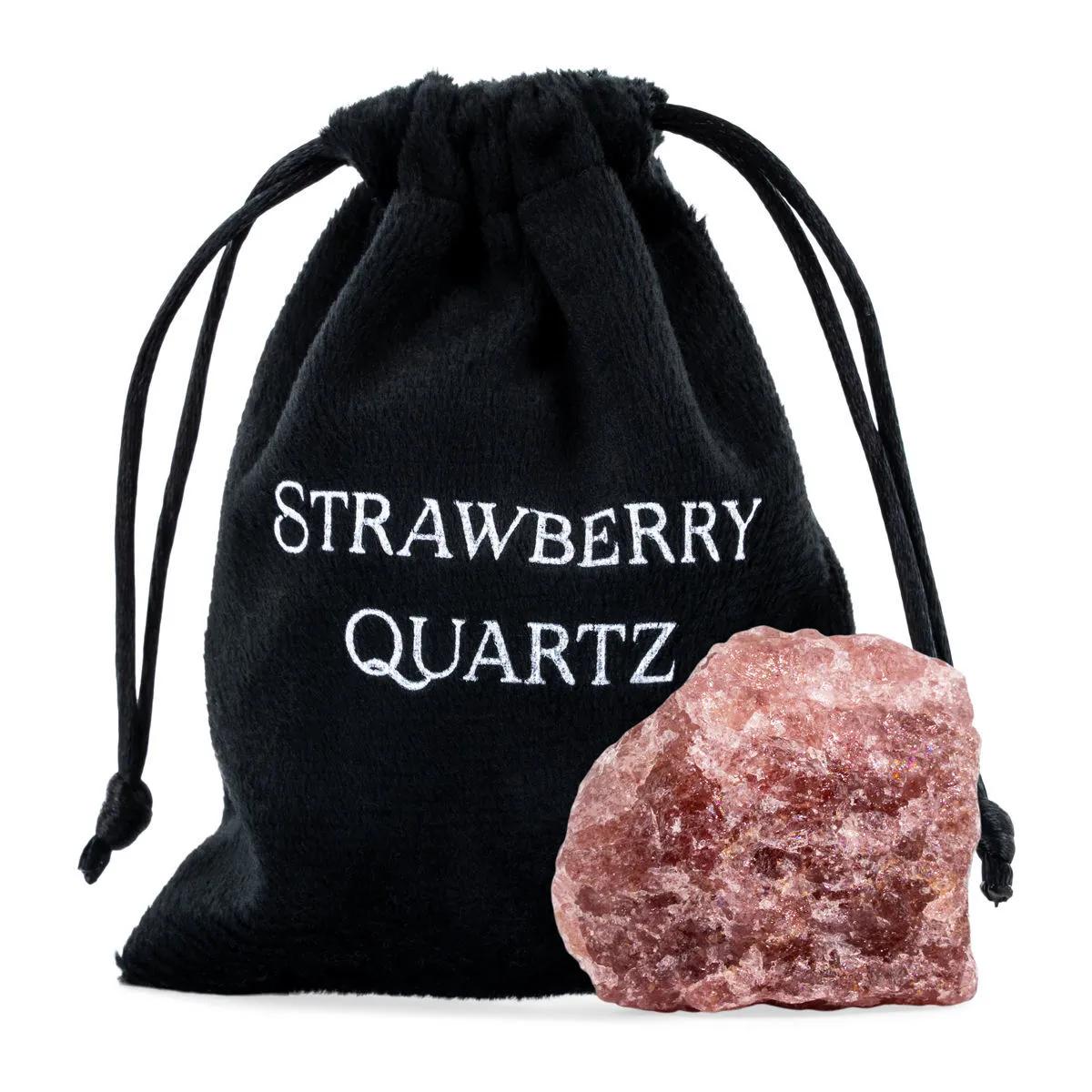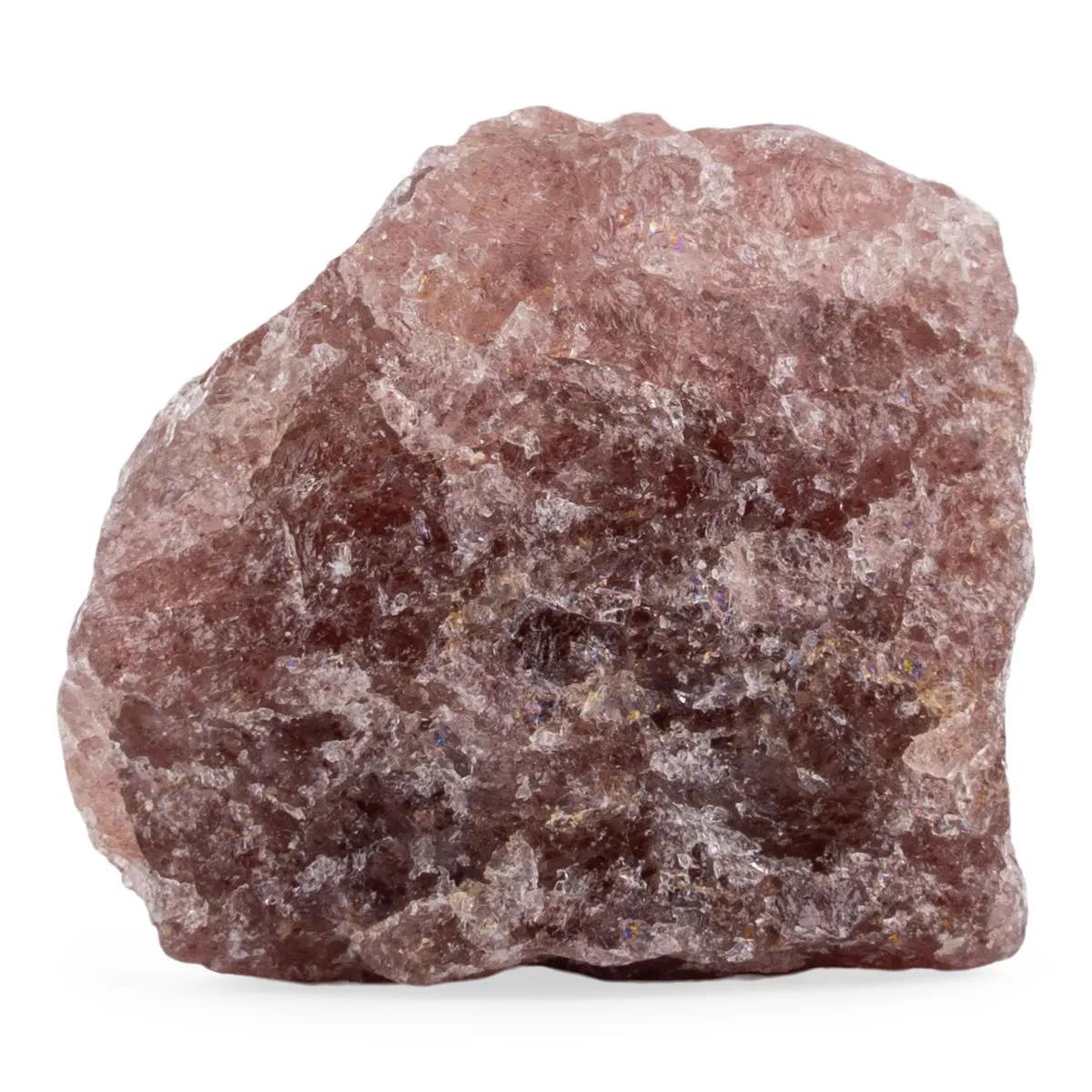
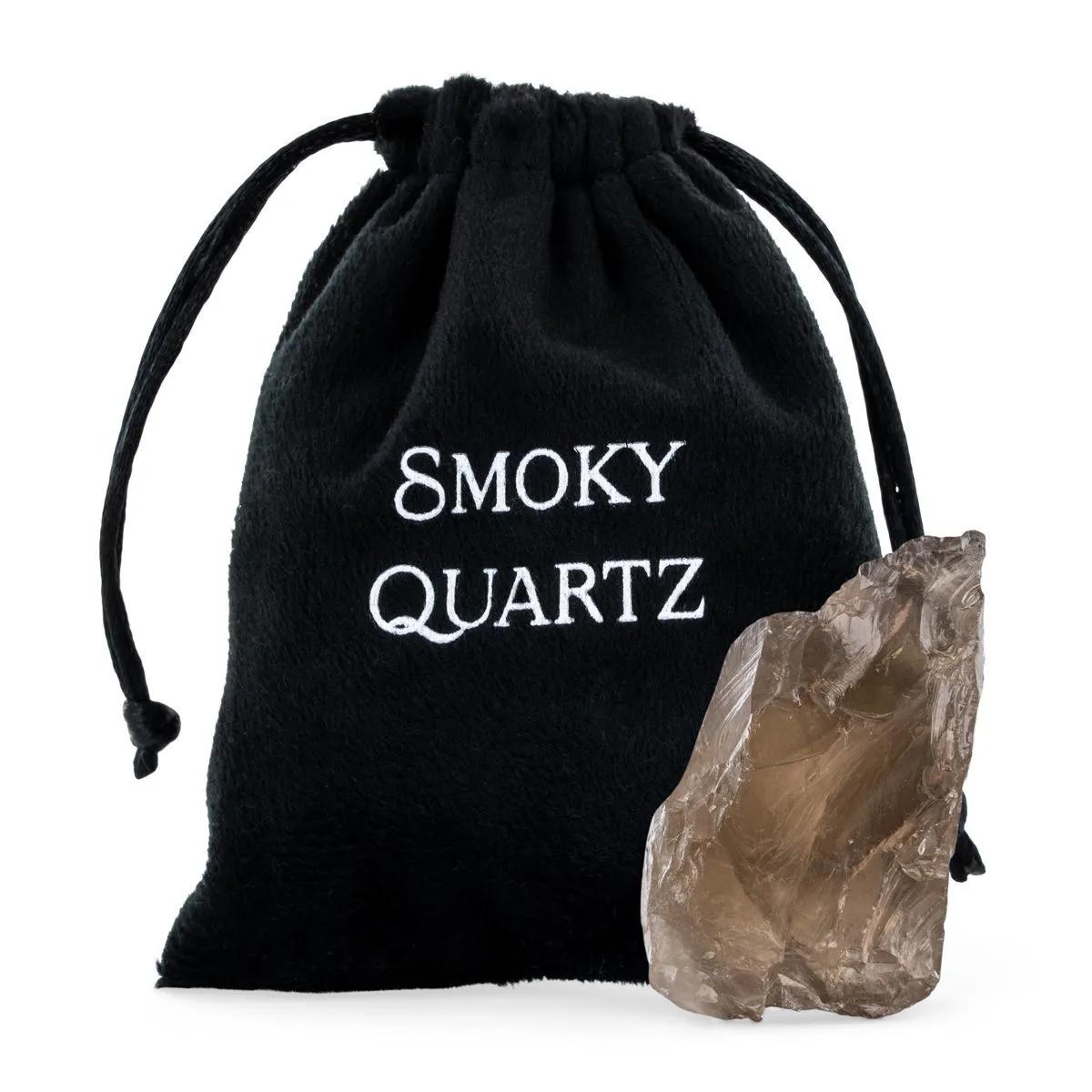
Smoky Quartz is a brown variety of quartz that ranges from pale tan to almost jet-black, formed when natural radiation from surrounding rocks acts on clear quartz crystals over millions of years. Sourced from Brazil, Australia and Scotland, each natural stone in this lot measures 3–5 cm and arrives in its raw, untumbled form — no polish, no dyes, just the rock as it came out of the ground.
Why Smoky Quartz is worth a spot on your shelf
Smoky Quartz is the grounding stone of the quartz family — visually the most dramatic, geologically the most interesting. The smoky colour isn't a treatment or a dye; it's the result of aluminium impurities reacting to natural background radiation from surrounding granite over geological time. That's why no two stones look identical: some are champagne-pale, others nearly black, and a fair few have that classic gradient where one end is clear and the other deeply smoked.
In Druid and Celtic traditions it was considered a sacred stone, often used in ceremonial work tied to the earth. Today people pick it up for the same reasons they'd reach for any quartz — but with the added pull of that earthy colour, which makes it sit better in a modern interior than a bright pink rose quartz or a fluorescent amethyst cluster. It's the crystal you can leave on a desk at work without anyone asking questions.
What you actually get
One natural Smoky Quartz stone, 3 to 5 cm at its widest point. Each piece is hand-picked from the supplier's batch, so expect variation in shape, depth of colour, and surface texture. Some stones have natural fractures or rainbow inclusions inside — that's a feature of raw quartz, not a defect. The finish is natural: no tumbling, no polishing, no coating.
| Spec | Value |
|---|---|
| Mineral | Smoky Quartz (SiO₂) |
| Family | Quartz / silicate |
| Colour range | Pale tan to near-black brown |
| Size | 3–5 cm |
| Finish | Natural (untumbled) |
| Mohs hardness | 7 |
| Origin | Brazil, Australia, Scotland |
| Associated chakra | Root |
| SKU | SM0765 |
Smoky Quartz vs. other grounding stones
If you're choosing between grounding crystals, Smoky Quartz sits in a different spot than Black Tourmaline or Hematite. Here's how they compare on the shop floor:
| Stone | Look | Traditionally used for | Best if you want… |
|---|---|---|---|
| Smoky Quartz | Translucent brown to black | Grounding, root chakra work | A grounding stone you can still see light through |
| Black Tourmaline | Opaque matte black | Protection, energy shielding | A dense, fully opaque protector |
| Hematite | Metallic silver-grey | Focus, stability | Something with weight and shine |
Spiritual and traditional uses
Smoky Quartz is traditionally linked to the root chakra and used in grounding meditations — the kind where you sit, hold the stone, and consciously bring your attention back into your body. Practitioners traditionally use it to clear stagnant energy from a room and to support emotional balance during stressful periods. None of this is scientifically proven; crystal work sits in the spiritual and intentional practice space, not the medical one. We say this plainly because we'd rather you buy it for what it is than what it isn't.
One practical note worth flagging: research on quartz dust exposure (e.g. studies on respirable crystalline silica reviewed in Inflammatory and Coagulatory Markers and Exposure to Different Size Fractions of Particle Mass, PMC6814634) relates to industrial inhalation of fine quartz particles, not handling a whole crystal. A 4 cm stone on your desk isn't generating respirable dust. Just don't grind it up and breathe it in.
How to use Smoky Quartz
- Rinse the stone under cool running water when it arrives, then pat dry with a soft cloth.
- Hold it in your dominant hand, close your eyes, and set a simple intention — something like "I'm bringing my attention back to the present."
- For daily practice: carry it in a pocket or place it on your desk where you'll see it.
- For meditation: hold it on your lap or place it at the base of your spine area (root chakra) while seated.
- Clean it occasionally with a damp, soapy cloth — quartz is hardness 7, so it won't scratch easily, but avoid harsh chemicals.
- Many people "cleanse" their stones by leaving them in moonlight overnight or smudging with sage. Avoid prolonged direct sunlight — some smoky quartz can fade under heavy UV exposure over time.
Honest limitations
A few things to know before you buy. First, because these are natural stones, the one you receive will not look exactly like the photograph — colour depth and shape vary considerably across the batch. Second, raw quartz often has internal fractures that catch the light; these are natural and don't affect the stone's integrity, but if you wanted a flawless display piece, a tumbled or polished variety would suit you better. Third, the spiritual properties described in crystal lore are traditional uses, not clinical outcomes. We sell these as beautiful natural objects with a long cultural history — anything beyond that is down to your own practice.
Pairs well with a Selenite charging plate (traditionally used to "clear" other crystals between sessions) or a small Rose Quartz tumbled stone if you want to balance grounding work with something softer. Both sit in our Crystals for Rest & Balance collection.
From our counter
Smoky Quartz is one of the easier crystals to recommend to people walking into the shop for the first time. It doesn't look "spiritual" in the way a giant amethyst geode does — it looks like a proper rock, the kind you'd pick up on a Scottish hillside. That makes it sit comfortably in offices, on bedside tables, in jacket pockets. We've had customers buy one for a stressful job change, others for meditation practice, others just because they liked the colour. All valid reasons.
Frequently Asked Questions
Is Smoky Quartz radioactive?
No. The brown colour comes from past exposure to natural background radiation over geological timescales, but the finished stone itself does not emit measurable radiation. It's safe to handle, carry, and keep in your home.
Will Smoky Quartz fade in sunlight?
Heavy, prolonged UV exposure can lighten some Smoky Quartz over months or years. For display, keep it out of direct windowsill sun. Indoor lighting and occasional sunlight won't affect it.
How do I clean my Smoky Quartz?
Wipe gently with a damp cloth and a drop of mild soap, then dry with a soft towel. Avoid ultrasonic cleaners, harsh chemicals, and prolonged soaking. Quartz is hardness 7, so it won't scratch from normal handling.
Are Smoky Quartz and Citrine the same stone?
No. Both are quartz varieties coloured by trace elements, but Citrine is yellow to orange (iron-related), while Smoky Quartz is brown to black (aluminium plus radiation). Heat-treated amethyst is sometimes sold as citrine — Smoky Quartz is always its natural colour.
What chakra is Smoky Quartz linked to?
The root chakra, located at the base of the spine. In crystal traditions, root-chakra stones are used to support feelings of stability and connection to the earth. This is traditional practice, not a medical claim.
Will every stone look like the photo?
No — these are natural, hand-picked stones measuring 3–5 cm. Colour depth, shape, and surface texture vary across the batch. Some lean pale champagne-brown, others nearly black. Internal fractures and rainbow flashes are natural features of raw quartz.
Last updated: April 2026