Digestion
by Holy Flavour
Triphala powder is a traditional Ayurvedic preparation made from three dried Indian fruits — amla (Emblica officinalis), bibhitaki (Terminalia bellirica), and haritaki (Terminalia chebula) — combined in equal parts and ground into a fine, nutrient-dense powder. If you've spent any time reading about Ayurveda, you'll have come across Triphala. It's not some trendy superfood that appeared last year — this blend has been a cornerstone of Indian traditional medicine for well over a thousand years, and modern research is starting to catch up with what practitioners in the East have long understood.
This organic Triphala powder is made from 100% dried fruits locally sourced in India. No fillers, no binders, no capsule shells — just the three fruits, dried and milled. The result is a powder that's rich in vitamin C, polyphenols, tannins, saponins, and amino acids. It's the kind of thing you add to your daily routine and quietly wonder why you didn't start sooner.
Triphala stands apart from single-ingredient supplements because it combines three fruits that each bring something different to the table. Amla is one of the richest natural sources of vitamin C — gram for gram, it puts most citrus fruits to shame. Bibhitaki and haritaki contribute tannins, gallic acid, and a spectrum of polyphenolic compounds. Together, they create a blend that's been the subject of a growing body of peer-reviewed research.
According to a study published in PMC, Triphala supplementation showed beneficial effects in attenuating oxidative stress, inflammation, and clinical symptoms (PMC, 2024). Separately, research suggests Triphala may apply an inhibitory effect on digestive enzymes, with one study noting effects on blood sugar levels comparable to certain conventional approaches (PMC, 2024). And according to research into immunomodulatory effects, Triphala powder was evaluated for its effect on experimentally induced inflammation in mice, with promising results (PMC, 2014).
None of this means Triphala is a magic bullet. But the volume of research — clinical trials, animal studies, in-vitro work — is genuinely impressive for a traditional preparation. According to a review in Anticancer Research, cited by WebMD, Triphala and its phenolic constituent gallic acid showed differential cytotoxicity on prostate cancer cells versus normal cells (WebMD). Research also suggests Triphala has been tested as an antioxidant and radioprotector in mice (PMC, 2014). And a safety study confirmed that acute and chronic toxicity testing in animals showed a favourable safety profile at recommended doses (PMC, 2022).
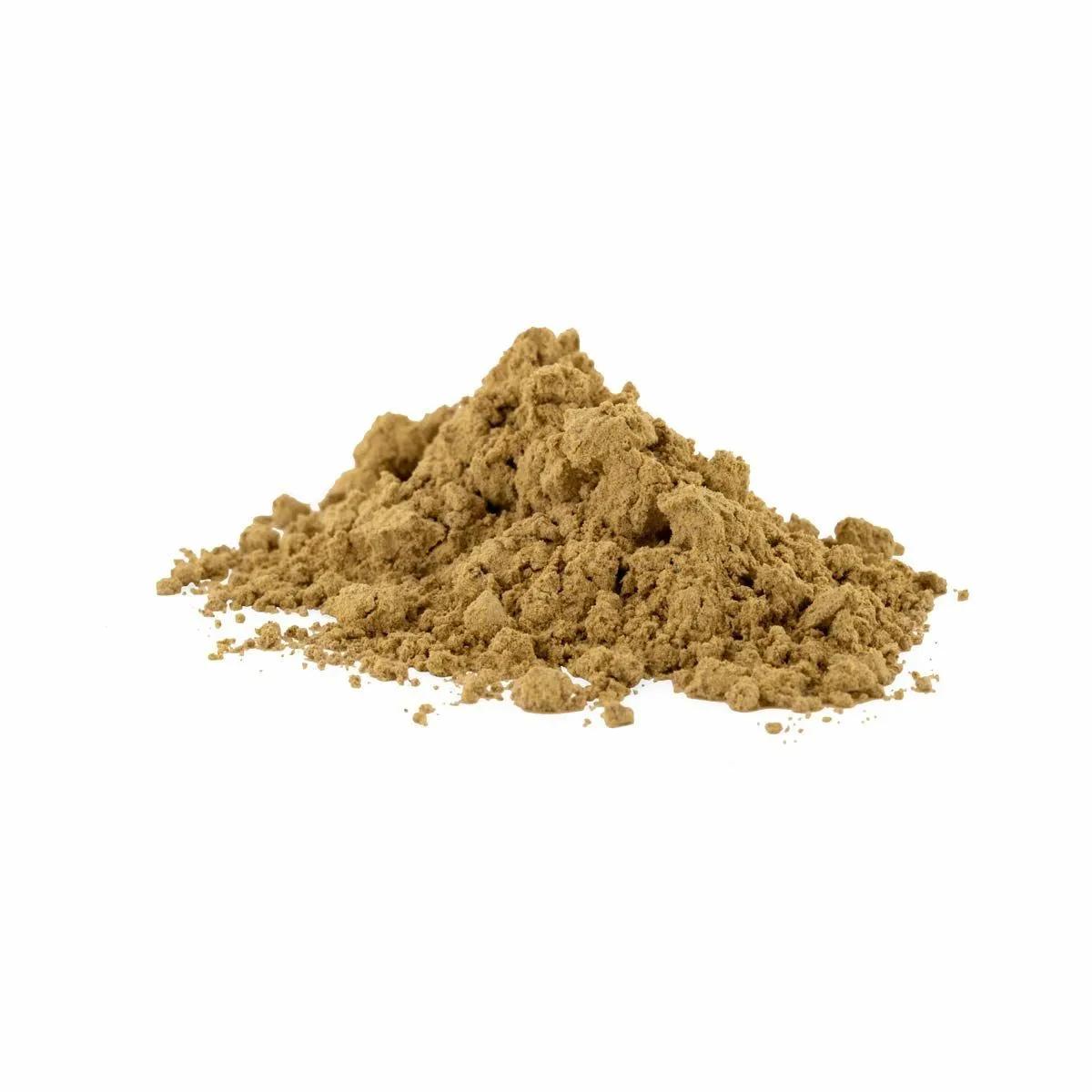
Here's the honest bit. Triphala powder tastes like something that's good for you — which is to say, it's not pleasant. The flavour is a collision of sour, bitter, and astringent, with a faintly sweet aftertaste that arrives about three seconds too late to save you. The colour is a dusty olive-brown, and the smell is earthy and tannic, a bit like dried green tea leaves mixed with tamarind. You won't be sipping this for pleasure.
That said, it mixes into things better than you'd expect. In a banana smoothie, it's barely noticeable. Stirred into yoghurt with a bit of honey, it's actually fine. In plain water? You'll pull a face. We're not going to pretend otherwise. The one genuine limitation of Triphala powder versus capsules is palatability — if you're sensitive to bitter flavours, you'll need to get creative with how you take it. But the upside of powder over capsules is flexibility: you control the exact amount, and you can work it into food rather than swallowing pills.
| Spec | Value |
|---|---|
| Format | Fine powder |
| Ingredients | Amla, Bibhitaki, Haritaki (equal parts) |
| Certification | Organic |
| Origin | India (locally sourced fruits) |
| Composition | 100% dried fruits, no fillers or additives |
| Key nutrients | Vitamin C, polyphenols, tannins, saponins, amino acids |
| Shelf life | 24 months from date of manufacture |
| SKU | HE0080 |
The recommended serving is up to 3–5 grams per day. Clinical studies have used varying doses — research ranges from 2 to 4 grams taken twice daily for acute use, while studies on longer-term supplementation typically used 3–5 grams daily for periods of 3–6 months. Here's how to make it work in practice:
One practical tip: if you're new to Triphala, start at the lower end (2–3 grams) for the first week. Some people experience mild digestive adjustment — gas or loose stools — as the body gets used to the tannins and fibre. This typically settles within a few days. If it doesn't, scale back the dose.
We get asked this regularly: powder or capsules? Here's the honest breakdown.
| Factor | Triphala Powder | Triphala Capsules/Tablets |
|---|---|---|
| Dose flexibility | Full control — measure exactly what you want | Fixed dose per capsule (typically 500mg) |
| Taste | Sour, bitter, astringent — needs mixing | No taste (swallow whole) |
| Absorption | Powder dissolves faster, potentially quicker uptake | Capsule shell adds a small delay |
| Convenience | Requires measuring and mixing | Grab and go |
| Cost per gram | Typically lower | Typically higher due to encapsulation |
| Additives | None — pure powder | May contain capsule shell (cellulose/gelatin) |
If you want the best value and don't mind the taste, powder wins. If you travel a lot or genuinely can't stand the flavour even in a smoothie, capsules are the practical choice. Neither is wrong — it's about what you'll actually stick with daily.
Triphala pairs well with other Ayurvedic staples. If you're building a daily routine, Ashwagandha Powder makes a solid companion — different traditional use, same ease of mixing into morning smoothies. For digestive support, consider adding Psyllium Husk to your rotation alongside Triphala.
Most supplements do one thing. Triphala does several, at least according to the research. The combination of three fruits means you're getting a broader spectrum of plant compounds than any single-ingredient powder can offer — vitamin C from amla, tannins and gallic acid from all three fruits, plus saponins and amino acids. According to a review of three completed clinical trials, Triphala powder extract was evaluated against melanoma cell line-induced skin cancer in research settings (PMC, 2020). The antioxidant profile alone makes it worth considering.
We've carried Triphala at Azarius since well before it became a wellness-blog staple, and the customers who buy it tend to keep buying it. That's not marketing — that's just what we see in the reorder data. The 24-month shelf life means you can stock up without worrying about it going off, and because it's a simple dried-fruit powder with no extracts or concentrates, what you're getting is about as close to the traditional preparation as you can get without grinding the fruits yourself.
The honest limitation? Triphala isn't fast-acting. This isn't something you take once and feel a difference. The research that shows meaningful results typically involves daily use over weeks to months. If you're looking for instant results, you'll be disappointed. If you're looking for a well-researched, traditional preparation to add to a consistent daily routine, this is one of the best options in the Ayurvedic category.
Sour and bitter, with an astringent edge and a faint sweetness at the tail end. Most people find it unpleasant in plain water. Mixing it into a fruit smoothie, yoghurt, or warm water with honey makes it much more manageable.
The manufacturer recommends up to 3–5 grams daily. Clinical studies have used doses ranging from 2 to 4 grams twice daily for specific purposes. Starting at the lower end (2–3 grams) and adjusting based on how your body responds is a sensible approach.
Some people experience mild gas, stomach cramps, or loose stools, especially in the first few days. This is typically a digestive adjustment to the tannins and fibre content. Reducing the dose usually resolves it. Do not exceed the recommended daily amount.
Research suggests Triphala is safe for daily use at recommended doses. Studies have examined supplementation periods of 3–6 months. A safety study confirmed a favourable toxicity profile in animal models at standard doses (PMC, 2022). Pregnant or breastfeeding individuals should consult a doctor first.
This product is whole dried fruit powder — all three fruits ground up with nothing removed or concentrated. Extracts use solvents to isolate specific compounds, resulting in a more concentrated but narrower product. Powder gives you the full spectrum of plant compounds as found in the traditional Ayurvedic preparation.
Triphala is generally well-tolerated alongside other supplements. However, because research suggests it may influence blood sugar levels and digestive enzyme activity, consult your doctor if you're taking medication for diabetes or digestive conditions.
Keep it in a sealed container in a cool, dark, dry place. Moisture causes clumping and can degrade the active compounds. Stored properly, it has a shelf life of 24 months from the date of manufacture.
Last updated: April 2026
Medical disclaimer. This content is for informational purposes only and does not constitute medical advice. Consult a qualified healthcare provider before use of any substance.