Digestion
by Holy Flavour
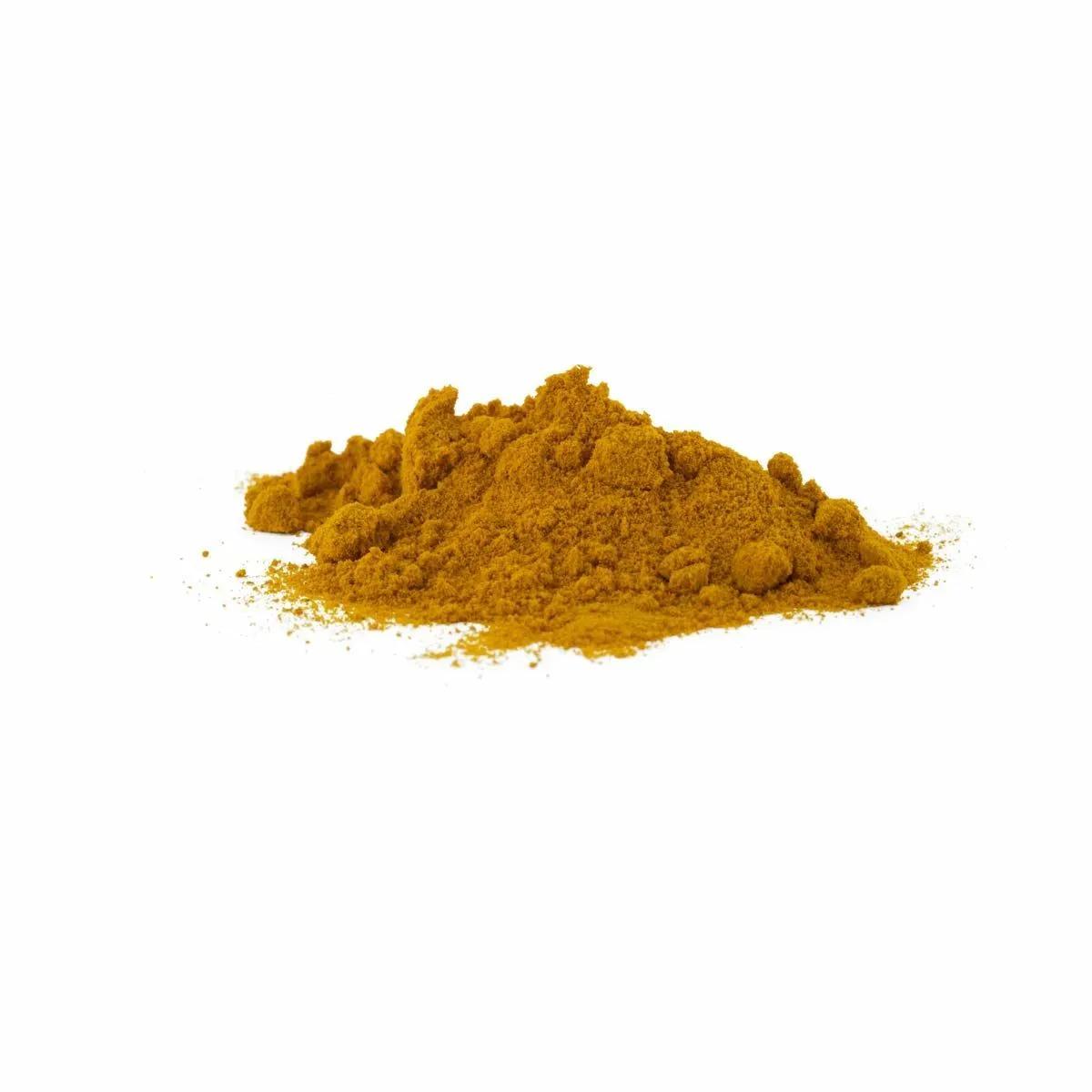
Organic turmeric powder is a finely ground spice made from steam-sterilised Curcuma longa rhizomes, sourced directly from farms in India. Turmeric has been a cornerstone of traditional Ayurvedic practice for thousands of years — not just for its warm, earthy flavour in curries, but for the bright yellow compound at its core: curcumin. According to a review in the journal Nutrients, curcumin has been the subject of numerous preclinical and clinical studies demonstrating safe and varied biological activity (Hewlings & Kalman, 2017). This is pure, certified organic turmeric powder — nothing added, nothing removed.
| Specification | Detail |
|---|---|
| Botanical name | Curcuma longa |
| Plant part | Rhizome (root) |
| Form | Fine powder |
| Certification | Organic |
| Processing | Steam sterilised |
| Origin | India |
| Active compound | Curcumin |
| Shelf life | 24 months from manufacture |
| SKU | HE0067 |
Curcumin absorption jumps dramatically when paired with piperine from black pepper — pick up whole black peppercorns or ground black pepper alongside this turmeric. If you're building out a daily wellness routine, organic ginger powder makes another solid companion: the two have been used together in Ayurvedic preparations for centuries.
Turmeric is one of those ingredients that earns its reputation honestly. The rhizome has been used in Indian cooking and traditional Ayurvedic practice (where it's called haridra) for well over 4,000 years. The compound responsible for that unmistakable golden-yellow colour is curcumin, and it's curcumin that has attracted serious scientific attention over the past few decades.
According to a 2023 review in Frontiers in Pharmacology, numerous preclinical and clinical studies have demonstrated that curcumin is safe and exhibits varied biological activity (Kunnumakkara et al., 2023). A separate review in the International Journal of Molecular Sciences found that curcumin has significant anti-inflammatory effects across a large number of preclinical and clinical research settings (Peng et al., 2021). And according to a review published via the National Center for Biotechnology Information, traditional knowledge of turmeric's properties in India and other Eastern countries has been increasingly validated by modern research (Prasad & Aggarwal, 2011).
Here's the honest limitation though: curcumin on its own has poor bioavailability. Your body doesn't absorb it well without help. The classic fix — and one backed by research — is to take turmeric together with black pepper. Piperine, the active compound in black pepper, can increase curcumin absorption by up to 2,000%. A pinch of pepper in your turmeric tea or golden milk isn't optional if you're after more than just flavour.
Curcumin is one of the most studied natural compounds in the world, and the research base is genuinely substantial — not the usual "one mouse study" situation.
According to a clinical review published in PMC, clinical studies have confirmed positive clinical efficacy of turmeric in several health contexts, including randomised double-blinded placebo-controlled trials (Curcuma longa review, 2024). Research published in BMJ Open examined therapeutic effects of turmeric and curcumin extracts, finding observed benefits across multiple trial designs (Daily et al., 2021). And according to Healthline's evidence-based review, a study on people with osteoarthritis found that curcumin showed measurable effects on joint comfort markers (Healthline, 2024).
The research is promising. It's also worth being straight with you: most studies use concentrated curcumin extracts at specific doses, not turmeric powder as a cooking spice. You'd need quite a lot of powder to match clinical trial concentrations. That said, regular dietary use of turmeric has been a feature of Indian cuisine for millennia, and population-level research on traditional turmeric-consuming cultures continues to generate interest. Clinical studies have typically used doses of 500–2,000 mg of turmeric daily, with some phase I and II trials demonstrating safety at up to 8 g/day of curcumin (Hewlings & Kalman, 2017).
We've stocked turmeric powder since the early days of the Azarius herbshop, and it remains one of our most consistently reordered products. Customers use it in everything from golden milk lattes to smoothies to savoury dishes. The colour is vivid — genuinely deep gold, the kind that stains your fingers and your chopping board if you're not careful. The aroma is warm, slightly bitter, and distinctly earthy. If you've only ever used the dusty stuff from a supermarket spice rack, the difference in freshness is noticeable the moment you open the bag.
One thing we always mention: turmeric stains everything. Countertops, clothes, mugs, your favourite white t-shirt. It's not a flaw — it's proof of the curcumin content. But fair warning. Keep a dedicated spoon for it and wipe spills immediately.
| Preparation Method | Suggested Amount | Key Tip |
|---|---|---|
| Golden milk | 1 teaspoon | Add black pepper and a fat source |
| Tea / infusion | 1/2–1 teaspoon | Steep 5–10 minutes, add pepper |
| Cooking (per serving) | 1/2 teaspoon | Add early in cooking for even colour |
| Smoothie | 1/2 teaspoon | Pair with ginger and tropical fruit |
If you're weighing up turmeric powder against standardised curcumin capsules, here's the honest breakdown. Capsules deliver a concentrated, measured dose of curcumin — typically 500–1,000 mg per capsule — with consistent bioavailability, especially when formulated with piperine or lipid carriers. They're the better choice if you're specifically interested in matching clinical study doses.
Turmeric powder, on the other hand, gives you the full rhizome in ground form: curcumin plus curcuminoids, volatile oils, fibre, and the flavour profile that makes it a kitchen staple. You won't get the same concentrated curcumin per gram, but you get the complete botanical in a form that's been used traditionally for thousands of years. For daily cooking and golden milk, powder is the best organic turmeric option for regular dietary use. For targeted supplementation at research-level doses, capsules make more sense. We carry both — pick what fits your routine.
Raw turmeric powder typically contains around 2–5% curcumin by weight. That means 1 teaspoon (roughly 3g) provides approximately 60–150 mg of curcumin. Clinical studies have typically used 500–2,000 mg of turmeric daily, so dietary use provides a lower but consistent intake.
Black pepper contains piperine, which research has shown can increase curcumin bioavailability by up to 2,000%. Without it, most curcumin passes through your digestive system without being absorbed. A small pinch of ground black pepper per serving is enough.
Turmeric is generally well tolerated as a food spice. However, consuming very high amounts of concentrated curcumin supplements may cause stomach upset. Phase I and II clinical trials have demonstrated safety at doses up to 8 g/day of curcumin, but sticking to typical culinary amounts is sensible for daily use.
Curcumin may interact with blood thinners, diabetes medications, and drugs that reduce stomach acid. If you're on prescription medication, speak with your doctor before adding concentrated turmeric supplements to your routine. Normal culinary use is generally not a concern.
Warm, earthy, and slightly bitter with a peppery undertone. The flavour is more intense than non-organic supermarket turmeric — you can smell the difference when you open the bag. It pairs well with ginger, cinnamon, coconut, and black pepper.
Keep it in a sealed container in a cool, dry, dark place away from moisture and direct sunlight. Stored properly, this organic turmeric powder has a shelf life of 24 months from the date of manufacture.
It's the best format for golden milk. Combine 1 teaspoon with warm milk, a pinch of black pepper, and a fat source like coconut oil. The fine grind dissolves well and gives a rich, deep golden colour that tells you the curcumin content is there.
Last updated: April 2026
Medical disclaimer. This content is for informational purposes only and does not constitute medical advice. Consult a qualified healthcare provider before use of any substance.