Drug tests
by EZ Test
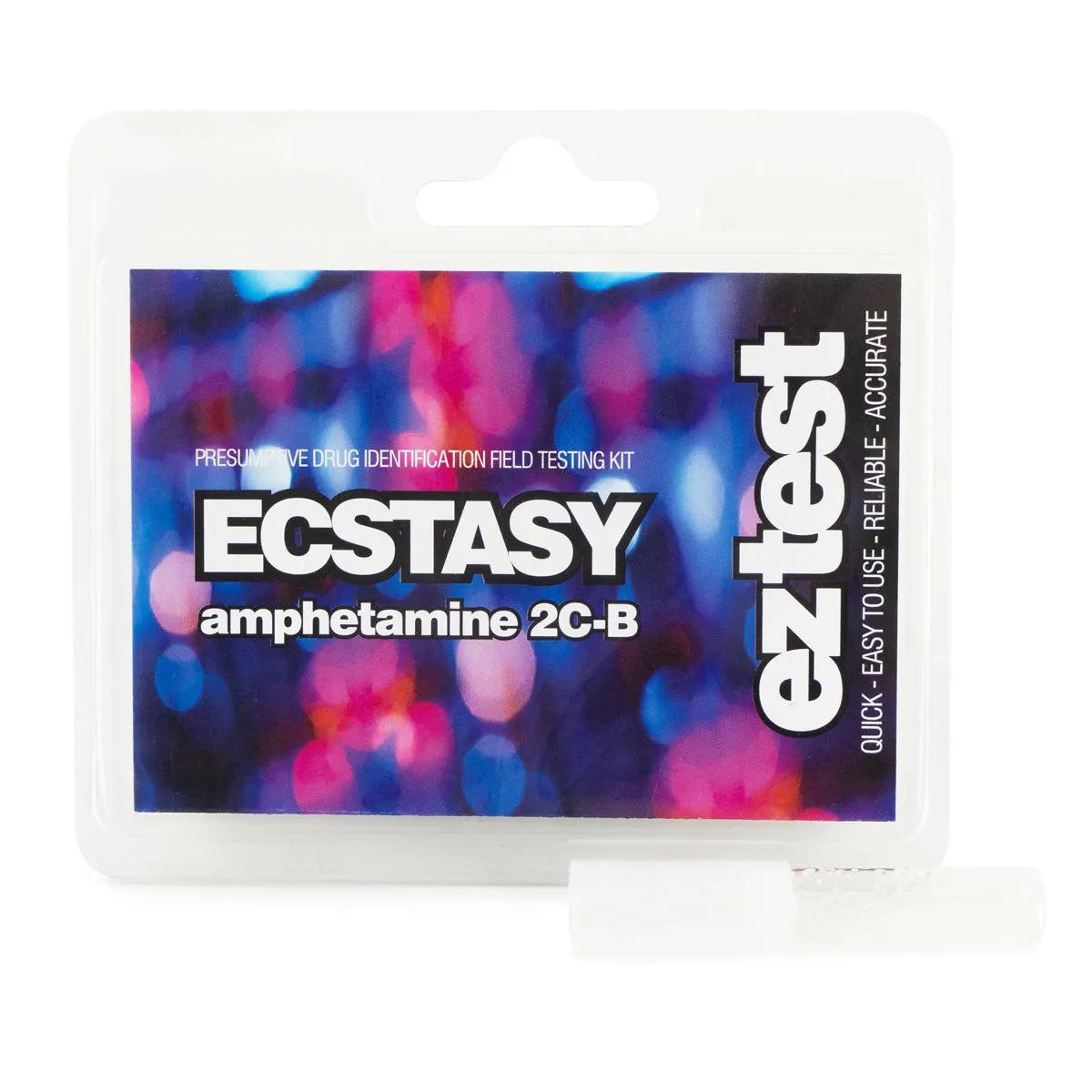
EZ Test Ecstasy is a single-use reagent test kit that tells you whether a pill or powder contains MDMA — and flags a range of other substances that commonly turn up in street pills. Drop a tiny scraping into the phial, give it a gentle shake, and read the colour change against the included chart. The whole process takes under 5 minutes, and it could save you a very rough night.
| Variant | SKU | Best for |
|---|---|---|
| 1 test | SM0183 | One-off check — single pill or batch sample |
| 5 tests | SM0184 | Sharing with mates or testing across a few batches |
| 10 tests | SM0373 | Stocking up for a season, group buys, or event organisers |
Each phial is a single use. If you're testing from the same batch, one test is enough. Different batches, different pills — test each one separately. We'd grab the 5-pack if you go out regularly; the per-test cost drops and you won't be caught without one when it matters.
This reagent test doesn't just screen for MDMA. It reacts to 10+ substance groups, each producing a distinct colour. That's the real value — street pills are rarely pure, and this kit helps you spot what else might be in there.
| Substance | Colour Reaction |
|---|---|
| MDMA (ecstasy) | Dark purple / black |
| DXM (dextromethorphan) | Grey / black |
| 2C-B / 2C-C / 2C-I | Yellow-green |
| DOB / DOI | Green-brown |
| Methylone | Yellow |
| Butylone | Yellow |
| Naphyrone | Orange |
| Methamphetamine | Orange-brown |
| Amphetamine | Orange-red |
| Opiates | Varies — check chart |
The included colour chart covers all of these and a few more edge cases. Keep in mind: a reagent test tells you what's present, not how much. It won't give you a purity percentage or an exact milligram count. For that, you'd need a lab service. But as a first-line check before you put anything in your body, this is the best tool you can keep in a jacket pocket.
Here's the blunt version: you don't know what's in a pressed pill or a baggie of powder until you test it. We've been selling drug testing kits since the early 2000s, and the stories customers tell us haven't changed — pills that turned out to be mostly caffeine, powders cut with research chemicals, tablets containing no MDMA whatsoever. The EZ Test Ecstasy kit exists because the gap between what you're told and what you're holding can be enormous.
According to a study on substance use assessment published in PMC, 21.3% of participants underreported use of at least one substance — meaning even people who think they know what they've taken can be wrong (PMC, 2024). If self-reporting is unreliable, imagine how unreliable a dealer's word is. A 30-second test removes the guesswork.
The honest limitation? A reagent test is presumptive, not definitive. It shows a colour reaction that indicates the likely presence of a substance. It won't tell you if your pill is 80mg MDMA or 200mg, and it can't detect every possible adulterant. Think of it as a traffic light: green means probably safe to proceed with caution, red means stop. It's not a full lab analysis — but it's the difference between going in blind and going in informed.
One thing we see people get wrong: testing in dim light. Colour differences between, say, dark purple (MDMA) and dark brown (amphetamine) can be subtle. Use your phone torch or step into decent lighting. It takes 10 extra seconds and makes the reading much clearer.
We started stocking EZ Test kits not long after opening the shop in 1999. Back then, most customers looked at us funny — "why would I test my stuff?" These days, testing is standard practice for anyone who takes harm reduction seriously, and we sell more test kits per month than we did per year in those early days.
The single most common result we hear about? Pills that test positive for MDMA but also show a secondary reaction — usually amphetamine or DXM. That's not unusual, and it's exactly the kind of thing you want to know before dosing. According to research published in PMC, MDMA administration enhances emotional empathy but diminishes recognition accuracy of negative facial expressions (PMC, 2024). That's the expected pharmacology of actual MDMA. If your pill contains something else entirely, the experience — and the risks — will be completely different.
We'd also point out: if you're testing powder rather than pills, be aware that the colour reaction can be slightly different in intensity. Powder dissolves faster and tends to give a quicker, more vivid colour change. Pills take a moment longer because the binder material dilutes the sample. Both are readable — just give pills an extra 30 seconds.
The EZ Test Ecstasy kit uses a Marquis-type reagent — the same chemical basis used by most field-testing services across Europe. It's the standard first-line test for MDMA identification. If you want to go further, you can pair it with other reagent tests (like the EZ Test Marquis or EZ Test Mandelin) to cross-reference results. Two different reagents giving consistent results is far more reliable than one alone.
Lab testing services (like those offered at some festivals or through postal services) give you exact composition and dosage. They're the gold standard. But they take days, sometimes weeks, and aren't always available when you need them. The EZ Test Ecstasy kit is what you use right now, on the spot, before you make a decision. The two approaches complement each other — they don't compete.
This is a testing product, not MDMA itself — but since you're testing for a reason, the research context matters. According to harm reduction guidance, a commonly referenced dose calculation is 50mg plus your body weight in kilograms (e.g., 120mg for a 70kg person). Clinical studies have observed that starting doses of 75–90mg are referenced for first-time contexts, with 120mg often cited as a ceiling for experienced individuals. These figures come from harm reduction literature, not from us — always cross-reference with trusted sources like DanceSafe or the Trimbos Institute.
According to research published in PMC, side effects associated with MDMA in clinical settings were largely transient and mild to moderate in severity (PMC, 2024). That's with pharmaceutical-grade MDMA in controlled conditions. Street pills are a different story entirely — which is precisely why testing matters.
| Specification | Detail |
|---|---|
| Product type | Single-use reagent drug test |
| Primary target substance | MDMA (ecstasy) |
| Additional substances detected | DXM, 2C-B/C/I, DOB, DOI, methylone, butylone, naphyrone, methamphetamine, amphetamine, opiates |
| Test time | 1–5 minutes |
| Sample size needed | Pinhead-sized scraping |
| Pack sizes | 1, 5, or 10 tests |
| Includes | Reagent phial(s), colour chart, instruction sheet |
| Storage | Cool, dark place — avoid direct sunlight |
| Shelf life | Check packaging — typically 12–18 months sealed |
For more thorough screening, pair the EZ Test Ecstasy with the EZ Test Marquis — running two different reagents on the same sample gives you a much more reliable picture. If you're testing multiple substance types (not just MDMA), the EZ Test Cocaine and EZ Test Ketamine kits round out your harm reduction toolkit.
No. Reagent tests are qualitative, not quantitative — they indicate the presence of a substance, not the amount. For exact milligram dosage, you'd need a laboratory analysis. The EZ Test tells you what's in there, not how much.
No reaction typically means the sample doesn't contain any of the substances this reagent detects. That's actually useful information — it means whatever you have, it's not MDMA. Don't take it.
A tiny scraping — genuinely pinhead-sized. You're not destroying the whole pill. Scrape a small amount from a corner or edge and drop it into the phial. The reagent only needs a trace to react.
No. Each phial is single-use. Once the inner ampoule is cracked and the reagent is released, it's spent. That's why the 5-pack and 10-pack exist — if you're testing multiple samples, you need one phial per test.
This reagent is not designed or validated for fentanyl detection. If fentanyl contamination is a concern, you'd need a dedicated fentanyl test strip. The EZ Test Ecstasy targets MDMA, amphetamines, cathinones, and the other substances listed on the colour chart.
Keep them sealed in a cool, dark place — a drawer or cupboard is fine. Avoid direct sunlight and high temperatures, which can degrade the reagent. Sealed phials typically last 12–18 months; check the date on the packaging.
The reagent is described as harmless by the manufacturer. It can stain skin and clothing, so handle with care, but it's not corrosive or toxic in the small quantities used. Wash your hands after use as a sensible precaution.
Last updated: April 2026


This product description was drafted with AI assistance and reviewed by Luke Sholl, Cannabinoids & smartshop specialist since 2011. Editorial oversight by Joshua Askew.
Medical disclaimer. This content is for informational purposes only and does not constitute medical advice. Consult a qualified healthcare provider before use of any substance.