Drug tests
by Dope or Nope
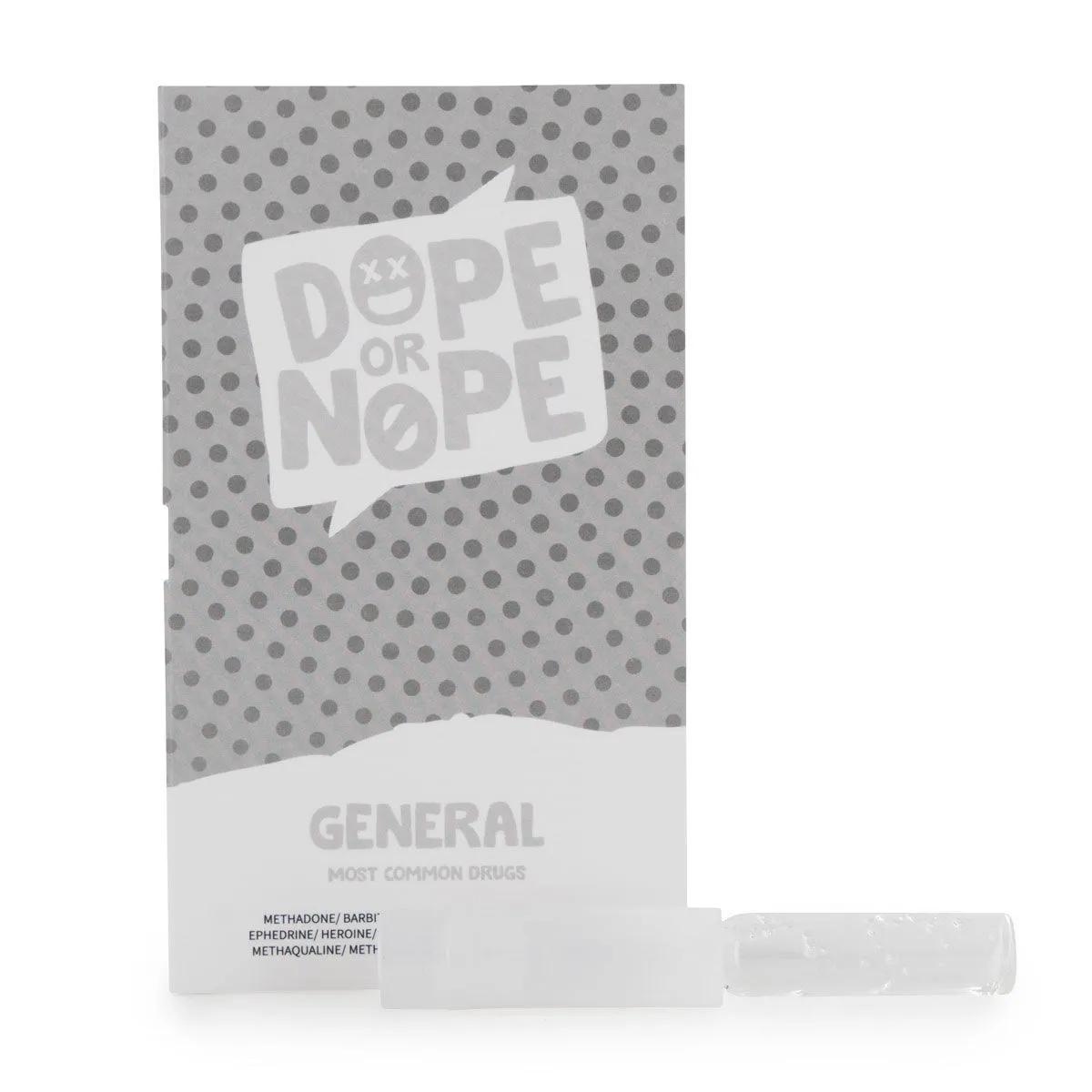
The Dope or Nope General Drug Test is a reagent-based home testing kit that identifies up to 11 common substances using a colour-coded reaction system. Drop your sample into the ampoule, give it a moment, and match the colour against the included chart. It won't replace a lab, but it gives you a solid first read on what you're actually dealing with — and that matters more than most people think.
This single reagent test covers 11 substances — a broad enough spread to catch the most commonly encountered drugs in recreational and unknown samples. Each substance produces a distinct colour reaction within a specific timeframe, so you're not just guessing. Here's the full list:
| Substance | Detection |
|---|---|
| MDMA (Ecstasy) | Yes — distinct colour reaction |
| Cocaine | Yes — distinct colour reaction |
| Amphetamine | Yes — distinct colour reaction |
| Methamphetamine | Yes — distinct colour reaction |
| Ketamine | Yes — distinct colour reaction |
| Heroin | Yes — distinct colour reaction |
| Methadone | Yes — distinct colour reaction |
| Oxycodone | Yes — distinct colour reaction |
| Mescaline | Yes — distinct colour reaction |
| Ephedrine | Yes — distinct colour reaction |
| Methylphenidate | Yes — distinct colour reaction |
That's 11 substances from a single ampoule. The test is also useful for flagging cross-contamination — if your sample contains more than one substance, the colour reaction may differ from the expected result, which is a red flag worth paying attention to.
Knowing what's actually in a sample before it goes anywhere near your body is basic common sense. We've been in this game since 1999, and one thing hasn't changed: what's on the bag doesn't always match what's inside it. According to research published in PMC, exposure to fentanyl-contaminated heroin has been linked to overdose incidents, with users noting that powder substances are particularly easy to adulterate. A separate PMC study on xylazine-related injuries highlights the growing presence of adulterants like "tranq dope" in street supplies, which can cause accelerated venous damage and serious skin wounds.
The point isn't to scare you. The point is that a 2-minute colour test can flag something that shouldn't be there. According to PMC research on poly-drug use, distinct morbidity and mortality consequences have been associated with unknowing consumption of mixed substances. A home drug test won't catch everything, but it catches a lot — and for a kit that costs less than a round of drinks, that's a reasonable trade-off.
We get asked about these kits constantly, especially around festival season. The most common scenario: someone has a sample they're unsure about and wants a quick sanity check. This kit handles that well. What it doesn't do is tell you purity levels or exact dosage — for that, you'd need a proper lab analysis. But as a first-line screening tool? It does the job. We'd rather you test and know than guess and hope.
The Dope or Nope General Drug Test uses a reagent that changes colour when it reacts with specific chemical compounds. Each of the 11 detectable substances produces its own colour within its own reaction time. The included guide chart maps every colour to a substance, so you compare and identify. Simple as that.
One honest limitation: if your sample produces no colour reaction at all after the full waiting period, it means the substance isn't on the chart. That doesn't mean it's safe — it means it's unidentified. In that case, the smart move is to bin it. An unknown substance with zero test data is not worth the gamble.
| Spec | Value |
|---|---|
| Brand | Dope or Nope |
| Test type | Reagent-based colour reaction |
| Substances detected | 11 |
| Uses per kit | 1 (single-use ampoule) |
| Results format | Colour-coded chart |
| Guide included | Yes — colour reference card |
| SKU | SM0332 |
| Sample required | Small amount of substance |
Running multiple tests? Grab a few extra Dope or Nope kits — each ampoule is single-use, so one test means one kit. If you want to go deeper on specific substances, Dope or Nope also produce targeted single-substance tests for MDMA, cocaine, and others. Pair this general test with a substance-specific kit for a more complete picture.
The whole process takes a few minutes. No lab equipment, no technical knowledge, no fuss. The ampoule is self-contained — you crack it, drop the sample in, and read the result. We'd recommend doing this in decent lighting so the colour comparison is accurate. A dim room or coloured lighting can throw off your reading.
Straight talk: this is a screening tool, not a laboratory instrument. It tells you what substance is likely present in your sample based on a chemical colour reaction. It does not measure purity, concentration, or dosage. It won't tell you if your MDMA is 40% or 80% pure — just that MDMA is present.
It also won't detect every possible adulterant. According to PMC research on methamphetamine, long-term effects of certain substances include psychosis, memory loss, aggressive behaviour, severe dental problems, and weight loss — consequences that are compounded when substances are unknowingly contaminated. A reagent test catches the big 11 substances, but novel research chemicals or rare adulterants may slip through without a colour change.
That said, catching even one unexpected substance in a sample is worth the price of the kit. If your "cocaine" turns the colour of ketamine, that's information you absolutely want before making any decisions. The test is a first filter — not the final word.
The colour reactions are reliable for identifying the 11 listed substances when used correctly in good lighting. It's a reagent screening tool, not a lab-grade analysis — treat it as a strong indicator, not a guarantee. For higher certainty, pair it with a substance-specific test.
No. Fentanyl is not on the 11-substance colour chart for this general test. If fentanyl detection is a concern, you'll need a dedicated fentanyl test strip, which uses a different detection method entirely.
This isn't a urine or blood test — it tests the substance itself, not your body. As long as you have a physical sample of the substance, you can test it. There's no detection window to worry about.
The reagent is corrosive. Avoid skin and eye contact, and don't inhale fumes. If it spills, rinse with water immediately. Use the kit on a surface you don't mind staining, because the reagent can discolour fabric and countertops permanently.
No. Each ampoule is single-use. Once the reagent has reacted with a sample, it's spent. You'll need a fresh kit for every substance you want to test.
No colour reaction means the substance isn't one of the 11 on the chart. It could be inert filler, or it could be something the test simply doesn't cover. The safest response is to discard the sample — an unidentified substance carries unknown risks.
Anyone who wants a quick first check on an unknown or uncertain sample. Festival-goers, harm-reduction volunteers, and anyone who'd rather spend 2 minutes testing than take a blind risk. It's a practical tool, not a luxury.
Last updated: April 2026
Medical disclaimer. This content is for informational purposes only and does not constitute medical advice. Consult a qualified healthcare provider before use of any substance.