Incense & aromatherapy
We'll only email you about this product — no marketing.
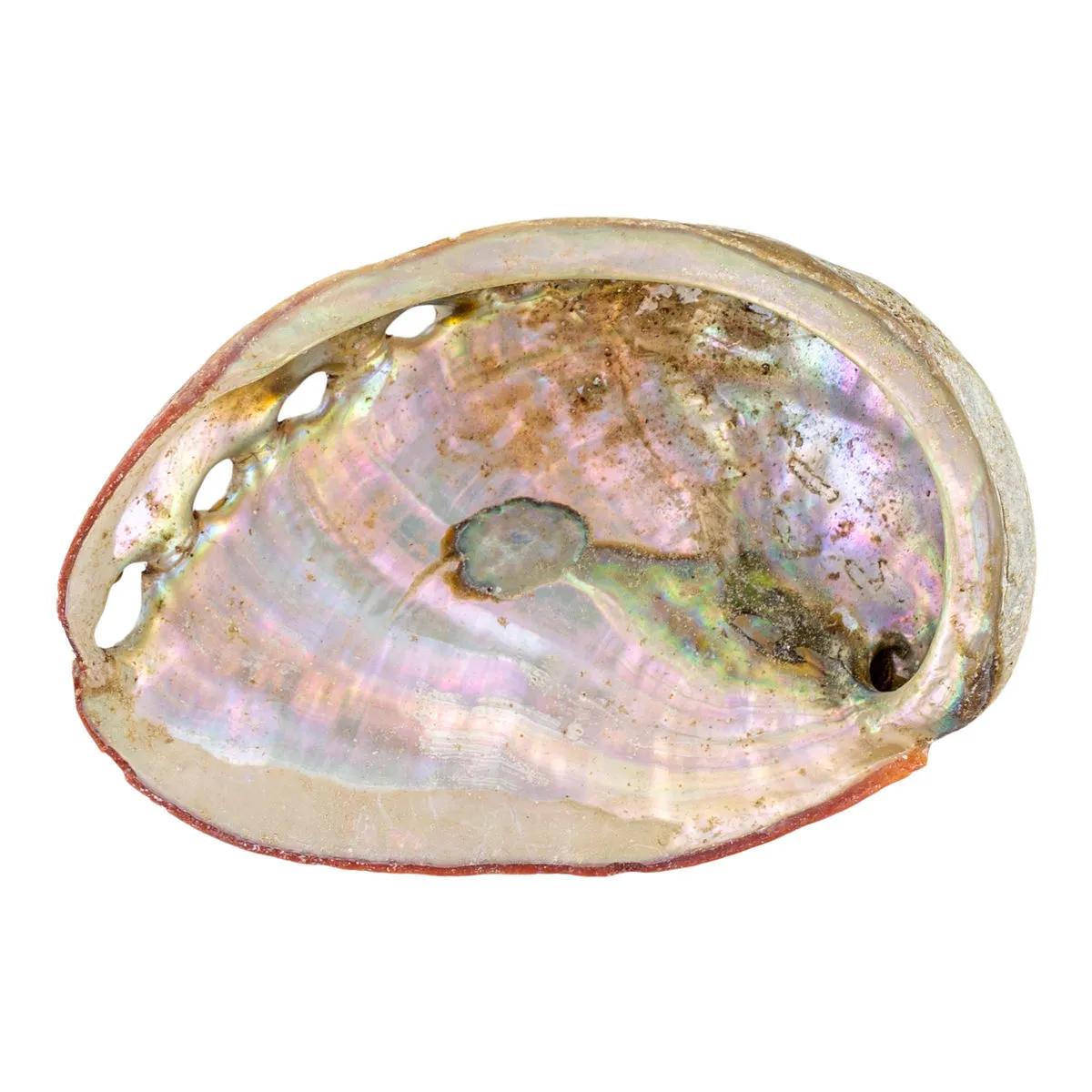
An abalone shell is a naturally iridescent sea shell that works as a heat-resistant dish for burning incense, smudging sage, or simply sitting on your shelf looking gorgeous. These shells are sourced as a byproduct of organic abalone farming in Chile — no poaching, no environmental damage, just a stunning piece of ocean brought to your living room. Each one measures roughly 70 to 90mm across and features its own unique pattern of blue, grey, and green hues that shift in the light like a miniature oil painting.
You could burn your incense stick in a coffee mug. You could rest your smudge bundle on a dinner plate. But neither of those catches ash while looking like it was carved from the inside of a wave. The natural nacre — that shimmering mother-of-pearl layer — turns every abalone shell into something genuinely beautiful, and no two are identical. The colour shifts between deep ocean blue, silvery grey, and mossy green depending on the angle and the light.
These particular shells come from organic farms in Chile, which matters more than you might think. Wild abalone populations have been hammered by overharvesting worldwide. By using shells that are a byproduct of sustainable farming operations, you get the same stunning natural product without contributing to that problem. The shells have been cleaned but deliberately left close to their natural state — you might find a grain of sand tucked in a fold, or catch a faint whiff of the sea when you first unwrap it. That's not a defect; that's the real thing.
One honest note: because these are natural shells, expect some irregularities. Small chips along the outer edge, slight asymmetry, the occasional rough patch — all normal. If you want factory-perfect symmetry, you want a ceramic dish. If you want something with character that the ocean actually made, this is it.
| Specification | Detail |
|---|---|
| Size | Approximately 70–90mm |
| Origin | Chile (organic farming byproduct) |
| Colour | Blue, grey, and green iridescent nacre |
| Material | Natural abalone shell (Haliotidae family) |
| Cleaning | Lightly cleaned, natural essence preserved |
| SKU | SM0608 |
| Use | Incense holder, smudge dish, ornamental display |
| Heat-resistant | Yes — natural shell tolerates incense and smouldering sage |
Pair your abalone shell with a bundle of white sage for a complete smudging setup — the shell catches falling embers and ash while the sage does its thing. If you're more into daily incense, grab a pack of Palo Santo sticks; they sit neatly in the shell's natural curve and the woody, sweet smoke complements the ocean aesthetic nicely.
We've sold incense accessories since 1999, and the abalone shell remains one of those items people buy once and keep for years. The reason is simple: it does the job and it looks better doing it than anything ceramic or metal. The concave shape naturally cradles a smouldering sage bundle or incense cone, and the shell itself can handle the heat without cracking or discolouring. After a few uses, the interior develops a light patina of ash that actually enhances the iridescence underneath — it ages well.
The 70–90mm size is the sweet spot for most uses. Large enough to hold a standard sage bundle or catch ash from a stick of incense, small enough to sit on a windowsill, altar, or bedside table without dominating the space. If you're using it for smudging, you can comfortably hold it in one hand while directing smoke with the other. The natural weight — it's not heavy, but it has substance — keeps it stable on flat surfaces.
The one thing to watch: if you're burning incense cones directly on the shell, place a thin layer of sand in the bottom first. This adds a buffer between the hottest point of the cone and the shell surface. It's not strictly necessary — the shell handles heat fine — but it makes cleanup easier and extends the life of that beautiful nacre finish. A pinch of sand from the beach, or even some fine salt, does the trick.
Pick one of these up and the first thing you notice is the weight — not heavy, but reassuringly solid for its size. Run your thumb across the interior and you feel that glassy smoothness of the nacre, interrupted here and there by natural ridges where the shell grew in layers over time. The outside is rougher, more textured, with a chalky grey-brown surface that contrasts sharply with the iridescent interior. Hold it under a lamp and tilt it slowly — the colours shift from deep teal to silvery blue to a warm green, like looking into shallow tropical water.
The smell is subtle but present when the shell is new: a clean, mineral saltiness, like standing on a rocky coast. It fades after a few days on the shelf, especially once you start burning incense in it. After that, the shell takes on whatever scent you give it — sage, sandalwood, Palo Santo — layered over that faint ocean base note. It's a small thing, but it's one of those details that makes a natural product feel different from a mass-produced alternative.
Abalone shells have been used in smudging ceremonies by indigenous cultures across the Americas for centuries, representing the water element alongside the fire of the burning herbs, the earth of the herbs themselves, and the air that carries the smoke. Even outside of any spiritual practice, there's something grounding about using a natural object that came from the ocean floor. It connects the ritual to something real.
In traditional Chinese medicine, abalone shell (known as shi jue ming) has a long history of use. According to traditional practitioners, the typical preparation involves 15 to 30 grams of crushed shell decocted with water — though that's the whole shell ground to powder, not these decorative specimens. Research into abalone-derived compounds is ongoing: according to a 2024 study published in PMC, abalone shell-derived mesoporous hydroxyapatite showed that "the long-term release of Mg and Ca elements is conducive to promoting bone repair" in experimental settings. Separately, according to research on abalone viscera published in PMC (2024), the byproducts demonstrated "antioxidant, anti-inflammatory, anti-cancer, antimicrobial, and anti-hypertensive activities." These findings relate to processed abalone compounds in laboratory conditions — your decorative shell is for burning sage in, not for medical use — but they do show why this animal has attracted scientific interest beyond the dinner plate.
Primarily as a heat-resistant dish for burning incense, smudging sage, or holding Palo Santo. The concave shape catches ash and embers naturally. Many people also use them as decorative dishes for jewellery, crystals, or small items — the iridescent nacre interior makes them genuinely beautiful display pieces even when not in use.
Yes. Natural abalone shell handles the heat from smouldering sage, incense cones, and Palo Santo without cracking. For extra protection and easier cleanup, add a thin layer of sand to the bottom before placing a hot cone directly on the surface.
Because it grew in the ocean, not in a factory. Small chips, asymmetry, and rough patches along the outer edge are completely normal for natural shells. These irregularities are part of what makes each shell one of a kind — the iridescent interior is where the beauty lives.
After burning incense, let it cool fully, tip out the ash, and wipe the interior with a damp cloth. Avoid harsh chemicals, bleach, or abrasive scrubbers — they strip the nacre layer that gives the shell its iridescent colour. A gentle rinse under lukewarm water is all it needs.
Yes. They're a byproduct of organic abalone farming in Chile — the shells would otherwise go to waste. No wild abalone are harvested for these products, and no poaching or environmentally damaging practices are involved. You get a natural product without the ecological guilt.
Each shell measures approximately 70 to 90mm across. That's large enough to hold a standard sage bundle or incense cone comfortably, and small enough to fit on a windowsill, altar, or bedside table. Exact size varies because these are natural, not manufactured.
Very. Natural abalone shell is durable and stands up to regular use with incense and sage. With basic care — no harsh chemicals, no dropping it on tiles — a single shell lasts years. The nacre interior actually develops a pleasant patina over time that many people prefer to the fresh look.
You can, though keep in mind that standing water and soap residue will eventually dull the nacre finish. If you use it for soap, rinse and dry it regularly. For preserving that iridescent shimmer long-term, incense and dry display are kinder to the shell.
Last updated: April 2026
Medical disclaimer. This content is for informational purposes only and does not constitute medical advice. Consult a qualified healthcare provider before use of any substance.