Incense & aromatherapy
by Satya
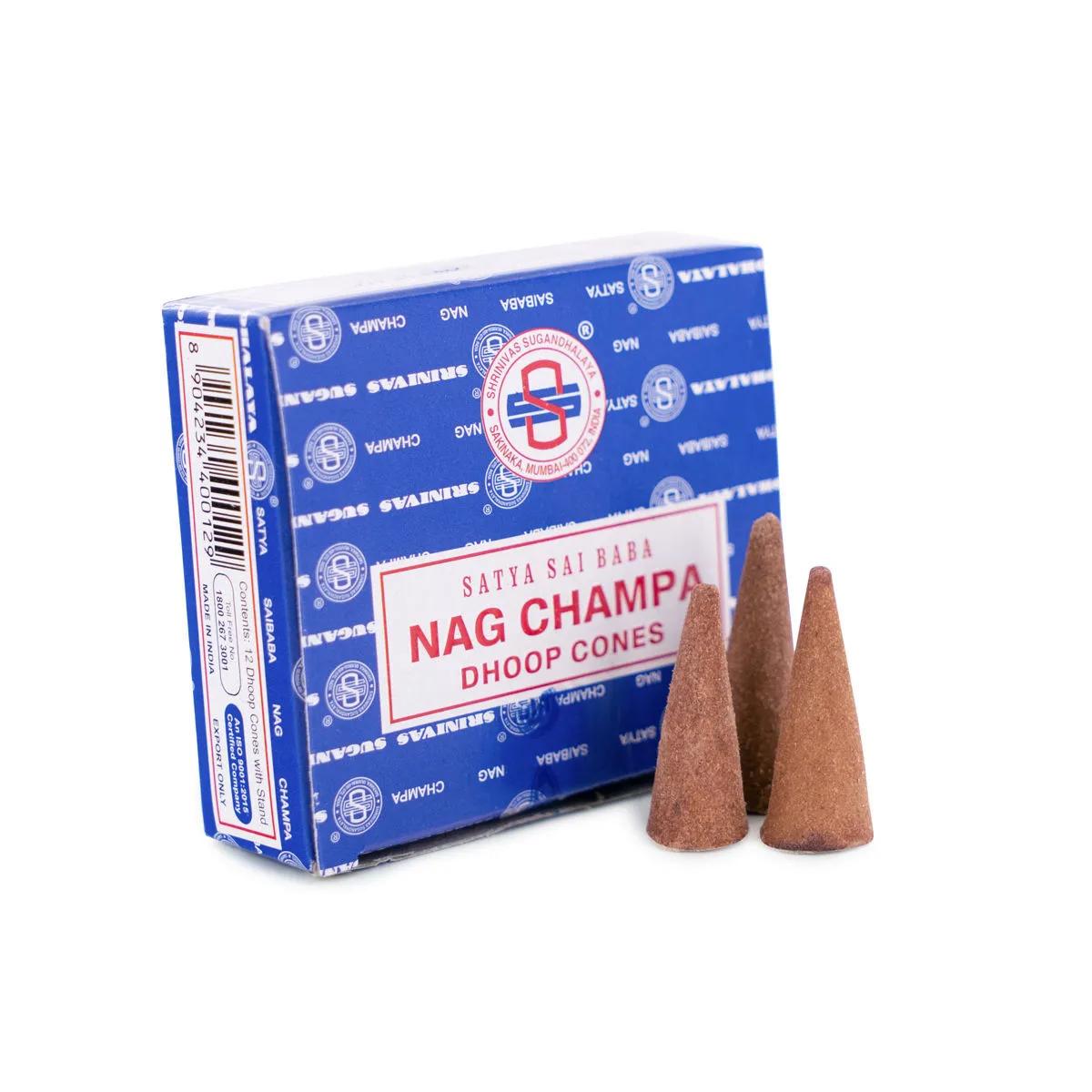
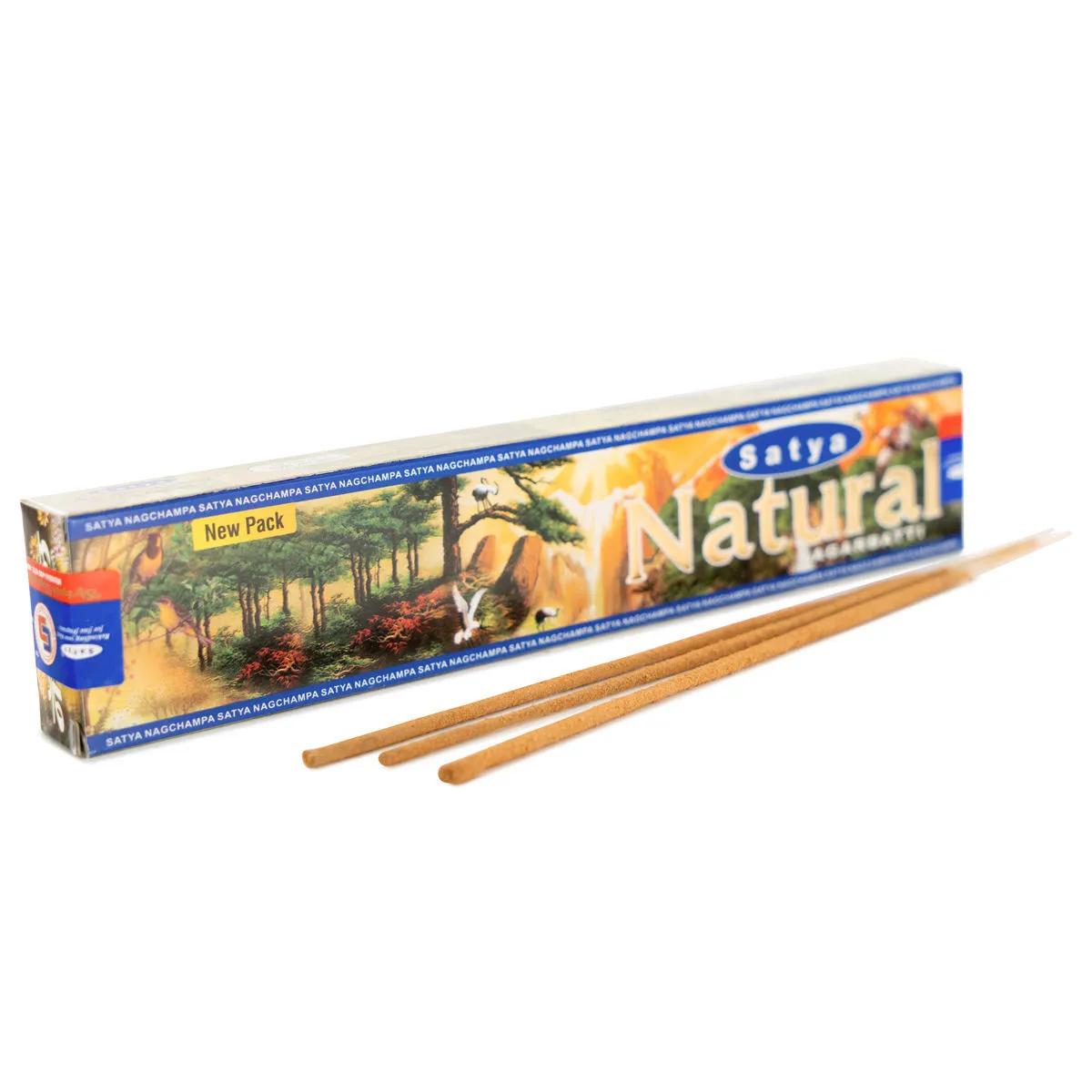
Natural Nag Champa incense is a hand-rolled sandalwood-based incense that fills a room with that unmistakable warm, resinous, slightly sweet scent associated with temples, meditation spaces, and anywhere people slow down on purpose. Each pack contains 15 grams spread across 12 sticks — enough to set the mood for a solid couple of weeks if you're burning one at a time.
| Spec | Value |
|---|---|
| Scent profile | Nag Champa (sandalwood base) |
| Content | 15 grams / 12 sticks |
| Production | Hand-rolled |
| Stick consistency | Varies — thickness and burn time differ stick to stick |
| SKU | SM0265 |
| Category | Incense and Aromatherapy |
Pair these with an incense holder to catch the ash properly — nothing ruins the vibe like grey dust all over your windowsill. If you're after a different scent profile for rotation, check out our other natural incense varieties in the Incense and Aromatherapy section.
Nag Champa is probably the most recognised incense scent on the planet. That warm, woody, slightly floral sandalwood character has been a fixture in meditation rooms, yoga studios, and living rooms for decades — and for good reason. It changes a room. Not in some abstract, hand-wavy way, but in the most literal sense: the air smells different, you breathe differently, and whatever you were stressed about five minutes ago takes a back seat.
These particular sticks are hand-rolled, which is worth mentioning because it means no two are exactly alike. Some will be slightly thicker, some thinner, and burn times will vary from stick to stick. That's not a flaw — it's the nature of handmade incense. Machine-pressed sticks burn more uniformly, but they also tend to smell more uniform, which usually means "flatter." The slight inconsistency here is the trade-off for a richer, more natural scent. We've burned enough incense behind the counter since 1999 to tell you: the hand-rolled stuff just smells better.
The honest limitation? At 12 sticks per pack, this is a taster rather than a bulk supply. If you're burning daily, you'll go through a pack in under two weeks. Good for trying the scent before committing to a larger order, or for keeping one pack at home and one at the office (or wherever you need the air to smell less like a Tuesday).
Nag Champa's scent is built on a sandalwood foundation — creamy, warm, and woody — with a slightly sweet, almost powdery floral top note that comes from the champaca flower (Magnolia champaca) traditionally used in the blend. The overall effect is earthy without being heavy, sweet without being cloying. If you've ever walked into a yoga studio or a vintage record shop and thought "that smells brilliant," there's a solid chance it was Nag Champa.
The smoke itself is soft and grey-blue, not acrid. When the stick is done, the scent lingers in fabric and curtains for a good hour or two. One stick is enough for a medium-sized room — you don't need to burn three at once unless you're genuinely trying to hotbox your flat with sandalwood.
We'd be doing you a disservice if we didn't mention this: incense smoke is still smoke, and smoke contains particulate matter. According to a review published in PMC, "smoke, regardless of sources, is well-believed to exert deleterious effects on the respiratory system upon inhalation" (PMC, 2021). A separate study noted that "long term use of incense is associated with an increased risk of squamous cell carcinoma of the respiratory tract" (PMC, 2008).
What does that mean in practice? Burn in a ventilated room. Crack a window. Don't sit directly in the smoke plume for hours on end, and don't burn incense around infants or pregnant people — research published in PubMed suggested that "household incense burning exposure was associated with delay in gross motor neurodevelopmental milestones" in infants (PubMed, 2018), and a separate study found that "prenatal incense burning was associated with lower birth weight for boys and smaller head circumference for boys and girls" (PMC, 2016). According to Healthline, "recent research reveals" potential health concerns with regular incense use (Healthline).
None of this means you should panic about the occasional stick. It means: ventilate, don't overdo it, and be mindful of who else is in the room. Common sense, really.
| Incense type | Scent character | Best for |
|---|---|---|
| Nag Champa (sandalwood base) | Warm, creamy, sweet-floral | Meditation, general ambience, masking stale air |
| Palo Santo | Bright, citrusy, woody | Quick cleansing burn, lighter scent preference |
| White Sage | Herbal, sharp, camphor-like | Smudging rituals, strong scent reset |
| Sandalwood (pure) | Creamy, woody, less floral than Nag Champa | Subtle background scent, smaller rooms |
If you want something less smoky altogether, consider resin incense on a charcoal disc — it gives you more control over intensity. But for sheer convenience, a Nag Champa stick is hard to beat: light it, forget about it, enjoy the room for the next half hour.
Traditionally, Nag Champa blends use sandalwood as the primary base, combined with champaca flower (Magnolia champaca) and a resin or honey binder. The exact recipe varies by manufacturer, but the sandalwood-champaca combination is what gives Nag Champa its distinctive warm, sweet-floral character.
Roughly 25–45 minutes per stick. Because these are hand-rolled, thickness varies from stick to stick, so burn times aren't identical. Thicker sticks burn slower, thinner ones faster. One stick is enough for a medium-sized room.
Burn it in a ventilated space — open a window or door. Like any combustible incense, the smoke contains particulate matter (PM2.5). Research suggests long-term heavy use in unventilated spaces may affect respiratory health. Occasional use with decent airflow is a different story. Just don't hot-box a sealed room.
Birds are especially sensitive to airborne particulates and should never be in the same room as burning incense. Cats and dogs are more tolerant, but keep the room ventilated and watch for signs of irritation like sneezing or leaving the room. If your pet seems bothered, put the stick out.
They're hand-rolled. No two sticks come out exactly the same, which affects both thickness and burn time. This is normal for artisanal incense and actually a sign that you're getting handmade product rather than machine-extruded sticks.
Keep the sticks in their original packaging, away from moisture and direct sunlight. A cool, dry drawer works fine. Incense doesn't expire in the traditional sense, but the fragrance oils will fade over time — fresher sticks smell stronger.
Plain sandalwood incense is just that — sandalwood. Nag Champa adds champaca flower and typically a resin or honey binder, which gives it that distinctive sweet, slightly powdery floral layer on top of the woody base. It's richer and more complex than straight sandalwood.
Last updated: April 2026
Medical disclaimer. This content is for informational purposes only and does not constitute medical advice. Consult a qualified healthcare provider before use of any substance.