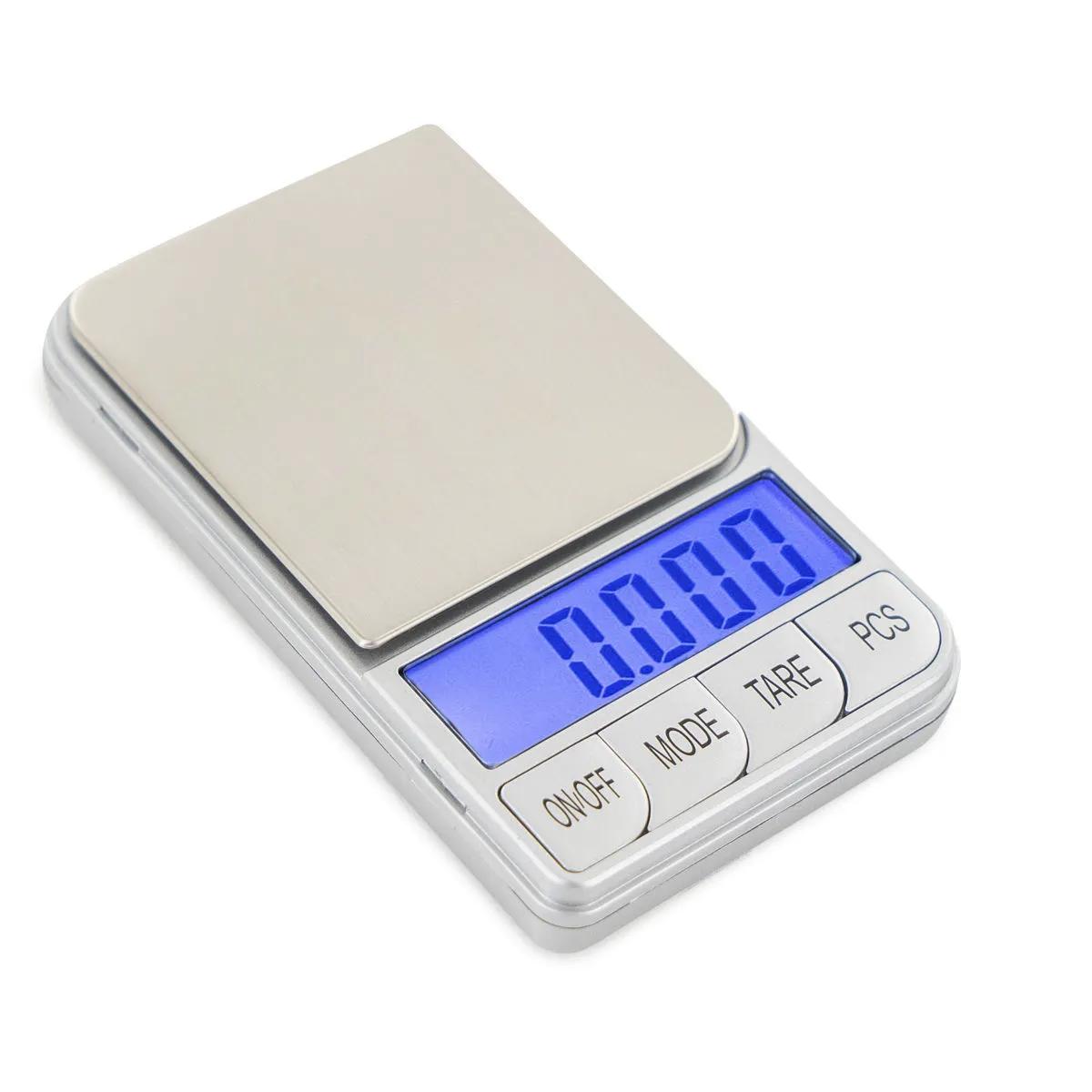
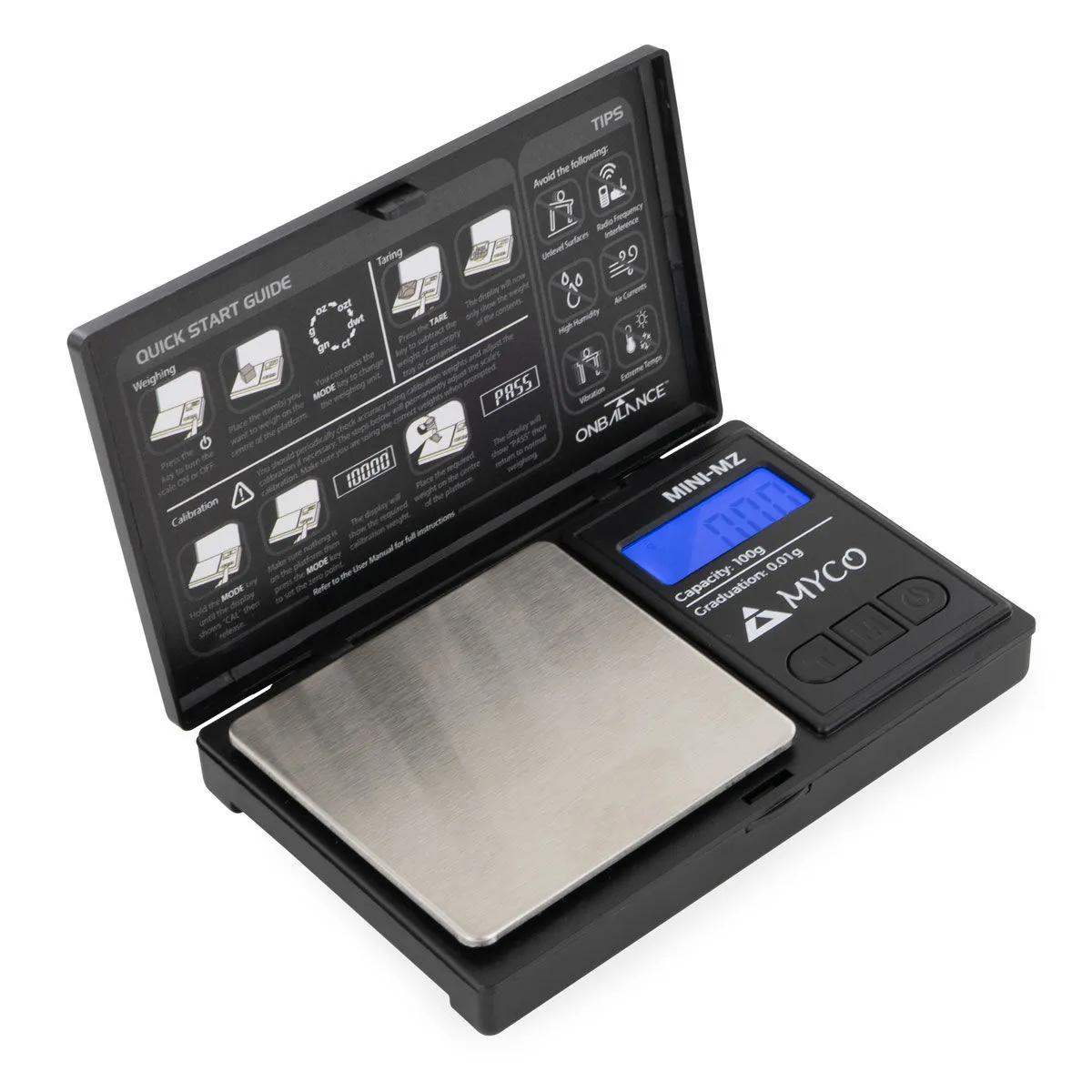
The On Balance MMZ-100 scale is a pocket-sized digital scale that reads to 0.01g across a 100g capacity — two decimal places of precision in something you can slide into a drawer. We've been selling pocket scales at Azarius since the late '90s, and the MMZ-100 is one of the few sub-€30 units we'd actually keep on our own desk.
Why the On Balance MMZ-100 scale earns desk space
Because it's the rare pocket scale that actually holds its calibration past the honeymoon phase. The On Balance MMZ-100 scale delivers 0.01g resolution with a 100g ceiling, auto-calibration built in, and a lifetime (or 10-year, whichever comes first) warranty from On Balance — a UK brand that's been making weighing kit since 2004.
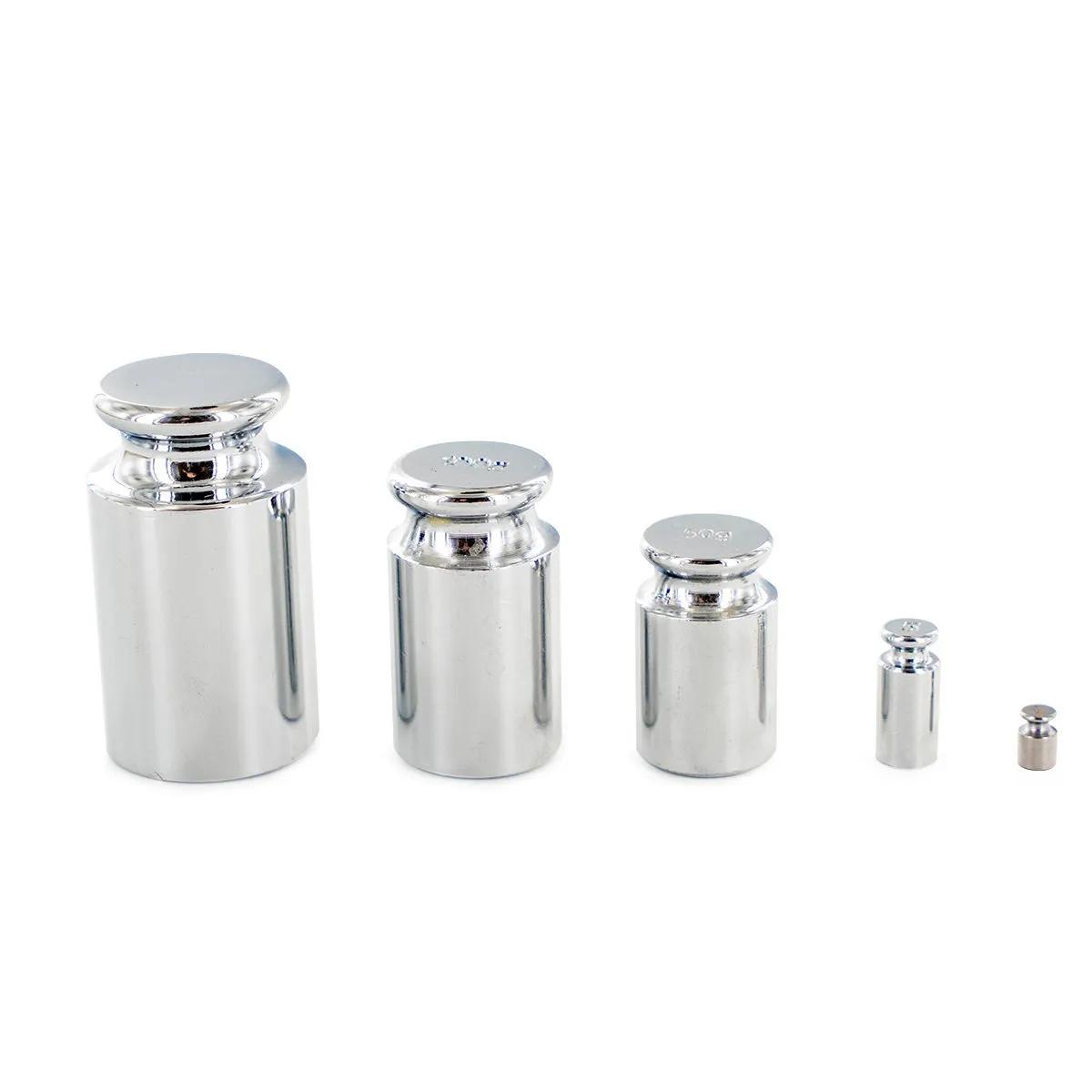
We've sold a lot of pocket scales over the years. The bargain-bin ones drift after a month — you'll re-zero it, place a 10g calibration weight, and watch it read 10.04g, then 9.97g, then 10.02g. The expensive lab-grade units do the same job as a mid-range scale for three times the price. The MMZ-100 sits in that sweet spot: accurate enough for 0.01g work, built solidly enough to survive being chucked in a bag, and cheap enough that you don't need to insure it.
The button feel is the thing you notice first. Cheap scales use mushy membrane buttons that stop registering after six months of thumb grease. The MMZ-100 uses proper tactile keys — you can hear and feel each press. Small detail, but it's why this one doesn't end up in the bin after a year.
Specifications at a glance
Here's what you're getting, stripped of marketing fluff. Everything below comes straight from the On Balance spec sheet.
| Brand | On Balance (UK) |
| Model | MMZ-100 |
| Capacity | 100g maximum |
| Readability | 0.01g (two decimal places) |
| Weighing modes | 6 (g, oz, ozt, dwt, ct, gn) |
| Calibration | Auto-calibration |
| Power | Batteries included |
| Warranty | Lifetime (or 10 years) |
| SKU | HS0110 |
How the MMZ-100 compares to other pocket scales
Not every 0.01g scale is the same. Here's how the On Balance MMZ-100 scale stacks up against what else tends to land on the shop counter.
| Scale type | Readability | Typical lifespan | Worth it? |
|---|---|---|---|
| Bargain-bin no-name 0.01g | 0.01g (claimed) | 3–6 months before drift | Only if you don't care about accuracy |
| On Balance MMZ-100 | 0.01g (real) | Years, covered by lifetime warranty | Yes — our pick for daily use |
| Milligram scales (0.001g) | 0.001g | Fragile, needs calm environment | Only if you genuinely need three decimals |
| Kitchen scale (1g) | 1g | Years | Useless for anything under 10g |
What the six weighing modes actually mean
The On Balance MMZ-100 scale switches between six units at the press of a button. Most people will only ever use grams, but here's the full list:
- g — grams (the default, what you'll use 95% of the time)
- oz — ounces (avoirdupois, the standard imperial ounce)
- ozt — troy ounce (used for precious metals, 31.1g vs 28.35g)
- dwt — pennyweight (jewellery, 1/20th of a troy ounce)
- ct — carat (gemstones, 0.2g per carat)
- gn — grain (1/7000th of a pound, used in reloading)
How to use the On Balance MMZ-100
- Pop the batteries in (included in the box) and place the scale on a flat, level surface — not a wobbly table.
- Press the power button and wait for the display to settle on 0.00g.
- Place the weighing tray or a container on top, then press TARE to zero it out.
- Add what you're weighing slowly — dropping things on the platform shocks the load cell.
- Read the value. If it flickers between two numbers, wait 2–3 seconds for it to stabilise.
- Switch units with the MODE button if you need ounces, carats, or grains.
- Re-calibrate every few months using a 50g or 100g calibration weight (sold separately) for best long-term accuracy.
Honest limitations — what the MMZ-100 isn't
It's a 100g scale. Try to weigh your 200g bag of coffee beans and you'll get an ERR message, not a number. It's also not a milligram scale — if you need 0.001g resolution for reloading or micro-dosing powders, look at the On Balance CK-20 instead. And while the housing is solid, this isn't a lab-grade instrument. Don't expect analytical-balance performance from a pocket scale, whatever the Amazon reviews say.
One more thing: all pocket scales hate draughts, vibrations, and uneven surfaces. If you're getting jumpy readings, nine times out of ten it's your environment, not the scale. Close the window, move off the wobbly side table, and try again.
Complete your setup with a 100g calibration weight to recalibrate the MMZ-100 when readings start to drift, and a set of weighing papers or a small dish to keep the platform clean. If you're working with quantities under 1g regularly, pair it with the On Balance CK-20 milligram scale for 0.001g precision on small amounts.
Frequently Asked Questions
How accurate is the On Balance MMZ-100 scale really?
It reads to 0.01g with a ±0.02g tolerance at normal room temperature on a stable surface. That's the real-world figure after calibration — not a marketing number. For comparison, most bargain pocket scales drift to ±0.05g or worse within months.
What does the lifetime warranty actually cover?
On Balance covers manufacturing defects and component failure for the lifetime of the product (or 10 years, whichever comes first). It doesn't cover drops, water damage, or overloading past 100g. Keep your receipt and contact On Balance directly through their UK site for claims.
Do I need to calibrate it when it arrives?
No — the MMZ-100 ships pre-calibrated and has auto-calibration built in. You only need a calibration weight if readings start drifting after months of use, or if you want to verify accuracy before weighing something critical. A 50g or 100g certified weight does the job.
Can I weigh something heavier than 100g on it?
No, and don't try. Overloading past 100g will damage the load cell permanently and isn't covered under warranty. If you need more capacity, look at the On Balance TW-200 (200g x 0.01g) or a larger bench scale instead.
Why does my scale show different readings for the same item?
Almost always an environmental issue — draughts, vibrations, an uneven surface, or static from the container. Place the scale on a solid flat surface away from open windows, tare before each weigh, and let the reading settle for 2–3 seconds. If it still drifts, re-calibrate with a known weight.
What's the difference between the MMZ-100 and milligram scales?
The MMZ-100 reads to 0.01g (two decimals). Milligram scales like the On Balance CK-20 read to 0.001g (three decimals) but have lower max capacity (typically 20g) and are more sensitive to environmental interference. If you don't specifically need 0.001g precision, the MMZ-100 is the better daily driver.
Last updated: April 2026