
Thailand Cannabis Documentary: Inside The Boom Recap
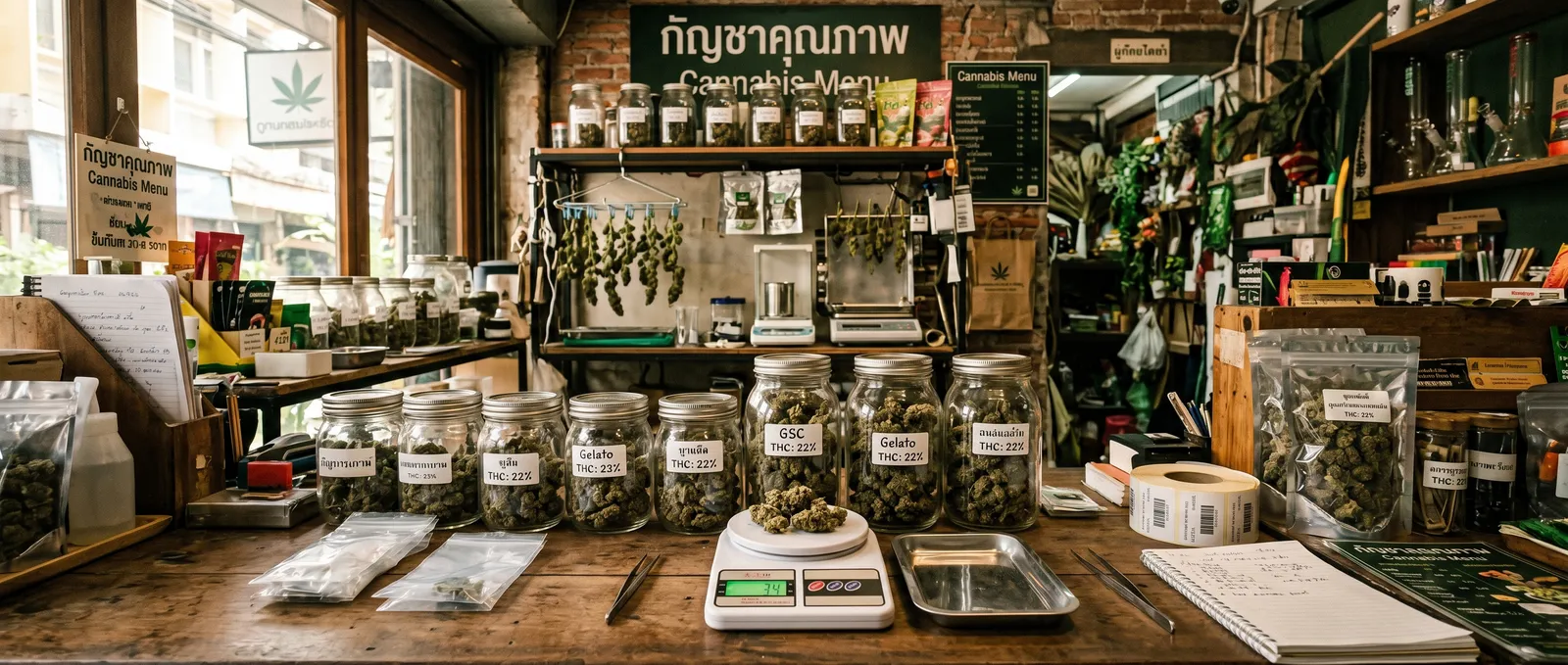
The Thailand cannabis documentary is a long-form film that follows what really happened after Thailand kicked open the cannabis door in 2022 — the budtenders, the indoor growers chasing perfect THC, the organic farmers, and the therapist running discreet mountain rehab clinics. It's a long way from the postcard story of Bangkok dispensaries, and it's why we sat down to recap it.
18+ only This article is written for adults. It's a recap of journalism, not a buying or growing guide.
What the film does well is refuse the easy framing. There's no "weed paradise" cheerleading, and no reefer-madness panic either. Instead the camera sits with three farmers, a recovering user behind the camera, and a therapist who thinks the whole substance-versus-person debate is the wrong question. Below is a recap of what the Thailand cannabis documentary actually shows — anchor facts, character arcs, and the closing thesis that purpose beats profit.
Why Thailand Opened the Door in 2022: The Post-COVID Backdrop
Thailand's 2022 cannabis policy shift was an economic rescue plan dressed up as reform, the documentary argues. Tourism had collapsed during COVID, and the government needed a new revenue stream fast. Cannabis — already softened in 2018 for medical use — was reclassified as the obvious lever to pull.
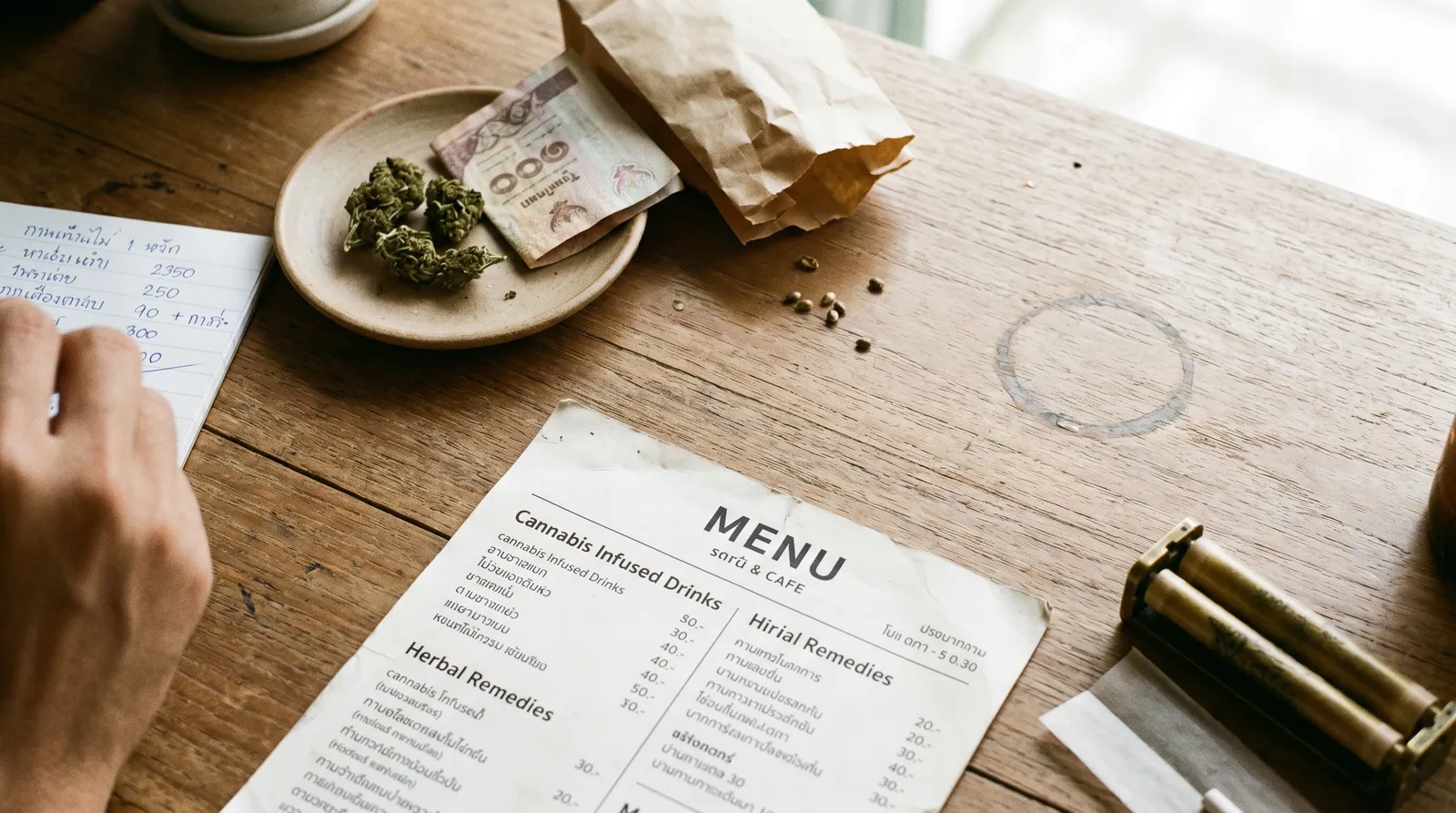
The film puts that decision in historical context, and this is the bit most explainers skip. Before 1979, cannabis was woven into Thai daily life: cooked into boat noodles, infused into massage oils, used as a folk medicine. Then in 1979 it was reclassified as a class-5 narcotic, and the country swung hard the other way. At the peak of the war-on-drugs era, the documentary notes that around 80% of Thai inmates were held for drug offences. So 2022 wasn't a leap into something new — it was, in a sense, a return.
By 2023 the market was valued at roughly USD 1.2–1.3 billion. Chiang Mai alone had 206 dispensaries. The documentary lingers on the speed of it: green crosses on every other shopfront, billboards in English, edibles in tourist-friendly packaging. A market built in 18 months on top of a culture that had spent 43 years pushing the plant underground.
Three Farmers, Three Reasons: Pete, Han and Molly
The Thailand cannabis documentary builds its emotional spine around three growers with completely different motives. None of them fit the stoner-entrepreneur stereotype, and that's the point.
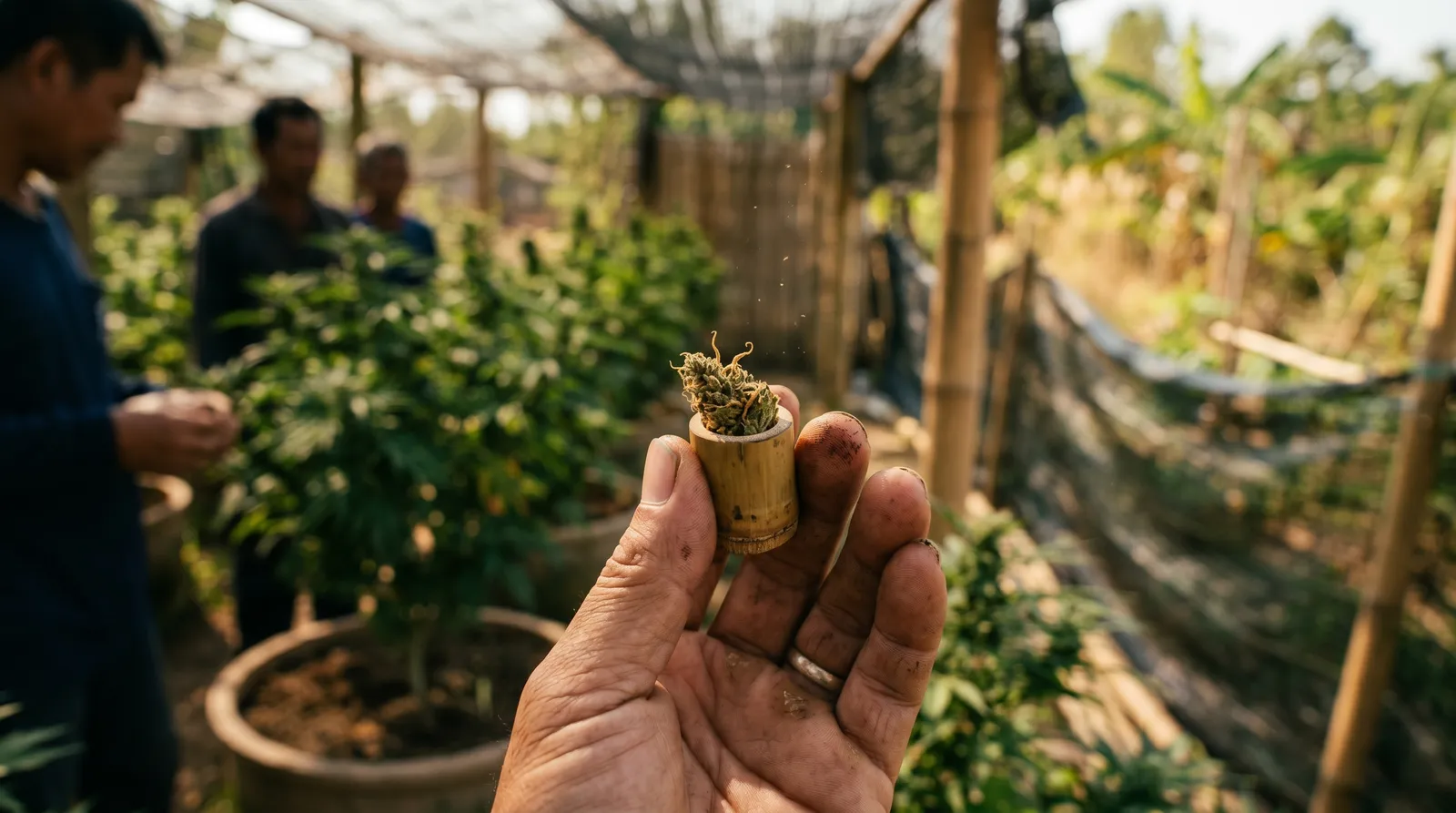
Pete — the budtender who doesn't really care about weed
Pete works behind the counter at a corporate dispensary chain. He's also a Muay Thai fighter who came out of COVID with a long stretch of depression behind him. He's honest on camera: cannabis is a job, not a calling. He sells it, he can talk customers through strains, and people who walk in to buy a gram get an honest steer — but he doesn't romanticise it. In an industry that runs on passion narratives, Pete is the documentary's quiet reminder that most people in any green rush are just clocking in.
Han — the science-obsessed indoor grower
Han runs a small indoor operation and approaches it like a lab. He talks about pH, water temperature, airflow, UV manipulation to push THC expression. He measures, he tweaks, he iterates. Crucially, he says growing is his happiness — not his retirement plan. He's less interested in scaling up than in getting one room dialled in perfectly. In a market where everyone else is chasing volume, his attitude reads almost like protest.
Molly — organic, outdoor, and a cancer survivor
Molly runs an outdoor organic farm. She's also a cancer survivor who, according to the film, uses CBD oil to help manage pain, and that personal stake colours everything. She talks about soil, about sun cycles, about growing something with a purpose beyond a margin. Her farm is small. Her ambitions are smaller still — by design.
| Farmer | Style | Driver |
|---|---|---|
| Pete | Corporate budtender | Income; cannabis as a job |
| Han | Indoor, scientific | Craft and happiness |
| Molly | Outdoor, organic | Personal health, purpose |
The Crash: Oversupply, Closures and a Saturated Thai Cannabis Market
Around half of Thailand's cannabis farms have already closed, according to the documentary. The green rush created more growers than buyers, prices fell, and the smaller operators went first. It's the same boom-and-bust story Colorado, Oregon and Canada have all lived through — just compressed into 24 months.
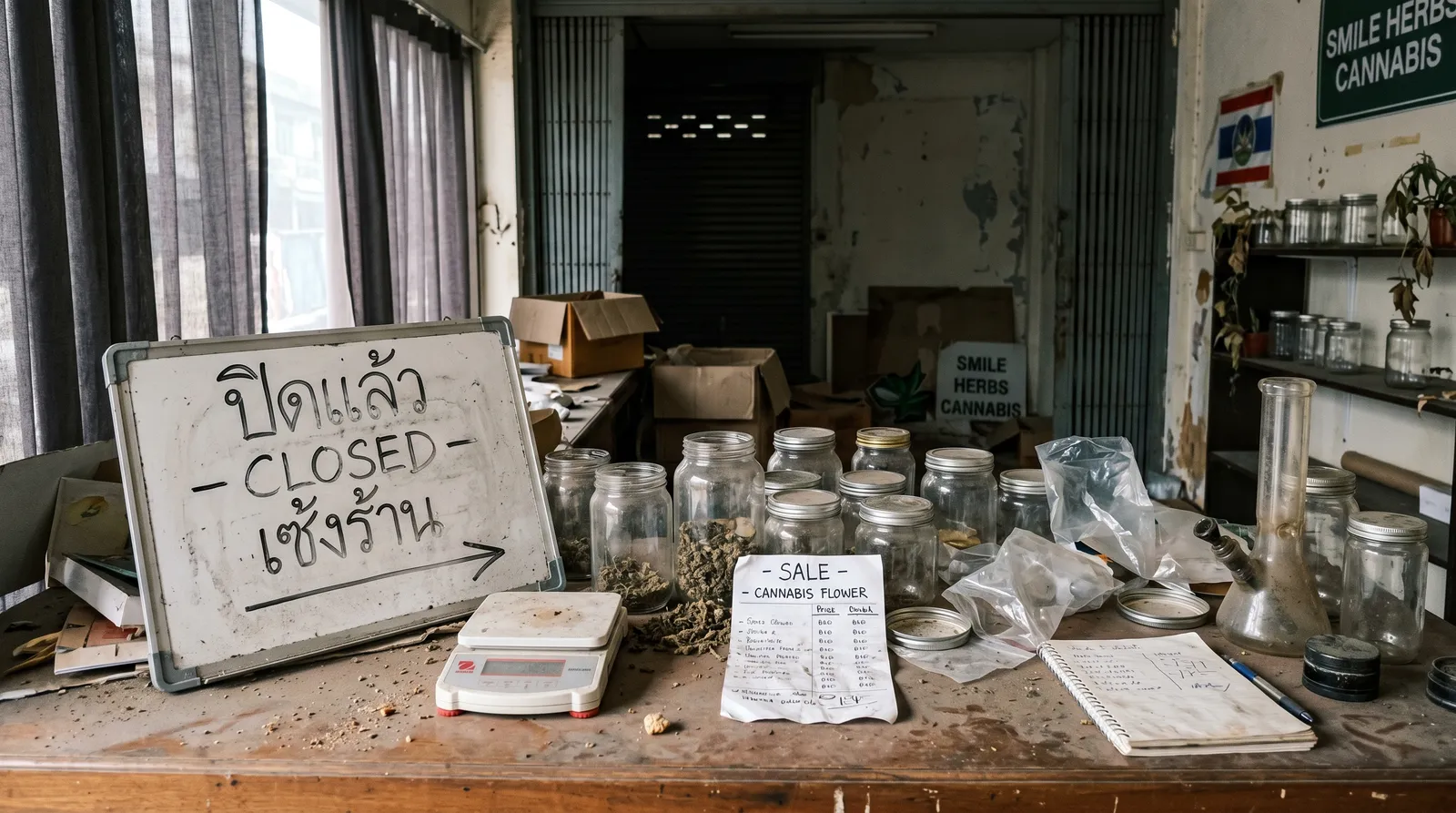
The film walks through empty greenhouses and shuttered dispensaries. In Chiang Mai's 206-dispensary cluster, footfall has thinned. Tourists still come and order from the menu, but the early gold-rush margins are gone. Wholesale flower prices have dropped to a level where outdoor commodity growers cannot cover their inputs. The shops that survive are the ones with brand, location, or a verticalised supply chain — exactly the players a small farmer like Molly cannot compete with on price.
What's interesting is how the three farmer profiles map onto the crash. Pete keeps his salary either way. Han, because he's not chasing yield, is insulated by his small footprint and his focus on quality. Molly survives because her customers are buying purpose, not grams. The growers wiped out are the ones in the middle — medium-scale, commodity-grade, betting on a price floor that never arrived.
- 2022: cannabis reclassified, post-COVID stimulus framing
- 2023: market value USD 1.2–1.3 billion, dispensaries multiplying
- 2023–2024: oversupply, falling wholesale prices
- Roughly 50% of farms closed
- Chiang Mai still hosts 206 dispensaries, but with thinner traffic
Secret Mountain Clinics: The Addiction Angle Most Coverage Misses
The documentary's most surprising thread is Ryan, a therapist running discreet rehab clinics in the Thai mountains. According to the film, he works with people struggling with cannabis dependence, gaming compulsion and pornography compulsion side by side — and his argument is that the substance is almost beside the point. Addiction, he tells the camera, is about your relationship with escape.
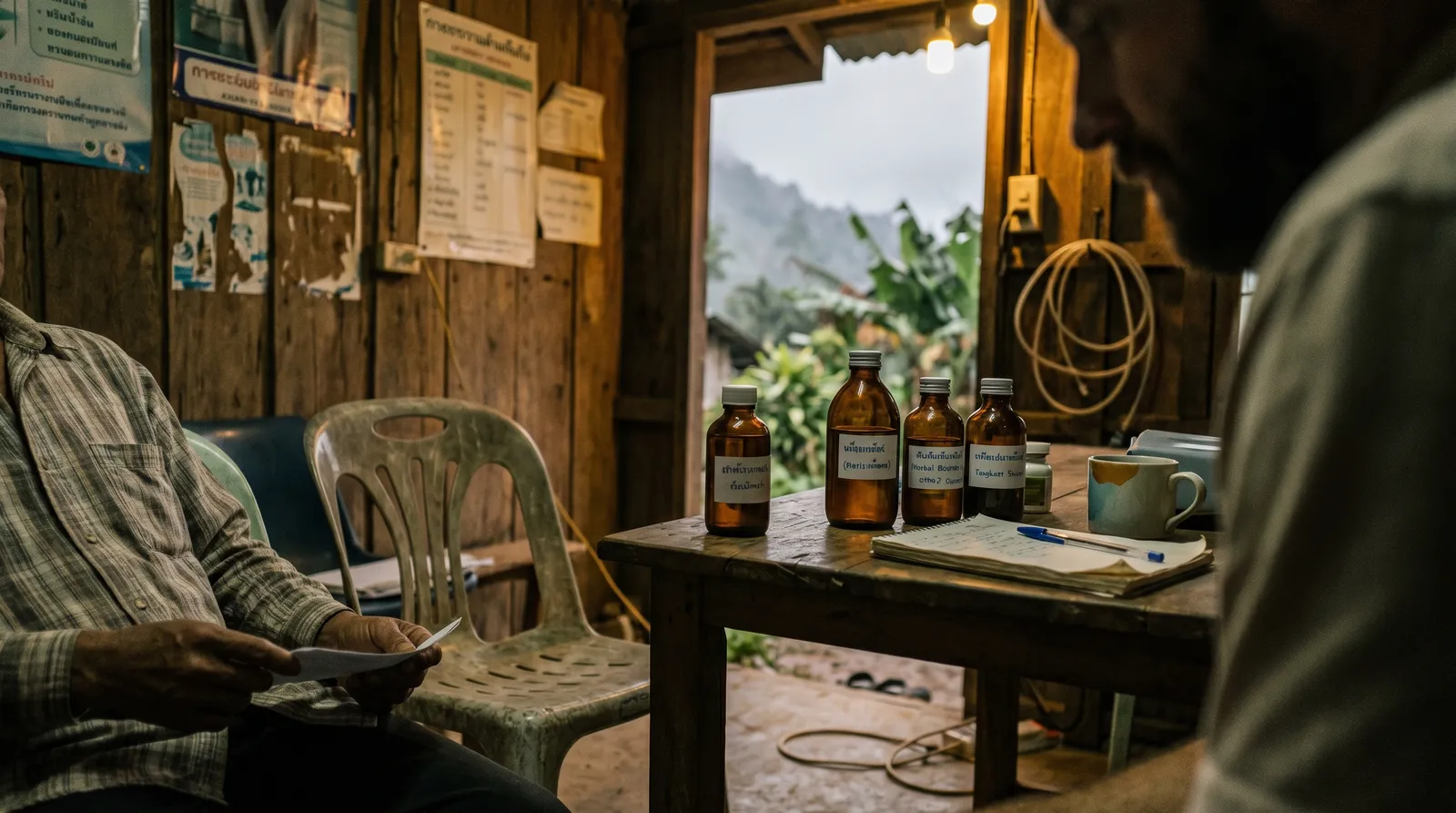
That framing matters because the film's narrator is open about his own cannabis dependence. He's not a tourist gawking at users in a clinic — he's someone who's been smoking heavily for years and is using the journey to look at his own habits. When he interviews Ryan, the conversation is uncomfortable in a useful way. It's not "is weed bad". It's "what are you running from, and is your tool of choice helping or stalling you".
From the documentary, paraphrased: addiction isn't the chemical — it's the pattern of needing somewhere to go that isn't here.
Ryan's clients fly in from across Asia and the West. Some are sent by family, some come on their own. The clinic is deliberately off-grid, partly for client privacy, partly because Thailand's formal mental-health framework hasn't caught up with the conversation cannabis has opened. It's one of the few times the film acknowledges that easier access has downstream costs, without sliding into moral panic.
Purpose Over Profit: The Documentary's Real Thesis
The film's closing argument is that purpose, not profit, separates the people who lasted from the people who didn't. The growers it celebrates are the ones who explicitly aren't optimising for money. Han's lab-grade indoor room, Molly's small organic plot, even Pete's honest "this is just my job" — the film is interested in people who have a clear relationship with what they're doing and why.
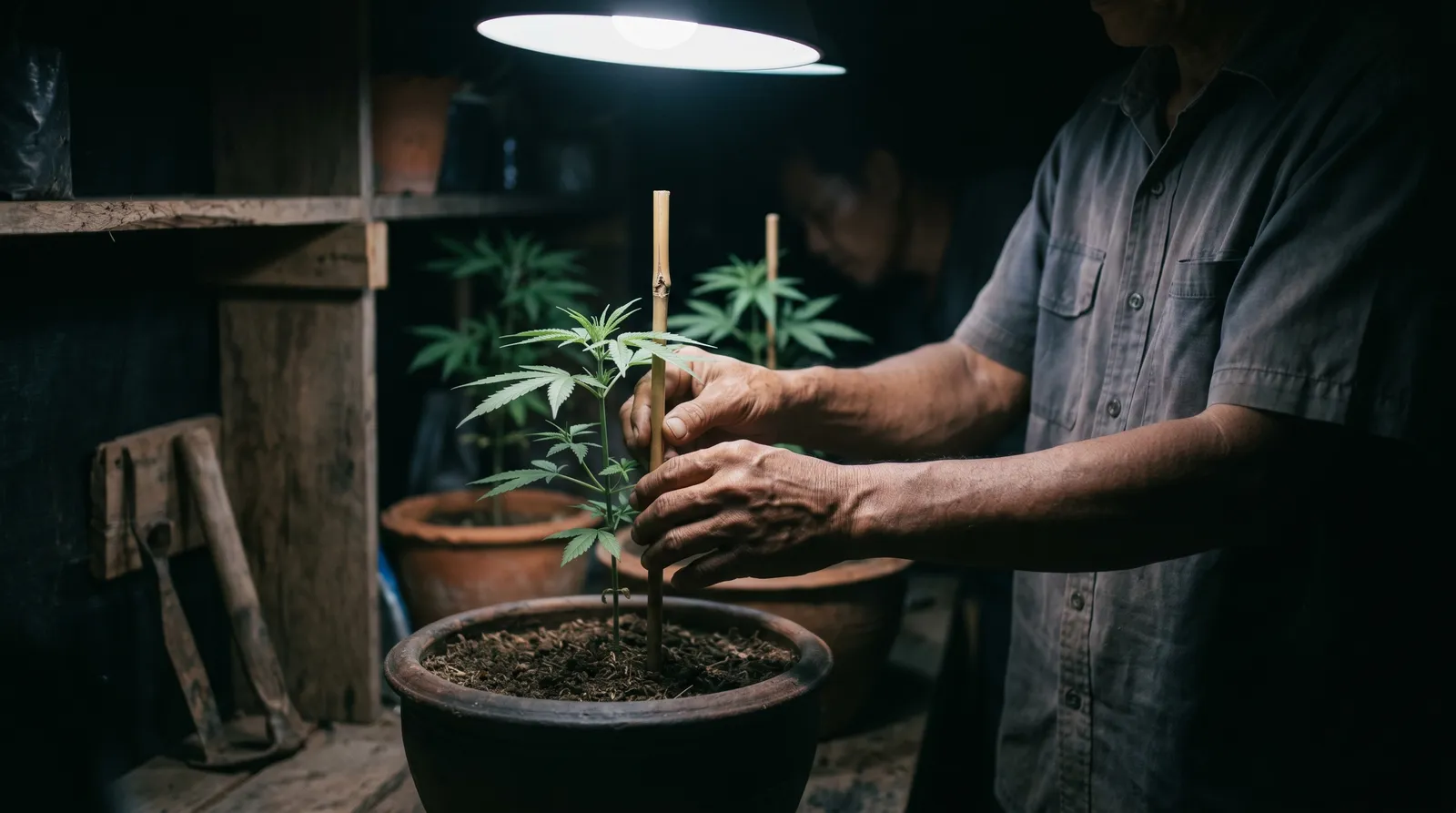
That reads as a deliberate counter-narrative. The market crashed because too many people grew for the wrong reasons. The clinics filled up because too many people consumed for the wrong reasons. The growers and users the film respects are the ones who, in different ways, replaced "more" with "why".
From Our Counter: What Amsterdam Taught Us About Green Rushes
From our counter in Amsterdam: we've watched the same arc play out here since 1999. The coffeeshop scene survived multiple policy shifts not because of scale but because the operators who lasted had a point of view — about quality, about clientele, about what they wouldn't put on the menu. We'll be honest about the limits of that comparison: Amsterdam's framework grew over decades, Thailand's was built in eighteen months, and a recap is no substitute for watching the documentary yourself. But the underlying pattern rhymes. The shops that get customers to come back, year after year, are the ones with a reason to exist beyond margin. Compared to the European MAPS-style harm-reduction conversations and EMCDDA market reports we read each year, the Thai story is younger and louder, but the lesson is the same one we keep relearning.
The film ends without policy prescriptions. It doesn't tell you whether Thailand got it right or wrong. It tells you that 2022 opened a door, that the people who walked through it did so for very different reasons, and that direct experience — talking to Pete, Han, Molly, Ryan, and yes, the narrator's own habit — beats any stereotype you arrived with.
Frequently Asked Questions
Last updated: April 2026
À propos de cet article
Adam Parsons is an external cannabis and psychedelics writer and editor who contributes to Azarius's wiki as both author and reviewer. On the writing side, he authors Azarius's kratom and kanna clusters, drawing on exten
Cet article de blog a été rédigé avec l’aide de l’IA et relu par Adam Parsons, External contributor. Supervision éditoriale par Joshua Askew.
Dernière relecture le 15 mai 2026