
Saint Vincent Pheno Hunt: A Landrace Survives a Volcano
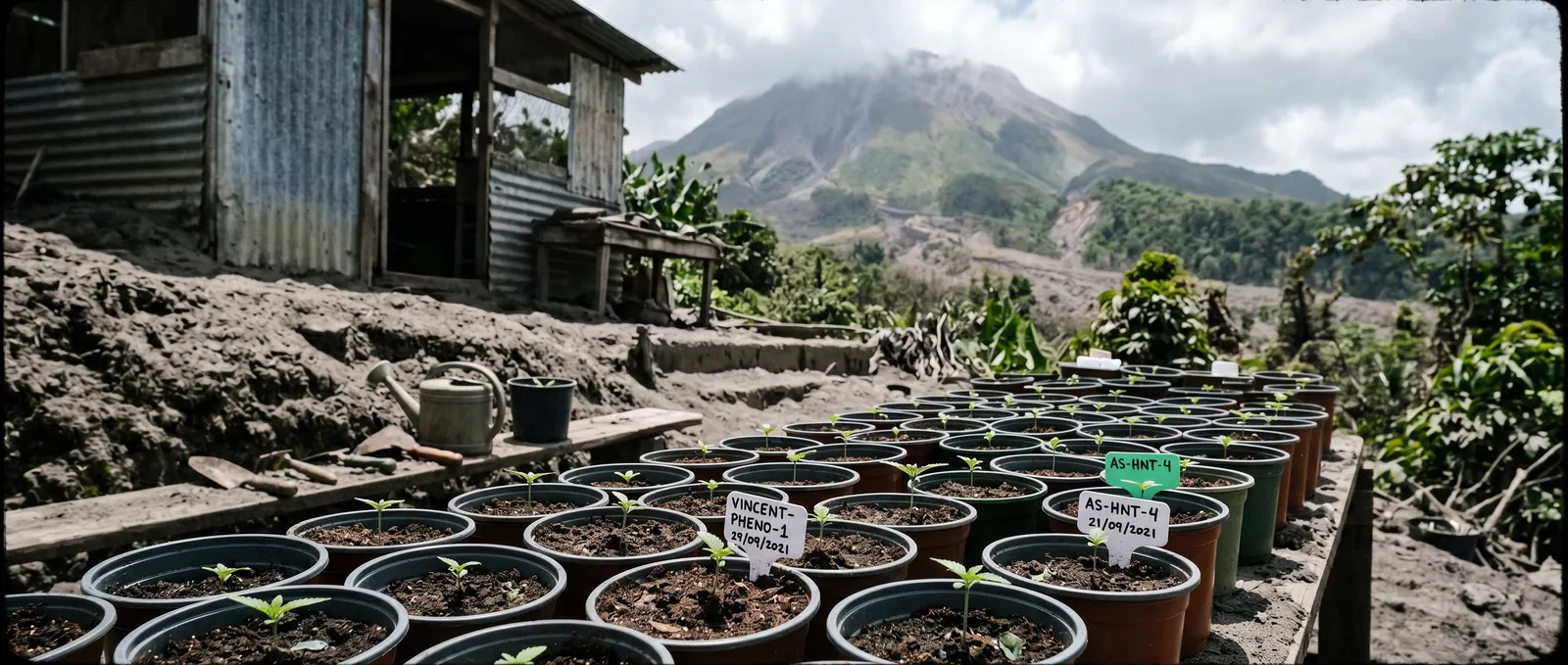
In April 2021, La Soufrière erupted and buried roughly 90% of Saint Vincent's cannabis genetics under as much as eight inches of volcanic ash. The Saint Vincent pheno hunt isn't a seed launch — it's the story of what Rastafarian farmers in the mountains managed to save, and what Humboldt Seed Company is documenting before it's gone for good.
This guide is written for adults. We've been watching the landrace conservation conversation for years from behind the counter in Amsterdam, and the Saint Vincent pheno hunt is one of the more honest pieces of cannabis documentary work we've seen. It's not a strain drop dressed up as a story. It's a record of what happens when a volcano takes 90% of an island's seed stock and a handful of mountain farmers become the only library left. Here's what the Humboldt Seed Company crew found when they went looking.
Why the Saint Vincent pheno hunt matters as cultural history
The Saint Vincent pheno hunt matters because it documents a genetic library that nearly disappeared in a single week. Cannabis was formally sanctioned on the island in 2018, giving Vincentian farmers their first real window to work openly. Three years later, La Soufrière erupted in April 2021 and dumped up to eight inches of ash across cultivation zones, wiping out an estimated 90% of the island's cannabis genetics.

What survived, survived because of geography and stubbornness. Rastafarian growers tucked into the remote mountainous interior — the parts of the island the ash plume hit hardest in some places, but where small isolated plots in protected valleys held on — kept hold of seed stock that traces back generations. Saint Vincent's soil occupies just 0.74% of the earth's crust, which sounds like trivia until you remember that this sliver of volcanic rock helped produce Lambs Bread (known locally as Vincy Gold), and shares lineage stories with Santa Marta Gold, Punta Roja and Colombian Gold.
From Our Counter: we get asked about "real" landrace sativas constantly, and the honest answer is that most of what gets sold under those names is two or three generations removed from anything that ever grew on the island. The Humboldt documentary is the first piece of footage we'd point someone toward if they actually want to understand what's at stake.
The names you've heard, in their place of origin
Lambs Bread, Santa Marta Gold, Punta Roja, Colombian Gold — these are spoken about in the documentary as cultural artefacts, not catalogue entries. They're tied to specific farmers, specific elevations, specific harvest rituals. Treating them as shopping list items misses the point of what the hunt is trying to preserve.
What the Saint Vincent pheno hunt found in the surviving plants
The Saint Vincent pheno hunt found sativa-dominant phenotypes with skinny light-green leaves, pronounced red pistils, dense trichome coverage and a terpene profile leaning into terpinolene, pinene and a spicy black-pepper note. Tested samples returned 17.61% THC at 14.03% moisture — which projects to roughly 21% on a properly dried sample — and total terpenes around 1.1%, genuinely high for outdoor-grown material.
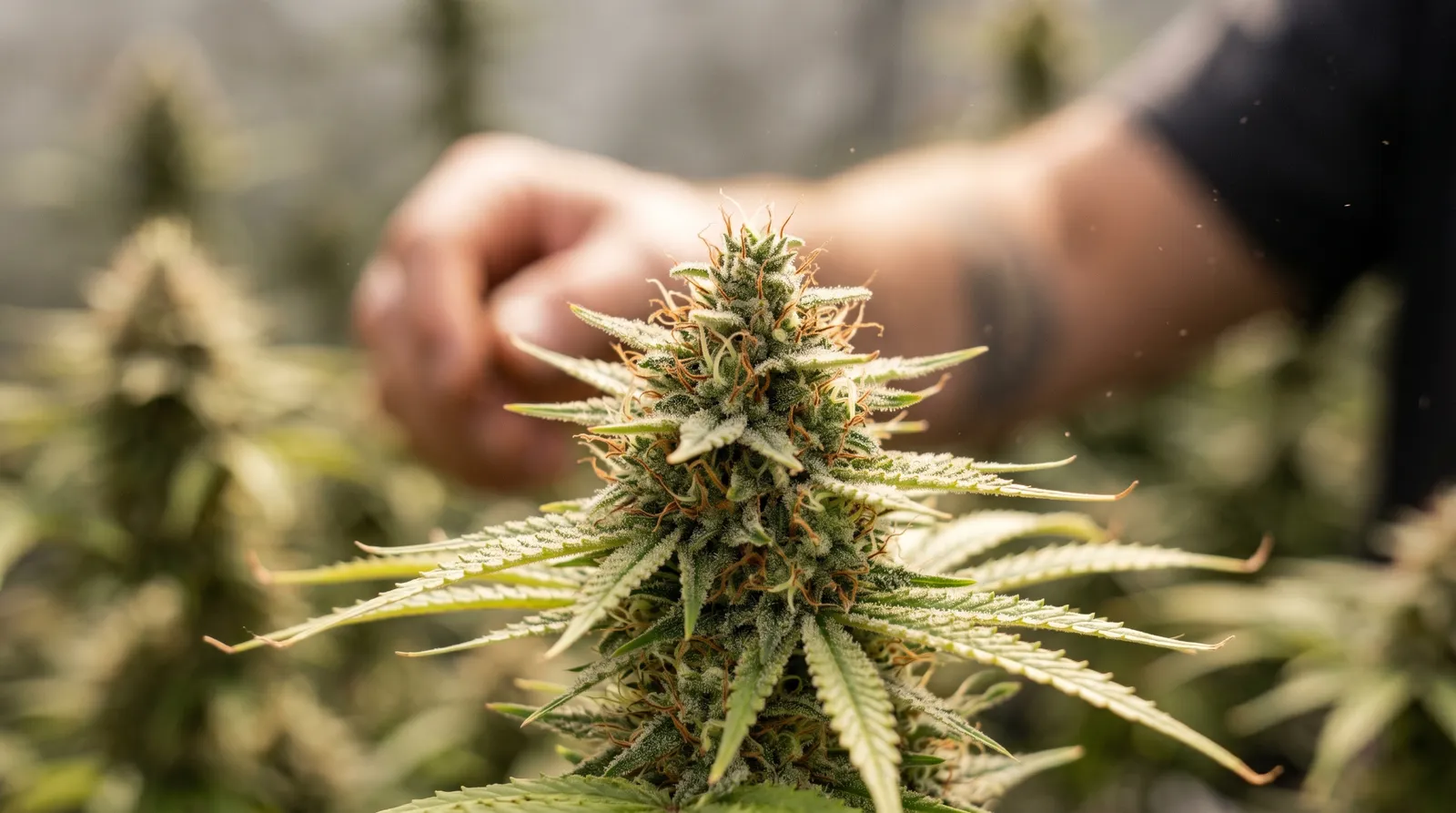
Here's what the hunters were sorting through in the field:
| Trait observed | Sativa-dominant pheno | Indica-leaning pheno |
|---|---|---|
| Leaf shape | Skinny, light green | Broader, darker |
| Pistil colour | Pronounced red | Paler, less saturated |
| Trichome density | High | Moderate |
| Dominant terpenes | Terpinolene, pinene, black pepper | More muted, earthier |
| Septoria leaf spot resistance | Stronger | Noticeably weaker |
The Septoria detail is the one most growers will skim past and shouldn't. Septoria leaf spot is a fungal pressure that hammers outdoor cannabis in humid climates, and the sativa-dominant Vincentian phenos showed real-world resistance the indica-leaners didn't. That's not a marketing claim — it's a field observation from a tropical island that gets hit with both extreme rain and volcanic recovery conditions.
One more thing the documentary doesn't shy away from: hermaphroditism shows up across landrace populations on the island. In a wild context that's a self-preservation trait — when a plant can't find a male, producing some pollen sacs is how the line continues. In a structured seed program it's a challenge. The hunt has to weigh genetic authenticity against stability, and the crew is open about that trade-off on camera.
How the Saint Vincent pheno hunt fits into post-eruption recovery
The Saint Vincent pheno hunt is one part of a broader recovery effort that ties seed conservation to social justice on the island. After the eruption, Dr Emmanuel donated 10,000 feminized seeds across five cultivars to help farmers rebuild. That gesture sits inside a wider policy framework: licensed cultivators on the island are required to buy at least 10% of their product from traditional farmers — the same Rastafarian growers who held the genetic line through the ash.
That 10% floor matters because it's the difference between "landrace genetics rescued by outside companies" and "landrace genetics rescued with the people who kept them alive still in the supply chain". You can debate whether 10% is enough. But it exists, on paper, as a recovery-era rule, and the documentary frames it as the thing that keeps the story from being another extraction-and-export tale.
Key things to take from the documentary recap:
- 2018: Saint Vincent formally sanctions cannabis cultivation.
- April 2021: La Soufrière erupts, ~90% of island genetics lost under up to 8 inches of ash.
- Rastafarian mountain farmers preserve the surviving seed stock.
- 10,000 feminized seeds donated post-eruption across five cultivars.
- 10% minimum sourcing from traditional farmers under the recovery framework.
- Lab results: 17.61% THC at 14.03% moisture, ~1.1% total terpenes.
- The island's soil is just 0.74% of the earth's crust.
From Our Counter: the part that stuck with us watching this was how matter-of-fact the farmers are. There's no "we saved the world" speech. They saved the seeds because the seeds were theirs. The documentary is worth your 40 minutes for that alone.
Frequently Asked Questions
The Saint Vincent pheno hunt is, at its core, a piece of cultural documentation. A volcano took the library, mountain farmers kept the index cards, and a film crew showed up to record what's left before climate, market pressure and time erase it for good. Watch the documentary, sit with the 0.74% figure, and remember that Lambs Bread had a place before it had a price tag. For more documentary recaps and harm-reduction reading, our blog's culture and science sections are where this kind of story lives.
Last updated: April 2026
Questions fréquentes
5 questionsWhat is the Saint Vincent pheno hunt actually about?
How much of Saint Vincent's cannabis genetics were lost in the 2021 eruption?
Why is Saint Vincent's volcanic soil significant for cannabis?
What is the 10% rule for traditional farmers?
Is hermaphroditism a problem in Saint Vincent landrace cannabis?
À propos de cet article


Adam Parsons is an external cannabis and psychedelics writer and editor who contributes to Azarius's wiki as both author and reviewer. On the writing side, he authors Azarius's kratom and kanna clusters, drawing on exten
Cet article de blog a été rédigé avec l’aide de l’IA et relu par Adam Parsons, External contributor. Supervision éditoriale par Joshua Askew.
Dernière relecture le 16 mai 2026