
Cet article traite de substances psychoactives destinées aux adultes (18+). Consultez un médecin si vous avez une pathologie ou prenez des médicaments. Notre politique d'âge
Herbal Tea Benefits — What Grandma Always Knew
Definition
Your parents' generation brewed herbal tea for sleep, anxiety, and mood — without a wellness app in sight. Here's why the smartshop world is circling back to old-school herbalism.
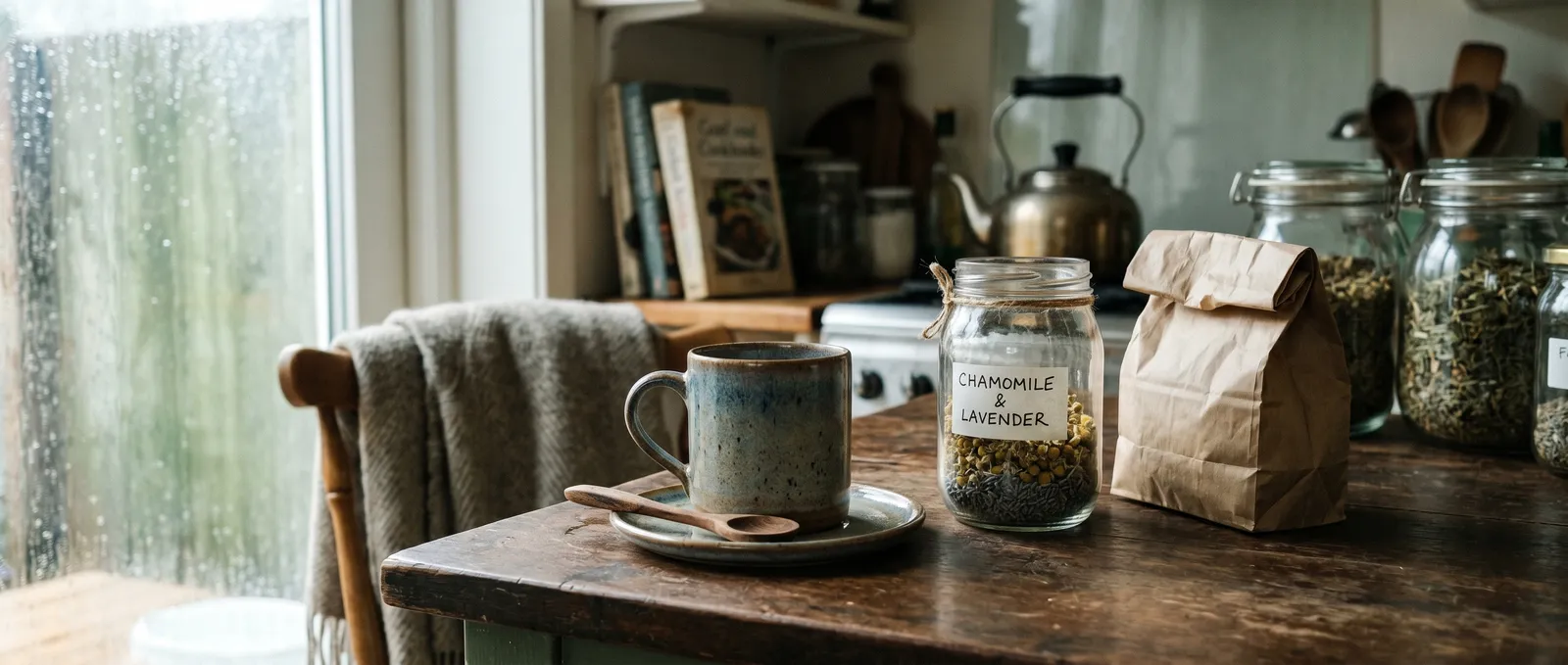
Herbal tea is a time-tested practice of brewing dried plants — such as chamomile, valerian, and passionflower — into warm infusions that support relaxation, sleep, and mood. Somewhere between the microdosing hype and the adaptogen smoothie craze, a quieter revival happened: people started rediscovering the herbal tea benefits their grandparents always knew about. Not matcha-latte-with-oat-milk tea. Proper herbal tea — the kind your grandmother kept in mismatched tins above the stove. Chamomile for sleep. Valerian when the nerves were bad. A little passionflower when the world felt too loud.
She didn't call it biohacking. She called it "having a cuppa before bed." And honestly? She was onto something that took the wellness industry another forty years to catch up with.
At Azarius, we've watched this come full circle. Customers who started with our damiana leaves or passionflower leaves for one reason — curiosity, mostly — keep coming back because the stuff actually works. Not like a pill. More like a practice. And that difference matters more than people think.
The Quiet Comeback of Herbal Tea
Herbal tea never actually disappeared — it simply fell out of fashion for a few decades while the supplement industry chased extracts and capsules. Your parents' generation brewed valerian root when they couldn't sleep. Their parents did too. Go back far enough in any European culture and you'll find a kitchen cupboard full of dried herbs that were the first line of defence against everyday complaints — restlessness, poor digestion, low mood, scattered thinking.
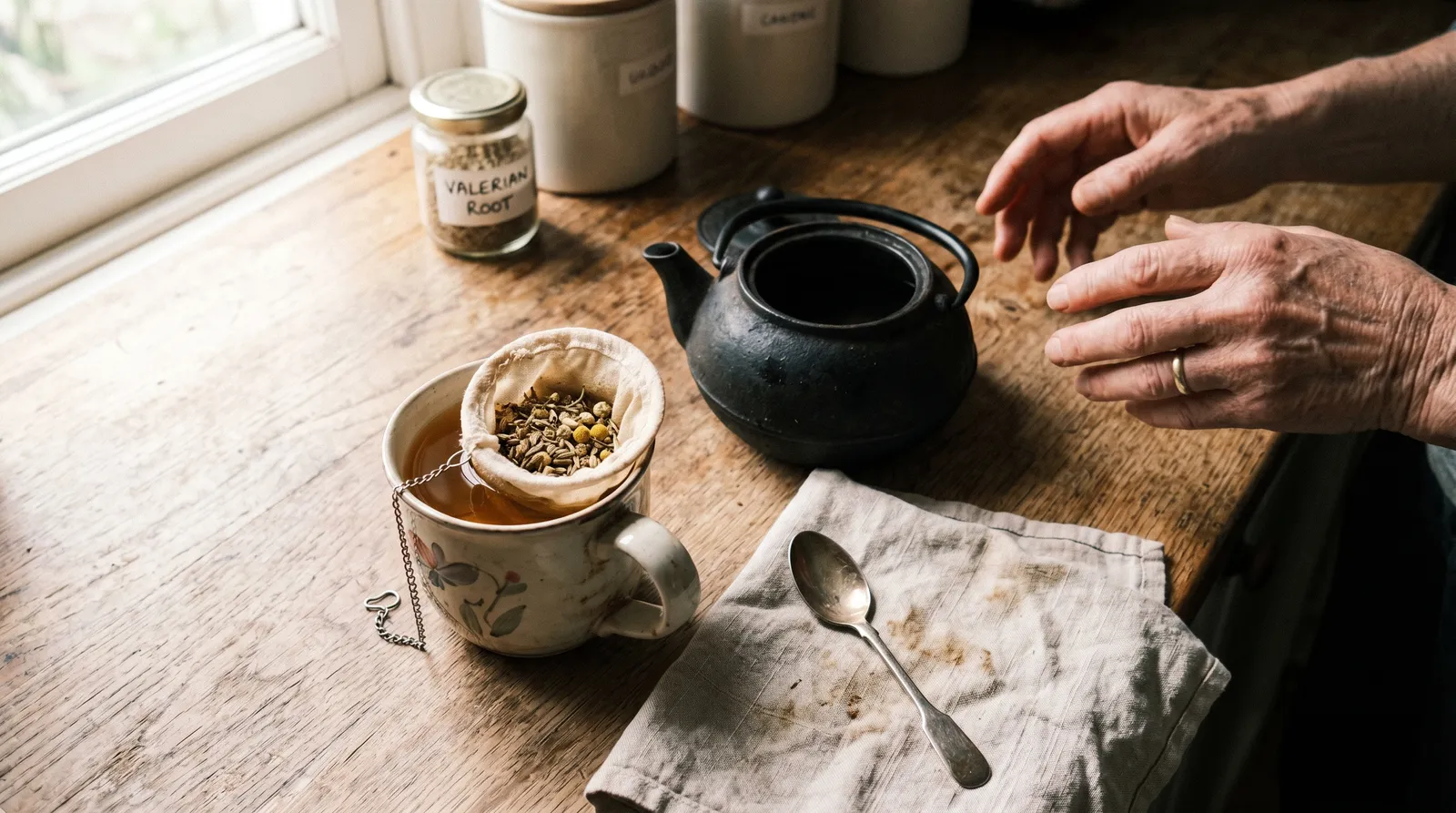
What changed wasn't the herbs. What changed was us. We wanted faster. We wanted standardised extracts, isolated compounds, things in capsules with milligram counts on the label. And those have their place — nobody's arguing against a good passionflower 10x extract when you need concentrated support. But something gets lost when you skip the ritual entirely.
Brewing a pot of herbal tea takes about five minutes. In those five minutes, you're slowing down. You're smelling the herbs. You're waiting. You're doing the thing that every meditation app charges you a subscription for, except you also get to drink something warm and slightly bitter at the end. The pharmacology matters — these plants contain real active compounds that interact with your GABA receptors and nervous system. But the act of preparation is itself part of the experience.
The clinical research agrees. A 2020 meta-analysis in Phytotherapy Research confirmed that passionflower significantly reduced anxiety scores versus placebo. The European Medicines Agency (EMA) lists valerian as a traditional herbal medicine for sleep disturbances. According to the EMCDDA's plant monograph database, many of these traditional herbs have well-documented histories of use across European cultures. Damiana has centuries of folk use in Central America backed by a growing body of animal studies. None of this would surprise your nan. She just called it "the good stuff" and poured you a cup.
Five Herbs Worth Knowing (and How to Brew Them)
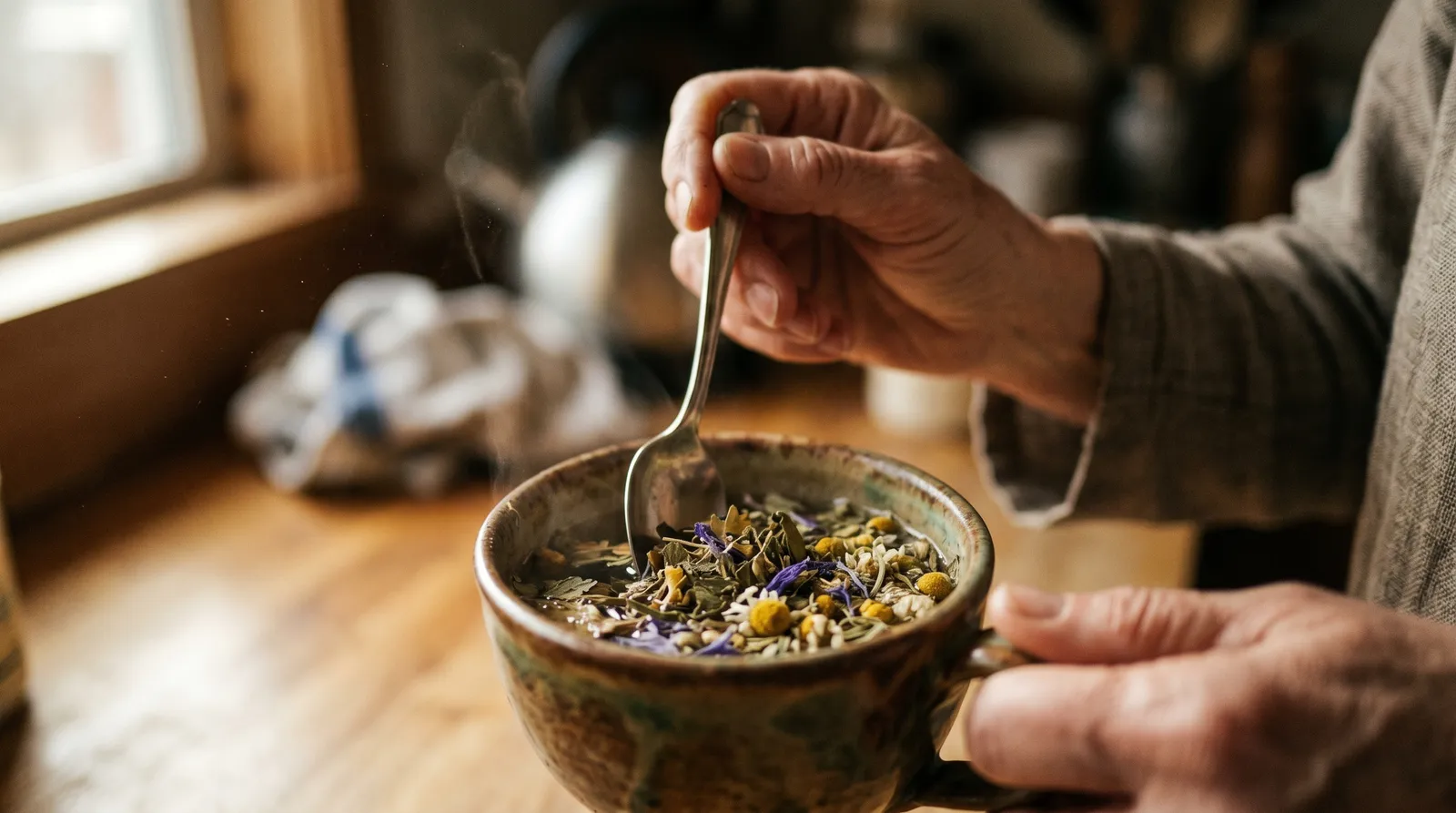
The five most popular herbal tea ingredients we sell are damiana, passionflower, valerian, blue lotus, and chamomile — each with distinct effects, flavour profiles, and ideal brewing methods. Not all herbal teas are created equal. Some taste gorgeous. Some taste like hot soil. Some work gently after twenty minutes; others you notice within the first few sips. Here's an honest breakdown of what they actually do and how to get the best out of them.
| Herb | What It Does | Taste | Best Time | Pairs With |
|---|---|---|---|---|
| Damiana | Mood lift, gentle relaxation without sedation | Slightly bitter, herbal, faintly sweet | Late afternoon / early evening | Honey, lemon balm, a good conversation |
| Passionflower | Calming, anxiety relief, sleep support | Mild, grassy, earthy | 1–2 hours before bed | Chamomile, valerian, lavender |
| Valerian | Deep relaxation, sleep onset, nervous tension relief | Strong, earthy, slightly funky | 30–60 minutes before bed | Passionflower, hops, honey (to mask the taste) |
| Blue Lotus | Dreamy relaxation, enhanced dream recall | Floral, delicate, slightly sweet | Evening, especially before sleep | Damiana, mugwort, quiet music |
| Chamomile | Gentle calming, digestive comfort, sleep support | Floral, apple-like, familiar | Anytime — the all-rounder | Honey, passionflower, lemon |
Damiana is the one that surprises people. Most customers pick up our damiana leaves expecting something subtle, and they're not wrong — it is subtle. But there's a warmth to it, a slight lift in mood after the second cup, that makes it genuinely enjoyable as a daily ritual. Traditional use in Mexico goes back to the Mayans, who brewed it as a mood tonic. The active compounds — damianin, apigenin, flavonoids — are thought to interact with GABA and dopamine pathways. For a concentrated version, the damiana 10x extract packs more punch per cup.
Passionflower is probably the most underrated calming herb on the planet. It doesn't knock you out the way valerian can — it's more like someone slowly turning down the volume on your racing thoughts. Steep passionflower leaves for 10–15 minutes in water just off the boil. The longer you steep, the stronger the effect. If you're dealing with proper restlessness, the passionflower 10x extract brews into something noticeably more potent.
Valerian is the heavy hitter. Let's be honest about the taste: it's rough. It smells like old socks and tastes like someone brewed a forest floor. But as a sleep herb, it's almost unmatched in the European tradition. The trick with valerian is to brew it covered — the volatile oils that make it effective are the same ones that evaporate if you leave the cup uncovered. Ten minutes, lid on, then drink the whole thing. Add honey. You'll want the honey.
Blue lotus has been used since ancient Egypt — there are tomb paintings of people drinking blue lotus wine. The alkaloids nuciferine and aporphine create a dreamy, deeply relaxing state that's particularly interesting before sleep. Brew it gently (80°C, 10 minutes) because high heat degrades the delicate compounds. You can order blue lotus shredded from our shop to try it yourself.
From Our Counter
Our best-selling tea blend for years has been the Good Night Herbs Tea — it combines passionflower, valerian, and chamomile in proportions that actually work. Customers who buy it once almost always come back for more. It's the blend we recommend to anyone who says "I just want something that helps me sleep without feeling groggy in the morning."
From Our Counter
One thing we hear a lot: "I tried valerian capsules and felt nothing." Nine times out of ten, when we switch them to brewing loose valerian root as a tea — covered, steeped properly — they come back surprised. The ritual changes the experience. We can't explain it fully, but after fifteen years behind the counter, we've stopped questioning it.
From Our Counter
A regular customer once told us she replaced her evening glass of wine with a strong damiana-and-chamomile blend. "It's not the same," she said, "but it scratches the same itch — that feeling of the day being officially over." We thought that was a perfect way to put it.
Why Ritual Beats Quick Fix
The ritual of brewing herbal tea activates your parasympathetic nervous system before you've even taken the first sip — making the preparation itself a form of relaxation. There's a reason your parents didn't take their chamomile in capsule form.
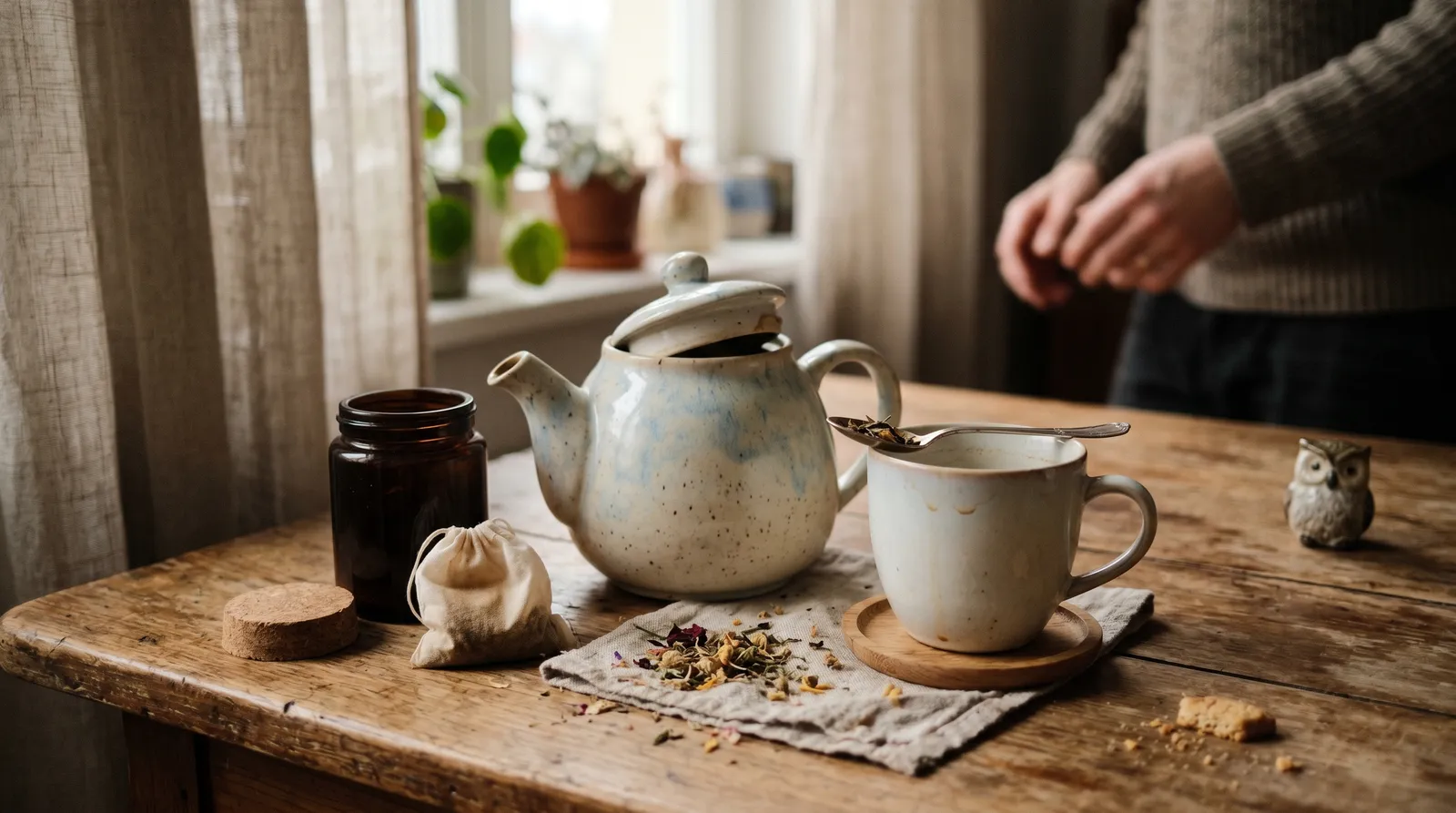
This isn't woo. The act of preparing tea — boiling water, measuring herbs, waiting for the steep, sitting down to drink — creates a consistent wind-down signal for your brain. Over time, the smell of valerian root alone can start to make you sleepy, because your brain has learned to associate it with rest. Classical conditioning. Pavlov's dog, but cosier.
The psychonaut community has always understood set and setting for big experiences — but the same principle applies to small ones. Drinking passionflower tea in a quiet room with the lights low is a different experience from washing down a capsule while scrolling your phone. Same compound. Different result.
When you brew loose herbs, you can adjust your dose intuitively. A heaping tablespoon on a bad night. A lighter scoop when you just want the edge off. Blend your own mixes — damiana and blue lotus for a dreamy evening, passionflower and chamomile for gentle wind-down, valerian on its own when you need the big guns. Our Life Experience Tea and Top Fit! Tea are pre-blended starting points, but half the fun is experimenting.
An honest limitation: herbal teas are not a replacement for professional medical treatment. If you're dealing with chronic insomnia or clinical anxiety, these herbs can be a helpful complement — but they're not a cure. We'd rather be straight about that than oversell. The herbal tea benefits are real, but they're gradual and work best as part of a consistent routine.
A few brewing tips worth knowing:
- Use water just off the boil (90–95°C) for roots and tough leaves like valerian
- Use slightly cooler water (80°C) for delicate flowers like blue lotus and chamomile
- Steep for 10–15 minutes minimum — this isn't English breakfast
- Always cover the cup to keep volatile oils from escaping
- Drink 30–90 minutes before you want the effect — these herbs are gradual, not instant
- Get loose herbs rather than teabags when possible — more surface area means better extraction
Your grandmother didn't need brewing instructions. She just did it every night for forty years and slept like a stone.
Herbal tea vs. capsules and extracts: capsules are convenient and offer precise dosing, which matters when you want consistency. Extracts like our 10x concentrates give you more potency per gram. But loose-leaf tea gives you something neither can: the ritual, the aroma, and the ability to blend and adjust on the fly. For most people exploring herbal tea benefits for the first time, we suggest starting with loose herbs and working from there.
The smartshop and the herb garden have more in common than either side admits. Both start with a plant. Both depend on knowing what it does and respecting what it can't. Both work best when you pay attention. The only real difference is that one comes with an Instagram aesthetic and the other comes with a chipped mug and a kitchen that smells like dried flowers.
We'll take the chipped mug.
Browse our full herbal tea collection to get started.
Last updated: April 2026
Questions fréquentes
5 questionsWhat are the main herbal tea benefits for sleep and relaxation?
How long should I steep herbal tea for the best results?
Can I mix different herbal teas together?
Are herbal teas as effective as extracts or capsules?
Are herbal teas safe during pregnancy?
À propos de cet article


Adam Parsons is an external cannabis and psychedelics writer and editor who contributes to Azarius's wiki as both author and reviewer. On the writing side, he authors Azarius's kratom and kanna clusters, drawing on exten
Cet article de blog a été rédigé avec l’aide de l’IA et relu par Adam Parsons, External contributor. Supervision éditoriale par Joshua Askew.
Dernière relecture le 23 avril 2026