
Cannabis Combustion Chemistry: What 900°C Does to THC
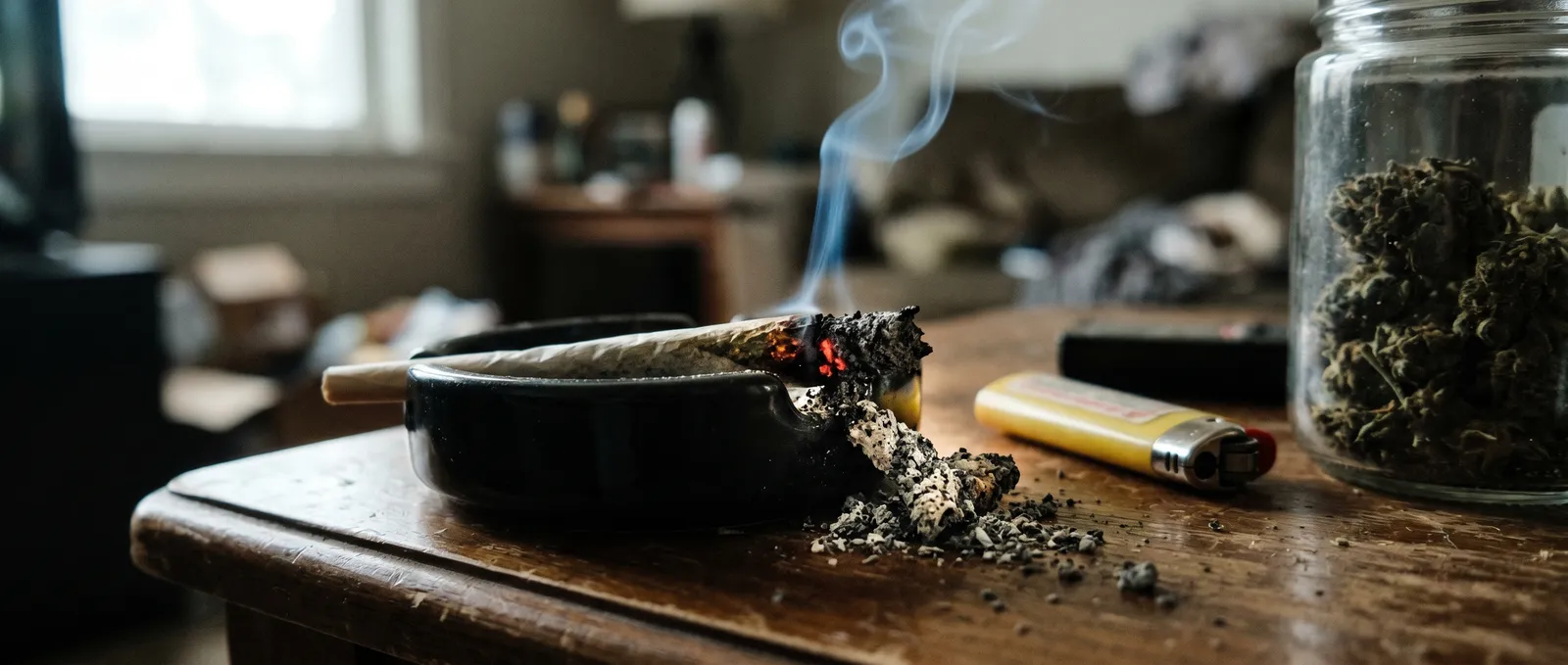
Light a joint and you're not just heating cannabis — you're running a tiny, uncontrolled pyrolysis reactor at around 900°C. At that temperature, the molecules you actually want (THC, CBD, terpenes) don't just vapourise. They shatter. And what comes back out the other end shares an uncomfortable amount of chemistry with tobacco smoke.
A well-circulated YouTube breakdown lays the groundwork, but the science goes deeper than most users realise. This piece looks at what actually happens to a cannabinoid molecule when it meets a flame — and how that contrasts with the two non-combustion routes (vaporisation and edibles) at the molecular level.
This guide is written for adults. The chemistry described applies to adult cannabis users curious about what combustion actually produces. 18+ only
The chemistry of cannabis combustion: what 900°C actually does to a cannabinoid
Combustion isn't heating — it's molecular demolition. The tip of a burning joint hits 700–950°C (Sullivan et al., 2013), well past the point where any organic molecule retains its original structure. THC decomposes meaningfully above ~200°C; at the cherry temperature it's gone in milliseconds.
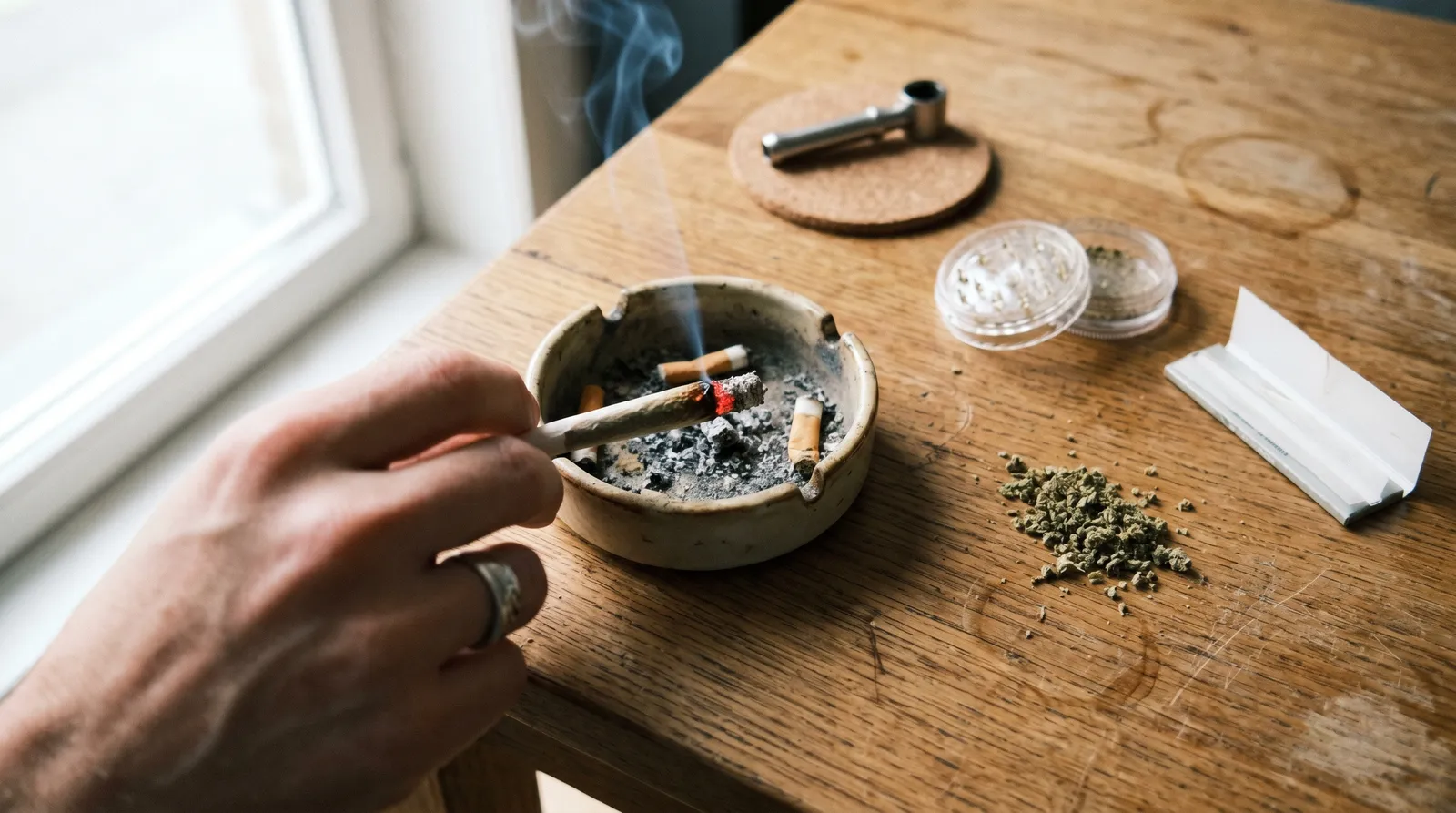
What happens chemically: at those temperatures, carbon–hydrogen and carbon–carbon bonds in cannabinoids and terpenes homolytically cleave, generating reactive organic radicals — unstable fragments with unpaired electrons. These radicals recombine almost randomly into hundreds of new compounds. Researchers using gas chromatography–mass spectrometry have identified more than 100 distinct pyrolysis products in cannabis smoke (Moir et al., 2008), including:
- Formaldehyde — a Group 1 IARC carcinogen, formed from terpene and cannabinoid fragmentation
- Acetaldehyde — Group 2B carcinogen, irritates respiratory tissue
- Benzene — Group 1 carcinogen; one joint can produce levels comparable to 5–10 cigarettes
- Carbon monoxide — incomplete combustion product; binds haemoglobin 200× more readily than oxygen
- Polycyclic aromatic hydrocarbons (PAHs) — including benzo[a]pyrene, the same compound flagged in tobacco tar
The shared chemistry with tobacco isn't a coincidence — it's physics. Burn any plant material above ~500°C and you'll generate a similar toxicant profile, because the radical chemistry doesn't care whether the starting material was Cannabis sativa or Nicotiana tabacum (Moir et al., 2008).
From Our Counter: We've had this conversation with customers for 25 years — people are often surprised that "natural" doesn't mean "clean smoke." The plant is natural. The combustion products are not the plant.
Vaporisation chemistry: why staying below 230°C changes everything
Vaporisation works because cannabinoids and terpenes boil well below the temperature at which they break apart. THC's boiling point sits around 157°C; CBD around 180°C; the major terpenes (myrcene, limonene, pinene) volatilise between 155°C and 220°C. The combustion threshold for plant matter sits roughly at 230°C and rises sharply from there.
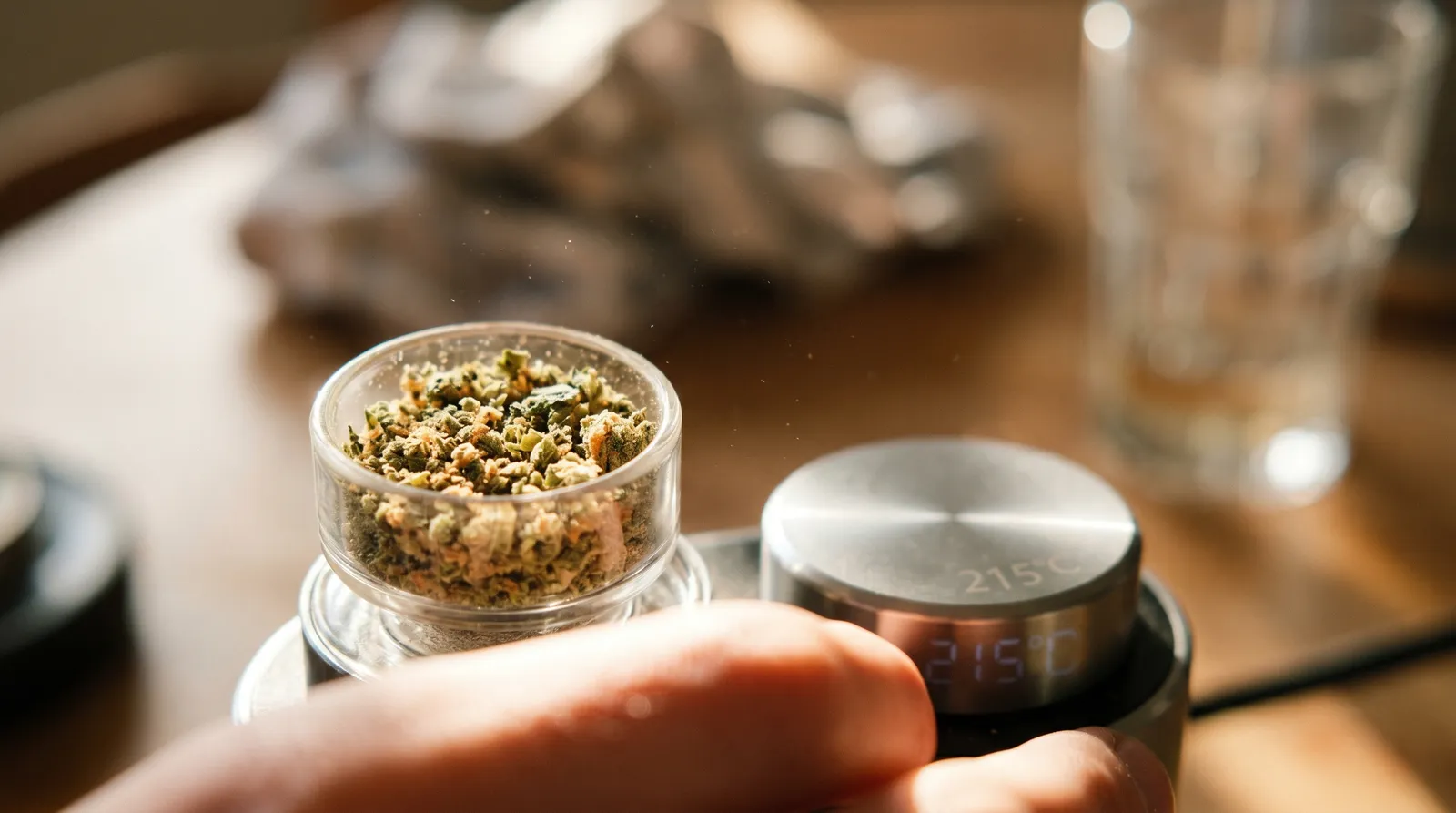
Heat cannabis to ~180–220°C and you get vapour — intact cannabinoid and terpene molecules suspended in air. Heat it past ~230°C and you start crossing into pyrolysis territory, where bonds begin to fracture. This is why vaporisation chemistry is fundamentally different: you're collecting the molecules you want, not the fragments left after they've been destroyed.
A 2007 study in the Journal of Pharmaceutical Sciences (Pomahacova et al., 2009) compared vaporised cannabis with combusted cannabis and found vapour contained roughly 95% cannabinoids by weight versus ~12% in smoke — the rest of the smoke being pyrolysis byproducts. The same study detected no measurable PAHs in vapour at properly controlled temperatures.
| Consumption route | Peak temperature | Major chemistry | Toxicant load |
|---|---|---|---|
| Combustion (smoking) | 700–950°C | Radical pyrolysis, recombination | High — formaldehyde, benzene, CO, PAHs |
| Vaporisation | 180–220°C | Thermal volatilisation | Low — minimal pyrolysis byproducts |
| Edibles (digestion) | Body temperature (37°C) | Hepatic metabolism only | Negligible thermal byproducts |
The 50°C gap between vaporisation and combustion is doing a remarkable amount of work in toxicological terms.
Edibles and decarboxylation: thermal chemistry without smoke
Edibles avoid combustion chemistry entirely because the only thermal step happens in a controlled oven environment — and even that is well below the pyrolysis threshold. Raw cannabis contains THCA (the acid form), which converts to active THC through decarboxylation: the carboxyl group (–COOH) breaks off as CO₂ when held at ~110–120°C for 30–45 minutes.
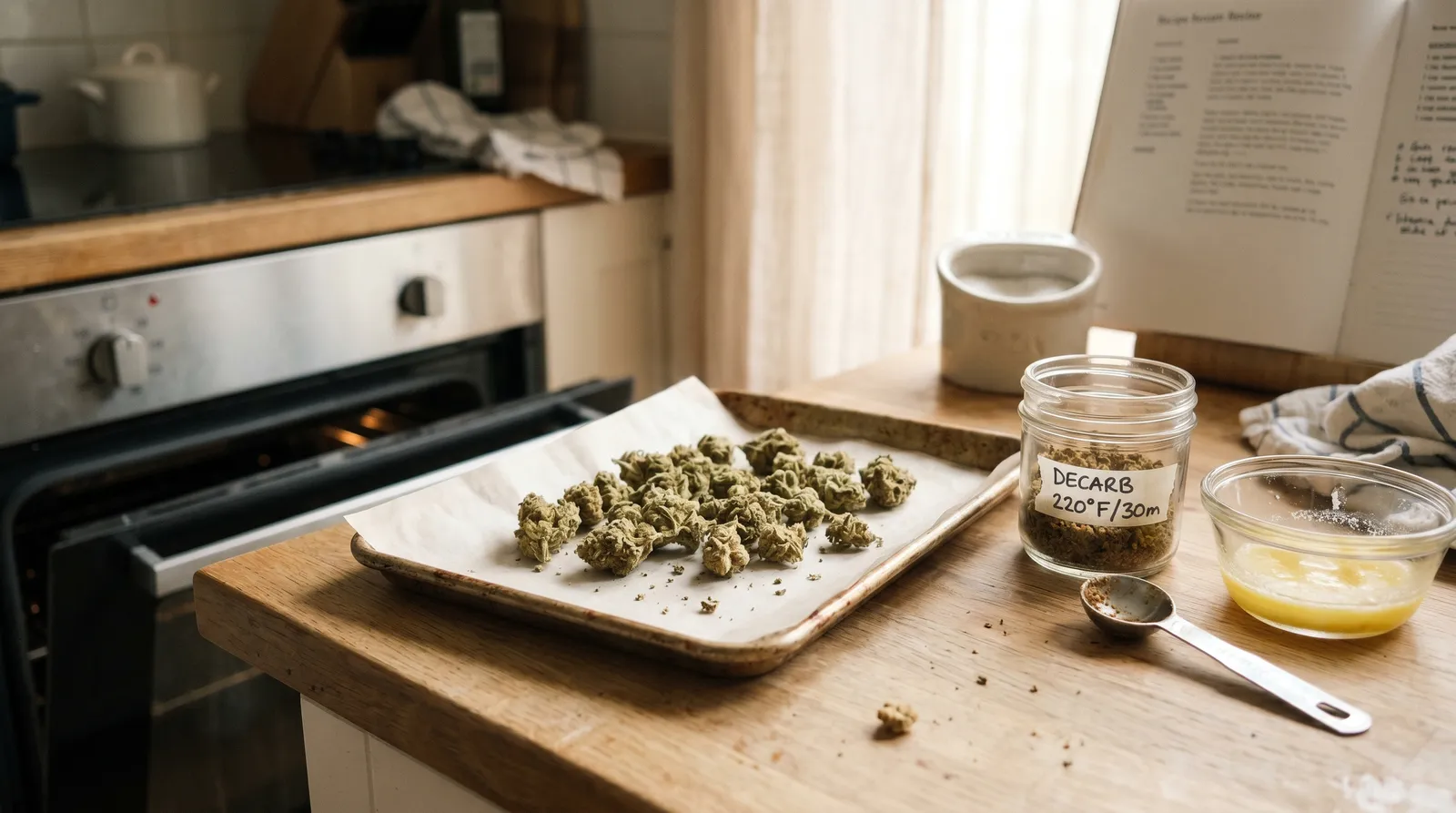
That's a clean reaction. One bond breaks, one CO₂ molecule leaves, and you're left with THC. No radicals, no fragmentation cascade, no formaldehyde. The molecular weight drops by 12.4% (the mass of the lost CO₂), which is where the often-quoted 87.7% conversion figure comes from (Wang et al., 2016).
Once consumed, the chemistry shifts to hepatic metabolism. The liver converts THC to 11-hydroxy-THC via the CYP2C9 and CYP3A4 enzymes — a longer-acting metabolite that crosses the blood-brain barrier more efficiently. No combustion products are involved at any stage, because no combustion ever happened.
From Our Counter: We can't tell you exactly how much pyrolysis damage one specific joint does to one specific person — the dose-response data for cannabis smoke specifically is still patchy compared to tobacco. What we can say is the chemistry is unambiguous: every combustion event generates the same class of toxicants, and avoiding combustion avoids that class entirely.
Frequently Asked Questions
For more on the science behind cannabis consumption methods, see our wiki articles on cannabinoid pharmacology and terpene chemistry. The general consumption-method categories — smoking, vaporising, and edibles — each carry distinct chemistry worth understanding before choosing a route.
Last updated: April 2026
À propos de cet article


Luke Sholl has been writing about cannabis, cannabinoids, and the broader benefits of nature since 2011, and has personally grown cannabis in home grow tents for more than a decade. That first-hand cultivation experience
Cet article de blog a été rédigé avec l’aide de l’IA et relu par Luke Sholl, External contributor since 2026. Supervision éditoriale par Joshua Askew.
Dernière relecture le 14 mai 2026