
Cet article traite de substances psychoactives destinées aux adultes (18+). Consultez un médecin si vous avez une pathologie ou prenez des médicaments. Notre politique d'âge
How to Use a Shisha
Definition
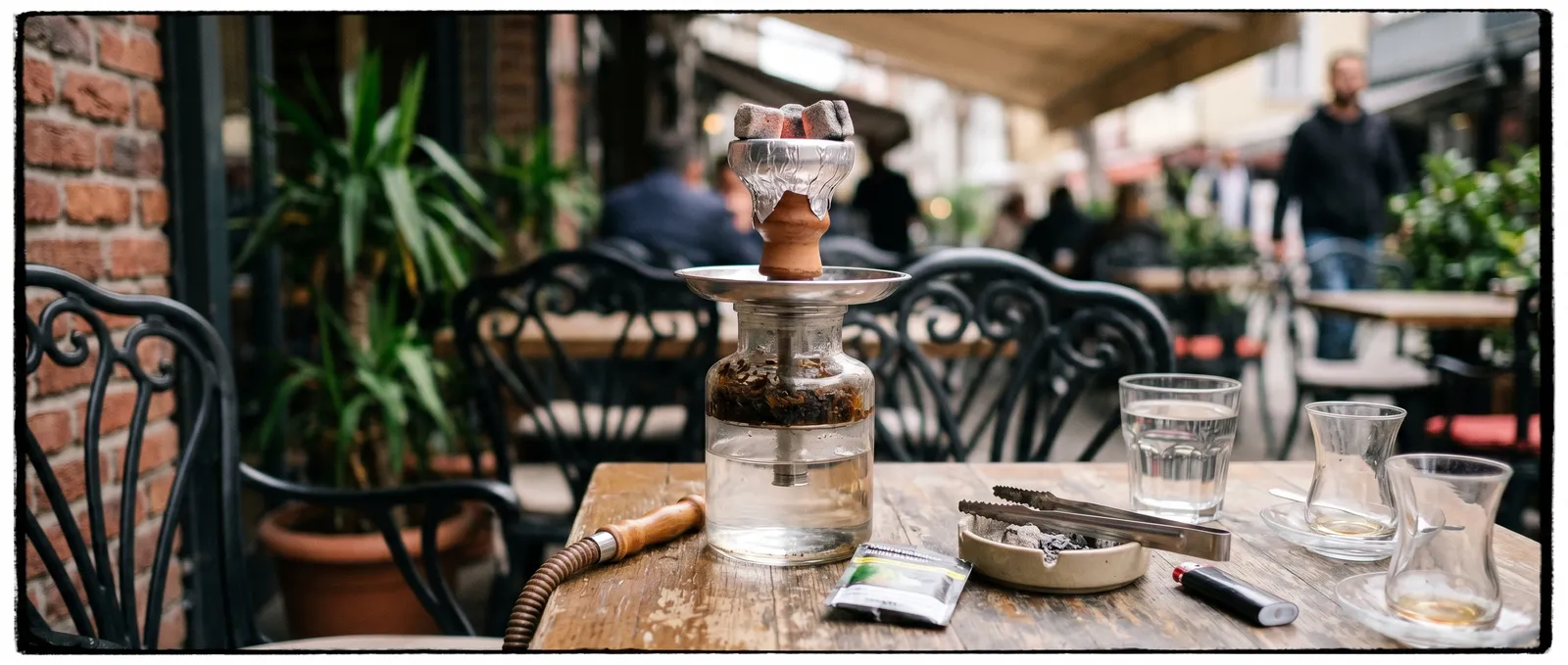
A shisha is a water pipe that filters smoke through a water-filled base, used to smoke flavoured tobacco or herbal blends. The WHO (2015) identified hookah use as a distinct tobacco-consumption method with specific preparation requirements. This guide covers the full setup process, from filling the base to managing heat during a session, aimed at adult users aged 18 and over.
18+ only
A shisha is a water pipe that filters smoke through a water-filled base, used to smoke flavoured tobacco or herbal blends. Also called a hookah, nargileh, or water pipe, the practice of learning how to use a shisha dates back to 16th-century India and Persia, though the modern café-style hookah took shape in Ottoman-era Turkey. This guide on how to use a shisha is written for adults and covers the practical steps of setting up, packing, and smoking a shisha at home, from first assembly to final cleanup. If you've never touched one before, you'll be smoking within 20 minutes of opening the box.
A quick note on what this guide is not: we're not covering the broader health profile of hookah smoking or the pharmacology of nicotine here — those belong to their respective pillar articles. This is purely a how-to for getting the thing working properly.
What You Need Before You Start
A complete shisha setup requires seven core components, and missing even one means a frustrating session. Before lighting anything, gather your full kit so you can focus on technique rather than scrambling for parts.
- The hookah itself — base (vase), stem, hose port(s), purge valve, tray, bowl, and hose. Most modern hookahs come as a complete set. If you want to buy a quality starter hookah, look for stainless steel stems and borosilicate glass bases — they last longer and clean more easily. You can order a complete hookah set from the Azarius shisha category to get everything in one box.
- Shisha tobacco or herbal molasses — flavoured tobacco (mu'assel) is the standard. Herbal alternatives use sugarcane fibre or tea leaves instead of tobacco. Both come pre-mixed with glycerine and flavouring. You can order herbal shisha blends from the Azarius herbal blends range if you prefer a nicotine-free session.
- Charcoal — natural coconut-shell coals are the go-to for anyone learning how to use a shisha properly. Quick-light discs exist but produce a chemical taste and more carbon monoxide. A 2014 study by Cobb et al. found that charcoal type significantly affects toxicant exposure, with coconut coals producing lower levels of carbon monoxide than quick-light alternatives (Cobb et al., 2014). Buy natural coconut coals from the Azarius accessories section for the cleanest sessions.
- Aluminium foil or a heat management device (HMD) — foil is the traditional method; an HMD (a metal disc that sits on the bowl) gives more consistent heat control.
- A coal burner or stove — electric coil burners work best for coconut coals. A standard kitchen gas hob works too, but you'll need a mesh screen to stop coals falling through the grate.
- Tongs — for handling hot coals. Metal, long-handled, no exceptions.
- A poker or toothpick — for poking holes in foil.
- Water — cold, from the tap. Some people add ice cubes for a cooler draw.
Step 1: Fill the Base with Water
The correct water level when you use a shisha is 2.5–4 cm above the bottom of the downstem — the metal tube extending from the main stem into the base. Too little water and you lose filtration; too much and you'll be sucking hard enough to pull a muscle in your cheek.
The water level is the single biggest variable in draw resistance when you use a shisha. If you want a looser, easier pull, go with 2.5 cm of submersion. If you prefer a tighter draw with slightly more filtration, push it to 4 cm. There's no "correct" level — it's personal preference, and you'll adjust it after your first session.
Ice cubes in the base cool the smoke noticeably. Roughly 4–6 cubes in a medium base drops the smoke temperature enough that you'll feel the difference on your first inhale. The water level rises as ice melts, so start slightly lower if you're adding ice.
Step 2: Assemble the Hookah
An airtight seal at every connection point is the foundation of a working shisha. Insert the stem into the base — most modern hookahs use a rubber grommet to create this seal. Push it down firmly until there's no wobble. If air leaks here, the whole session is ruined. You can test by covering the top of the stem with your palm and trying to inhale through the hose port. If you feel resistance, the seal is good. If air flows freely, reseat the grommet or wrap it with a small strip of damp paper towel for a tighter fit.
Attach the hose to its port. Again, a grommet creates the seal. If your hookah has multiple hose ports and you're smoking solo, plug the unused ports with their rubber stoppers — open ports kill suction entirely.
Place the metal tray on top of the stem. This catches ash and provides a resting spot for coals during rotation. Set the bowl on top of the stem (another grommet here), but don't pack it yet — that's the next step. Knowing how to use a shisha means understanding that every joint must be sealed before you even think about tobacco.
Step 3: Pack the Bowl
Bowl packing is the single most important skill in learning how to use a shisha well — it determines flavour intensity, cloud thickness, and session length. This is where most beginners go wrong.
For standard Egyptian-style bowls:
- Take a pinch of shisha tobacco and gently sprinkle it into the bowl. Don't press it down. You want the tobacco sitting loosely, with air gaps between the strands — think "fluffy," not "packed."
- Fill to just below the rim, leaving roughly 2–3 mm of space between the tobacco and where the foil or HMD will sit. If the tobacco touches the heat source, it scorches immediately and tastes like burnt tyres.
- Use a fork or your fingers to break up any clumps. The more evenly distributed the tobacco, the more evenly it heats.
For phunnel bowls (the ones with a single central hole instead of multiple holes at the bottom): the same fluff-pack applies, but make sure you don't block the central spire. Tobacco packed over the spire blocks airflow completely.
A 2016 study from the University of Pittsburgh measured particulate matter output across different packing densities and found that loosely packed bowls produced more consistent heat distribution and lower levels of harmful particulate matter compared to tightly packed bowls (Salloum et al., 2016). So the "fluffy pack" isn't just about flavour — it's measurably better.
Two staff members genuinely argued for fifteen minutes over whether shisha tobacco should be patted flat or left in a loose mound. The flat-patter insisted on "an even plane for even heat." The mound advocate said airflow matters more than geometry. We packed two identical bowls side by side — the fluffy mound smoked for 20 minutes longer and tasted cleaner by the end. The flat-patter now fluffs.
Step 4: Apply Foil or Heat Management Device
Foil or an HMD controls how much heat reaches the tobacco — get this wrong and you'll either scorch the bowl or produce no smoke at all.
If using aluminium foil:
- Tear off a sheet large enough to cover the bowl with 2–3 cm of overhang on all sides.
- Stretch it tightly over the bowl — you want a drum-tight surface, no sagging. Sagging foil touches the tobacco and causes burning.
- Crimp the edges around the bowl to hold it in place.
- Using a toothpick or poker, punch small holes across the entire surface. The pattern matters less than the quantity — aim for 15–25 holes, evenly spaced. Holes that are too large let too much heat through; holes that are too small restrict airflow. A toothpick-width hole is about right.
Some people use a double layer of foil for more heat control. This works well with quick-light coals (which burn hotter and less evenly), but with natural coconut coals a single layer is usually sufficient.
If using an HMD: simply place it on top of the packed bowl. No foil needed. Drop your coals inside, close the lid (most HMDs have adjustable vents), and you're ready. HMDs are more forgiving for beginners learning how to use a shisha because they regulate heat more consistently than foil — though some experienced smokers prefer the control that foil gives them.
Foil vs HMD: A Quick Comparison
We get asked this constantly, so here's an honest breakdown. Foil is cheaper, universally available, and gives experienced users fine-grained control — but it demands attention and practice. An HMD costs more upfront but practically manages itself once you set the vents. For beginners learning how to use a shisha, an HMD reduces the learning curve significantly. For seasoned smokers who enjoy tinkering, foil remains the preferred choice. Neither is objectively "better" — it depends on whether you want convenience or control.
Step 5: Light the Coals
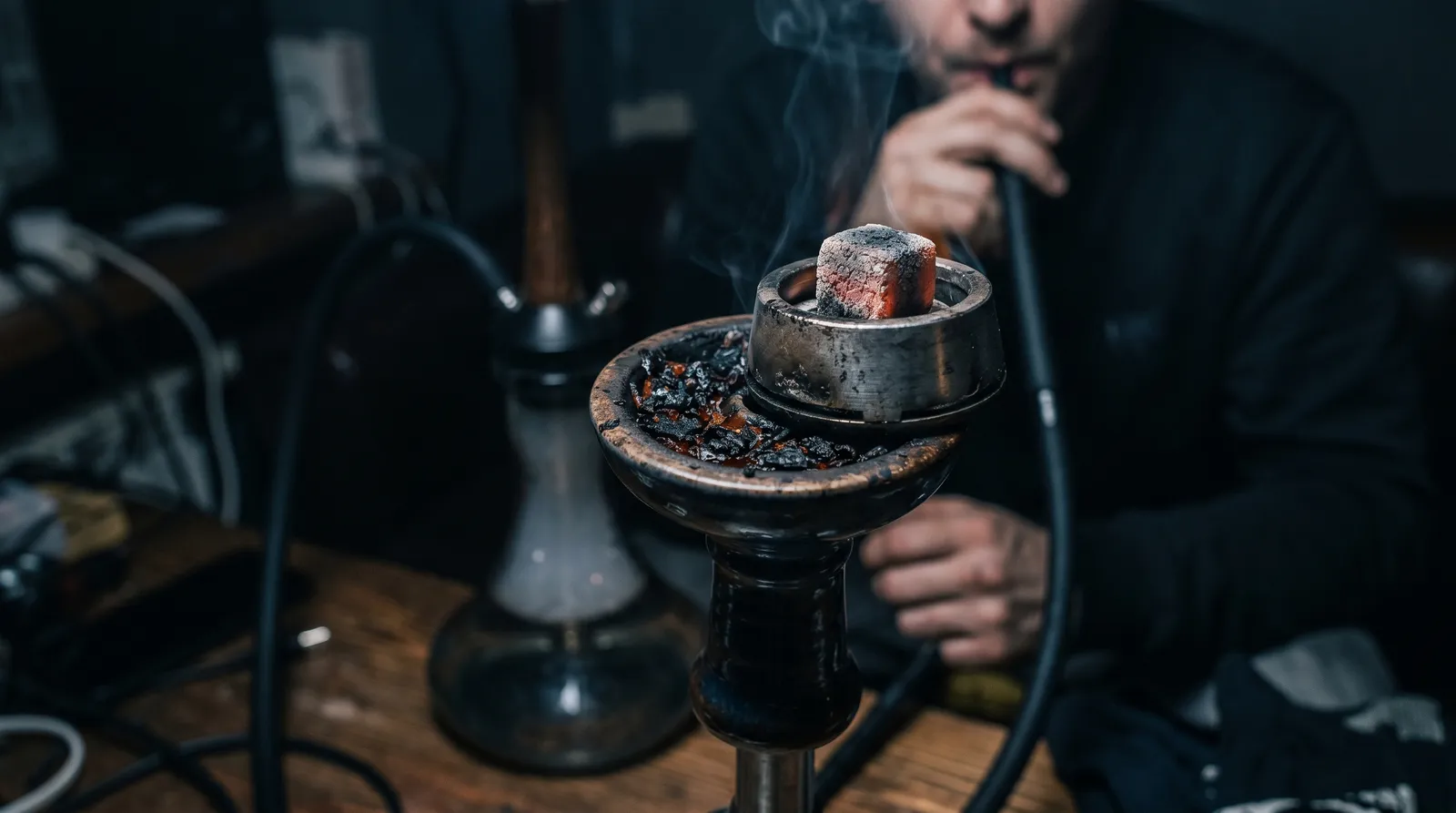
Natural coconut coals need 8–12 minutes on an electric coil burner to fully light. Place 2–3 cubes on the burner and wait — you'll know they're ready when they're glowing orange on all sides with a thin layer of grey ash. No black spots. A half-lit coal produces carbon monoxide without enough heat to properly vaporise the tobacco, which means harsh, flavourless smoke and a headache.
Never light coconut coals with a standard lighter — you'll be there all day and burn your thumb. An electric coil burner (the flat, spiral-element type) is the standard tool. They cost roughly the same as a few packs of coals and last years.
Quick-light coals ignite with a lighter in about 30 seconds and are fully lit in 1–2 minutes. They're convenient, but the accelerant coating produces a noticeable chemical taste for the first few minutes and, according to a WHO study group report, generates higher carbon monoxide levels than natural alternatives (WHO Study Group on Tobacco Product Regulation, 2015). The EMCDDA has also noted the growing popularity of hookah use across Europe and the importance of understanding product-specific risk profiles (EMCDDA, 2023).
Step 6: Place Coals and Start Smoking
Coals should be placed near the edges of the foil, not directly in the centre. Using your tongs, position 2–3 lit coals around the perimeter of the bowl. Edge placement heats the shisha tobacco from the outside in, giving you a longer, more even session.
Give the hookah 3–5 minutes to warm up before your first draw. This is the hardest part for impatient people, but it matters. The glycerine and flavouring in the tobacco need time to start vaporising. If you pull hard immediately, you'll get thin, harsh smoke.
After the warm-up, take slow, steady draws. Not short puffs — long, gentle inhales lasting 3–5 seconds. The smoke should feel smooth and cool (assuming your water level is right). If it's harsh or tastes burnt, you've got too much heat: remove one coal, or shift the coals further toward the edge of the bowl. This is the moment where knowing how to use a shisha properly pays off — patience with heat yields thick, flavourful clouds.
Every 10–15 minutes, use your tongs to gently tap the ash off the coals (onto the tray) and rotate their position on the foil. This keeps heat distribution even and prevents hot spots from scorching the tobacco underneath.
Step 7: Manage Heat Throughout the Session
Heat management is the skill that separates a mediocre shisha session from a great one. Here's the short version:
- Too much heat: harsh taste, throat burn, thin/wispy smoke. Fix: remove a coal, shift coals to edges, or blow gently through the hose to purge (if your hookah has a purge valve — most modern ones do).
- Too little heat: weak flavour, almost no smoke, you're pulling hard and getting nothing. Fix: add a coal, move coals closer to centre, or check that your coals haven't died.
- Perfect heat: thick, flavourful clouds on a relaxed inhale. The tobacco should be gently vaporising, not combusting.
A typical session with natural coconut coals lasts 45–90 minutes, depending on bowl size and packing density. You'll notice the flavour fading toward the end — that's your signal to wrap up. Smoking past the flavour just means inhaling heated glycerine and whatever's left of the charred tobacco.
One of our team members once tried to extend a dying session by adding three fresh coals at once to a bowl that was already fading. Within two minutes the tobacco was charred black and the smoke tasted like a campfire. The lesson: when the flavour goes, the session is over. No amount of extra heat brings it back — you just get a mouthful of carbon. Repack a fresh bowl instead.
Step 8: Clean Up After Your Session
Cleaning after every session is non-negotiable if you want consistent flavour. Residue builds up fast — especially in the stem and base — and old, stale smoke residue ruins the flavour of your next session.
- Let everything cool. The bowl and coals stay hot for 15–20 minutes after you stop smoking.
- Disassemble completely. Remove the bowl, tray, hose, and stem from the base.
- Dump the water. It'll be yellow-brown and smell terrible. That's filtration doing its job — though water filtration removes only a fraction of harmful compounds, not all of them.
- Rinse the base with warm water. For stubborn residue, add a tablespoon of bicarbonate of soda and swirl. Dedicated hookah base brushes (long, flexible bottle brushes) help reach the bottom.
- Clean the stem by running warm water through it. Use a stem brush to scrub the interior. You'll be surprised how much brown gunk comes out, even after a single session.
- Rinse the bowl and let it dry. Don't use soap — it leaves a taste that takes multiple sessions to fade.
- Hose care depends on the hose type. Modern silicone hoses are washable — run water through them and hang to dry. Traditional leather or fabric hoses should not be washed (they'll rust or mould internally). Blow air through them to clear residual smoke and store them hanging.
Shisha vs Other Smoking Methods
A shisha produces cooler, smoother smoke than a dry pipe or cigarette because of water filtration. However, sessions last much longer (45–90 minutes versus a few minutes for a cigarette), meaning total smoke exposure per session is substantially higher. The WHO (2015) estimated that a single hookah session can involve inhaling the equivalent smoke volume of 100 or more cigarettes, though the composition differs.
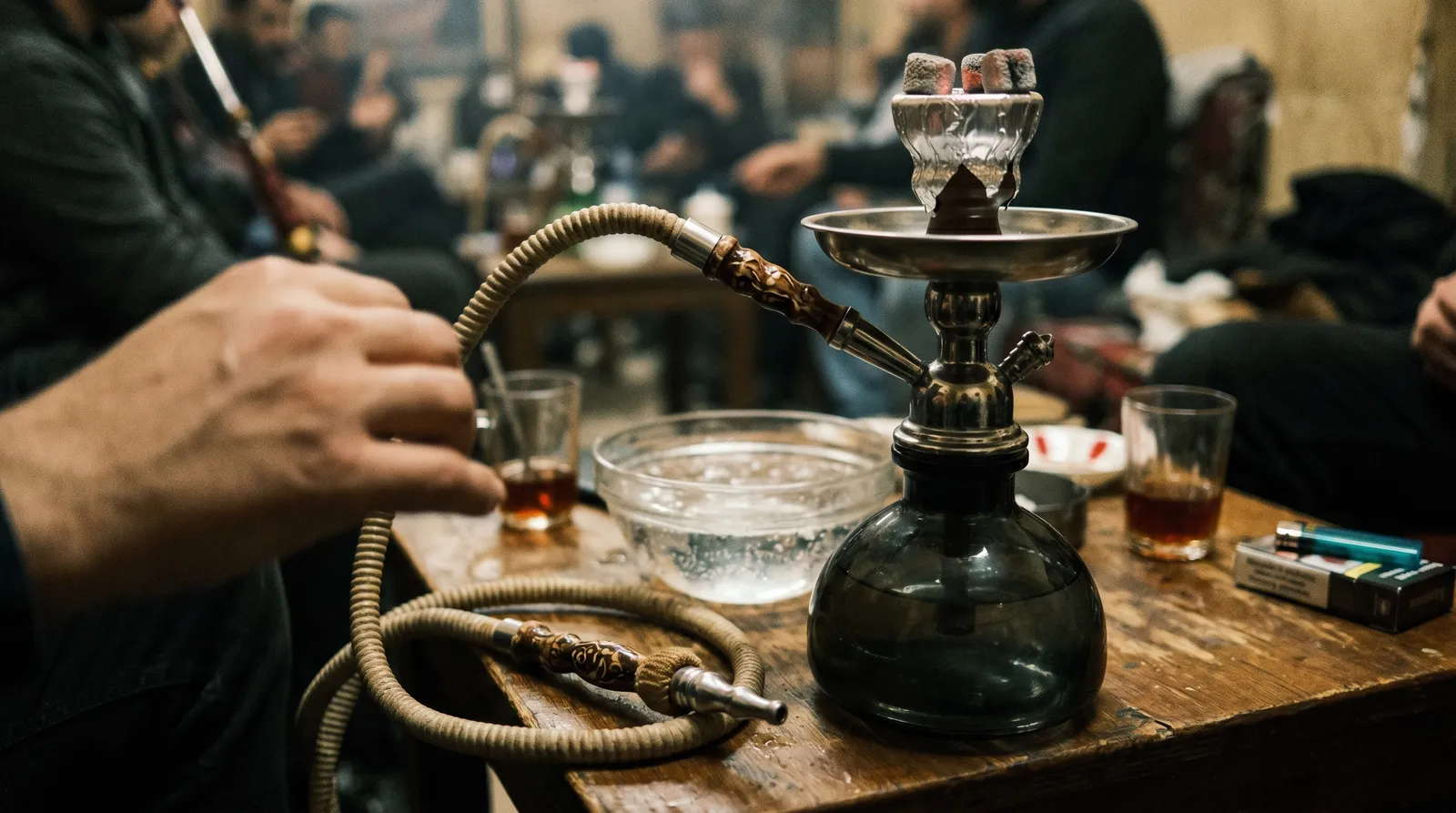
Compared to a dry herb vaporizer, a shisha combusts the tobacco rather than vaporising it at lower temperatures. Vaporizers generally produce fewer combustion byproducts, but they don't deliver the same thick clouds or social ritual that hookah smokers value. If you're primarily interested in harm reduction, a vaporizer is the more conservative choice. If the ritual, flavour, and social aspect matter to you, learning how to use a shisha offers an experience that no other method replicates.
We should be honest about what a shisha cannot do: water filtration does not make the smoke "safe." It cools it and removes some particulate matter, but carbon monoxide, heavy metals, and other toxicants pass through water largely unaffected. Anyone who tells you hookah is harmless because of the water is misinformed. This is a genuine limitation of the device, and no amount of ice, milk, or fancy base fluid changes the underlying chemistry.
Common Mistakes and How to Avoid Them
Most problems when learning how to use a shisha come down to heat control or airflow. The table below covers the seven errors we see most often from customers at the Azarius counter.
| Mistake | What Happens | Fix |
|---|---|---|
| Packing tobacco too tightly | Restricted airflow, weak smoke, uneven heating | Fluff-pack: sprinkle, don't press |
| Using half-lit coals | Headache, harsh taste, carbon monoxide | Wait for full orange glow, no black spots |
| Too much water in the base | Extremely tight draw, water splashing into hose | Submerge downstem 2.5–4 cm only |
| Not warming up before first draw | Thin, flavourless first hits | Wait 3–5 minutes after placing coals |
| Foil touching tobacco | Immediate burning, acrid taste | Leave 2–3 mm gap; stretch foil drum-tight |
| Never rotating coals | Hot spots scorch one area while the rest is undercooked | Rotate every 10–15 minutes |
| Skipping cleanup | Stale, ghosted flavours in next session | Rinse base, brush stem, dry hose after every use |
A customer once brought back a hookah claiming it was "broken — no smoke at all." We checked every seal, repacked the bowl, lit fresh coals — still nothing. Turned out he'd filled the base to the very top with water, completely submerging the stem. The draw resistance was so high that no amount of lung power could pull smoke through. We poured out half the water and it worked perfectly. He'd assumed more water meant more filtration. Technically true, but only if you can actually inhale.
Choosing Your First Shisha Setup
Your first hookah doesn't need to be expensive, but it does need to be functional. A stainless steel stem, a borosilicate glass base, a silicone hose, and a phunnel bowl will get you through hundreds of sessions without replacement. Cheap zinc-alloy stems corrode within months and taint the flavour of every session — we've seen it dozens of times at the counter.
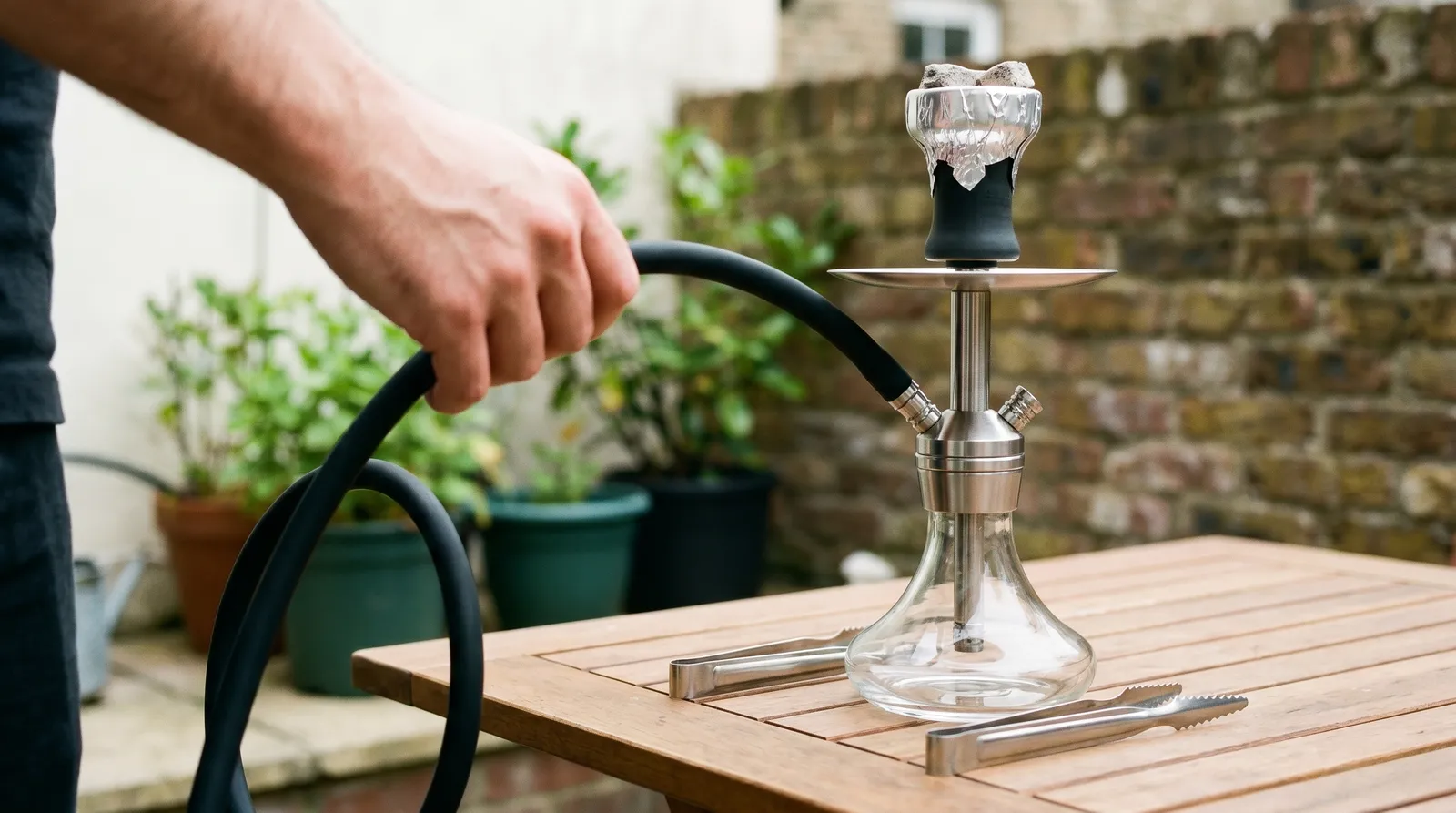
If you want to buy a complete starter kit, look for sets that include the hookah, a hose, tongs, and a bowl. You can get everything you need from the Azarius shisha collection. Separately, order a bag of natural coconut coals and your choice of shisha tobacco or herbal molasses. That's the full shopping list — nothing else required except water and a burner.
We'll be honest: we don't think mini hookahs (under 30 cm tall) are worth it for home use. They look cute, but the short stem means less cooling, the small base holds barely enough water, and the tiny bowls burn through in 20 minutes. They're fine for travel, but if you're setting up at home and want to learn how to use a shisha properly, get a full-size hookah of at least 45 cm. The difference in smoke quality is night and day.
Last updated: April 2026
Questions fréquentes
8 questionsHow much water should I put in a shisha base?
How long does it take to light natural coconut hookah coals?
Why does my shisha taste burnt?
How often should I clean my hookah?
Can I use a shisha without tobacco?
What is the difference between quick-light and natural hookah coals?
How do I pack a shisha bowl properly?
What is a heat management device (HMD) and should I use one?
À propos de cet article


Joshua Askew serves as Editorial Director for Azarius wiki content. He is Managing Director at Yuqo, a content agency specialising in cannabis, psychedelics and ethnobotanical editorial work across multiple languages. Th
Cet article wiki a été rédigé avec l’aide de l’IA et relu par Joshua Askew, Managing Director at Yuqo. Supervision éditoriale par Adam Parsons.
Avertissement médical. Ce contenu est fourni à titre informatif uniquement et ne constitue pas un avis médical. Consultez un professionnel de santé qualifié avant d'utiliser toute substance.
Dernière relecture le 24 avril 2026
References
- [1]Cobb, C.O. et al. (2014). "Influence of hookah tobacco flavoring and charcoal type on toxicant exposure." Nicotine & Tobacco Research, 16(4), pp. 418–425.
- [2]EMCDDA (2023). "European Drug Report 2023: Trends and Developments." European Monitoring Centre for Drugs and Drug Addiction. Luxembourg: Publications Office of the European Union.
- [3]Salloum, R.G. et al. (2016). "Waterpipe tobacco smoking and susceptibility to cigarette smoking among young adults." American Journal of Preventive Medicine, 51(5), pp. 767–775. (Includes secondary analysis of packing density and particulate output.)
- [4]WHO Study Group on Tobacco Product Regulation (2015). "Advisory note: waterpipe tobacco smoking: health effects, research needs and recommended actions for regulators." 2nd edition. Geneva: World Health Organization.