
Cet article traite de substances psychoactives destinées aux adultes (18+). Consultez un médecin si vous avez une pathologie ou prenez des médicaments. Notre politique d'âge
How To Use a Vaporizer for Cannabis
Definition
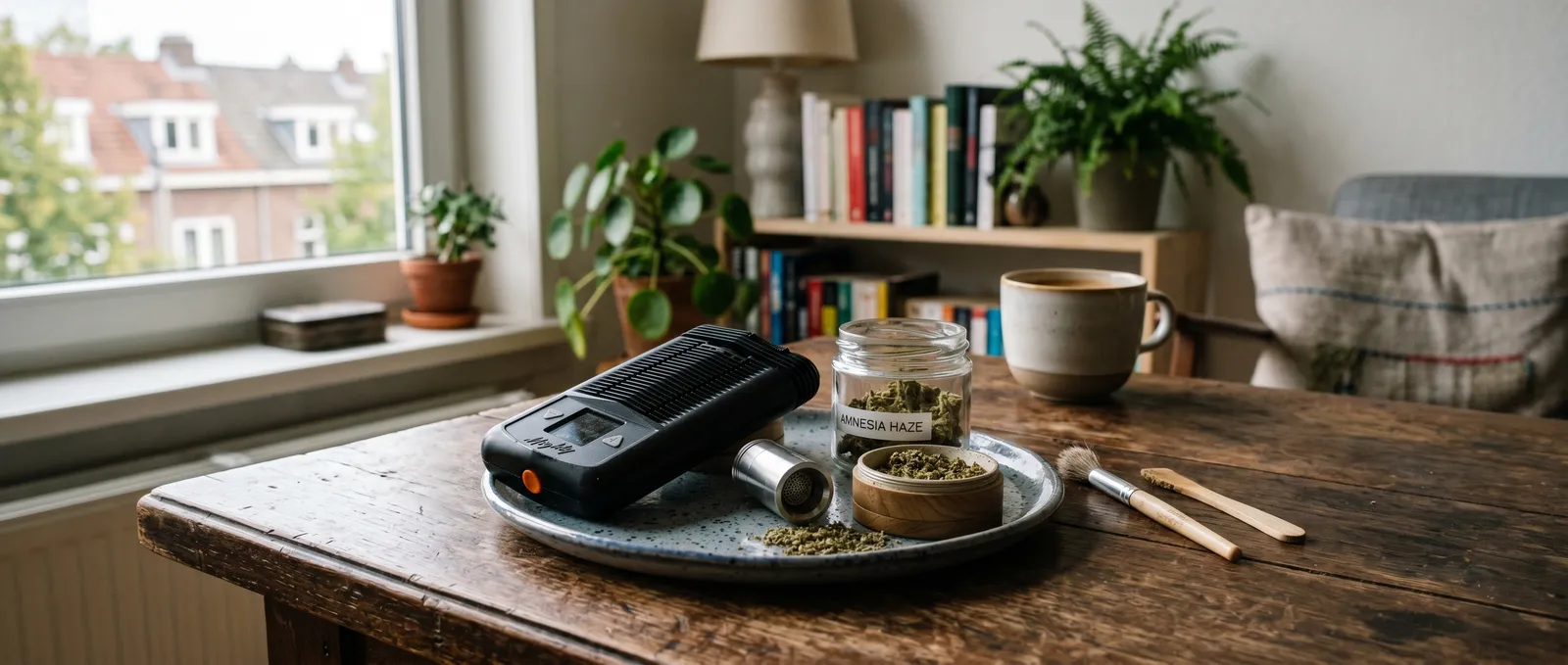
A vaporizer for cannabis is a device that heats dried flower to release cannabinoids and terpenes as inhalable vapour without combustion. A 2007 clinical trial found vaporising delivered equivalent plasma-THC levels to smoking while reducing expired carbon monoxide and respiratory symptoms (Abrams et al., 2007). This guide covers each step from grinding through cleaning.
18+ only — This guide covers adult use of cannabis vaporizers. The temperatures, techniques, and effects described below apply to adult physiology.
A vaporizer for cannabis is a device that heats dried flower or concentrate to a temperature that releases cannabinoids and terpenes as inhalable vapour without combustion. A 2015 systematic review found that vaporising cannabis reduced self-reported respiratory symptoms compared to smoking, while delivering comparable blood-THC levels (Loflin & Earleywine, 2015). If you've only ever smoked joints, the switch can feel odd at first: the vapour is thinner, the taste is different, and the ritual changes. This guide walks you through each step of how to use a vaporizer for cannabis, from grinding to cleaning, so you actually get it right. Whether you want to buy a vaporizer for the first time or get more from the one you already own, every step below is backed by cited research and years of hands-on experience from behind the Azarius counter.
Disclaimer: This article is for informational purposes only and does not constitute medical advice. Cannabis is a controlled substance in many jurisdictions. Consult a healthcare professional before using cannabis, especially if you take medications or have pre-existing health conditions. Always follow the laws applicable in your location.
Step 1: Know Your Device Type
The device type determines how heat reaches your herb, which in turn dictates grind size, packing method, and draw technique. Vaporizers fall into two broad categories — conduction and convection — and the one you're using changes how you approach every step that follows when learning how to use a vaporizer for cannabis.
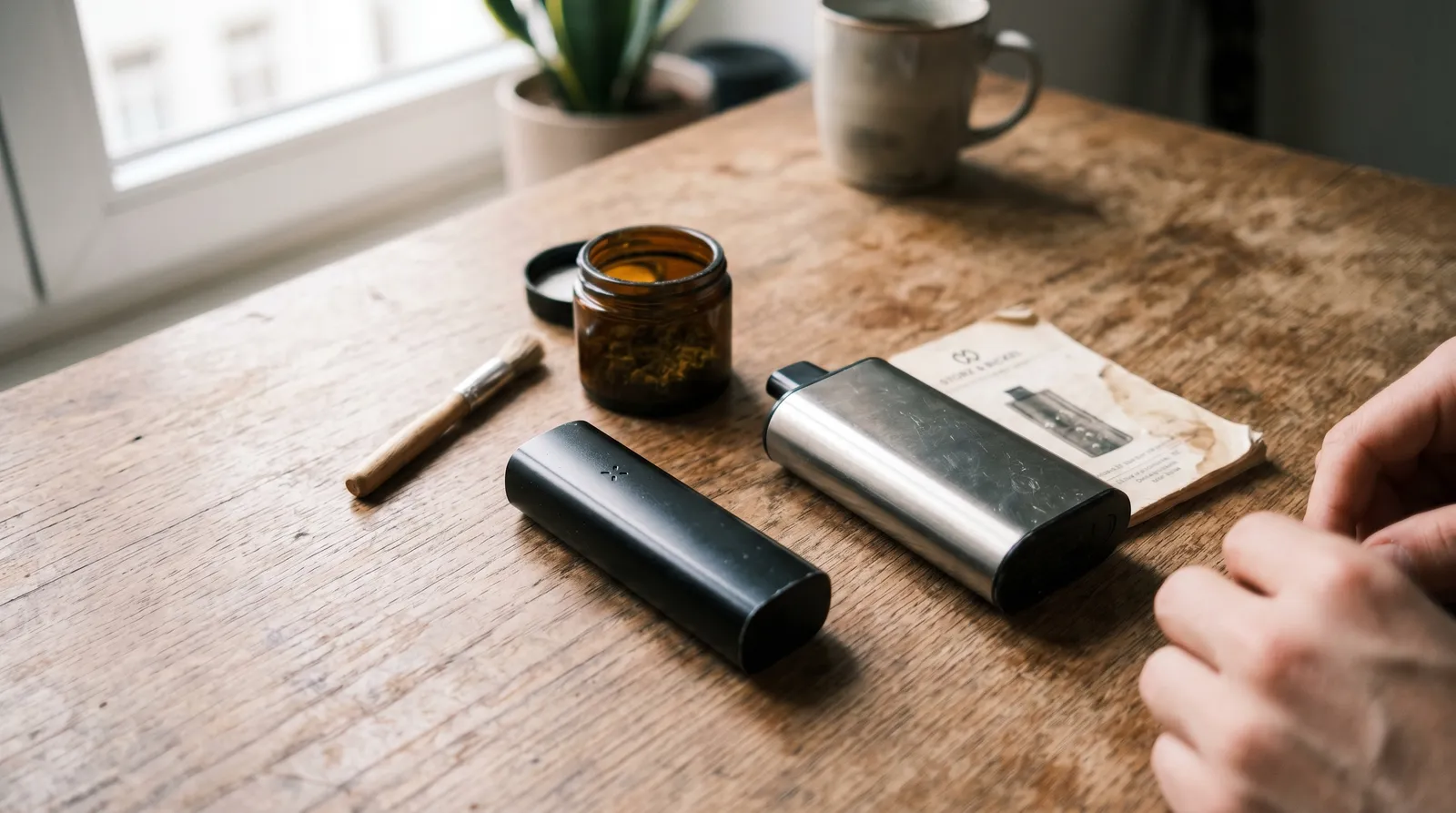
Conduction vaporizers press your herb directly against a heated surface — like a tiny frying pan. They heat up fast (usually 20–40 seconds) but can scorch material at the edges if you don't stir or repack between sessions. Most budget portable vapes use conduction.
Convection vaporizers pull hot air through the herb, heating it more evenly. They typically take 30–90 seconds to reach temperature and produce more consistent vapour. Desktop units like the Volcano by Storz & Bickel are the classic convection example, but several portables now use full or hybrid convection. If you want to buy a vaporizer that handles both flower and concentrates, hybrid models from brands like Storz & Bickel or Arizer often offer the most flexibility. You can browse the Azarius vaporizer category to compare desktop and portable options side by side.
There are also hybrid designs that combine both heating methods. The distinction matters because conduction vapes need a finer grind and tighter pack, while convection vapes want a medium grind with a looser pack to let air flow through. Get this wrong and you'll wonder why your expensive device tastes like hot air or burnt popcorn.
Step 2: Grind Your Cannabis Properly
A consistent, even particle size is the single most important factor in grinding — it ensures heat distributes evenly across the material so every part of the chamber contributes to vapour production. Grinding is where most people first go wrong when learning how to use a vaporizer for cannabis. Tear a nug apart with your fingers and you get chunks of wildly different sizes — the small bits overcook while the big ones barely release anything.
Use a dedicated herb grinder. Two or three twists usually does it. You're aiming for:
- Conduction vapes: Fine to medium grind, like coarse salt. Pack the chamber firmly but not so tight that air can't pass through at all.
- Convection vapes: Medium grind, like dried oregano flakes. Pack loosely — air needs to circulate freely through the material.
Avoid grinding to powder. Ultra-fine particles clog screens, get sucked through mouthpieces, and reduce airflow. If your grinder has a kief catcher, that's fine — you can sprinkle collected kief back onto a packed chamber for a more potent session, though go easy the first time you try this. You can order quality herb grinders from the Azarius grinder accessories category.
Step 3: Pack the Chamber
Proper packing means filling the chamber so that herb makes good contact with the heat source while still allowing adequate airflow. Every vaporizer has an oven, chamber, or bowl — the space where ground herb sits during heating. How you fill it matters more than most people think.
For conduction devices: Fill the chamber completely and tamp down gently with a finger or the flat end of a packing tool. You want the herb in contact with the heated walls, but not compressed into a brick. Think of it like packing brown sugar into a measuring cup — firm, not concrete.
For convection devices: Fill to the top of the chamber but don't press down. The herb should sit there loosely, like a basket of laundry. Overpacking a convection vape kills its main advantage (even airflow) and produces thin, wispy vapour.
A half-packed chamber works in most convection vapes but performs poorly in conduction models. If you want smaller sessions with a conduction vape, look for devices that include dosing capsules or chamber reducers — small metal inserts that shrink the oven size so a half-load still makes proper contact with the heating element. The Azarius vaporizer accessories category carries dosing capsules for popular models like the Mighty+ and the Crafty+.
Step 4: Set Your Temperature
Temperature is the single most important variable when you use a vaporizer for cannabis, because different cannabinoids and terpenes vaporise at different thresholds. The range you choose shapes the character of your session — from light and flavourful to heavy and sedating.
| Temperature Range | What Vaporises | Character of Effects |
|---|---|---|
| 160–180 °C (320–356 °F) | THC (boiling point ~157 °C), pinene, limonene, caryophyllene | Clear-headed, lighter effects, strong flavour, minimal visible vapour |
| 180–200 °C (356–392 °F) | CBD (~160–180 °C), myrcene, linalool, additional THC | Balanced — noticeable body relaxation alongside cerebral effects |
| 200–220 °C (392–428 °F) | CBN, THCV, humulene, remaining compounds | Heavier body effects, thicker vapour, reduced flavour, sedating quality |
A 2004 study using the Volcano vaporizer found that at 200 °C, vapour contained primarily THC with substantially fewer combustion byproducts than smoke, while temperatures above 230 °C began producing benzene and other toxicants (Gieringer et al., 2004). The takeaway: staying below 220 °C generally offers a better balance of potency and cleanliness, according to that research. Above 230 °C, you're essentially starting to combust.
If your vape only has preset heat levels (low, medium, high) rather than precise temperature control, start on the lowest setting and work up. You'll taste the difference immediately — lower settings give bright, terpy flavour; higher settings taste toastier and produce denser clouds.
A practical approach many people use: start a session at 170–180 °C for the first few draws (flavour-forward, light effects), then bump up to 195–210 °C to extract the remaining active compounds. This "temperature stepping" technique gets the most out of a single chamber load.
Step 5: Inhale Correctly
Slow, steady draws of 5–10 seconds produce the best vapour — the opposite of the sharp, fast drag you'd take from a joint. This trips up almost everyone coming from smoking.
Think of sipping a thick milkshake through a straw, not sucking air through a coffee stirrer. Fast, hard pulls cool the chamber down and produce less vapour. Slow pulls let the air spend more time in contact with the heated herb, extracting more cannabinoids per breath.
Hold the vapour briefly (a few seconds is plenty) and exhale. Research published in Pharmacology, Biochemistry and Behavior suggests that THC absorption in the lungs happens within the first few seconds, and holding beyond that primarily increases irritant exposure rather than active compound uptake (Zacny & Chait, 1989).
You might not see much visible vapour on your first few draws at lower temperatures. That's normal. Visible cloud ≠ potency. Some of the tastiest, most effective draws at 175 °C produce almost no visible exhale.
There's a particular face people make when they take their first draw from a vaporizer — a squint of confusion, like they've been handed a cup of tea when they ordered a beer. The vapour feels "empty" compared to smoke. Three minutes later, the effects arrive and the squint turns into raised eyebrows. The delay catches people off guard because smoke delivers irritants alongside cannabinoids, which you feel instantly in your throat. Vapour doesn't do that, so it seems like nothing happened — until it has.
Vaporizing vs. Smoking: An Honest Comparison
We'd be doing you a disservice if we pretended vaporizing is better in every way. Here's what we've honestly observed after years behind the counter: vaporizers win on flavour, efficiency, and reduced irritation. But they lose on simplicity — a joint needs no charging, no cleaning, no temperature decisions. The ritual is different, and some people genuinely prefer the heavier throat hit of smoke. If you're switching purely for the experience, you might be disappointed. If you're switching because you want to taste your terpenes and reduce respiratory irritation, you'll likely never go back. Neither method is perfect.
Step 6: Know When the Bowl Is Done
A spent chamber looks uniformly dark brown — like roasted coffee grounds — with no remaining green patches and almost no vapour production. This material is often called AVB ("already vaped bud").
Signs your bowl is finished:
- Vapour production drops to nearly nothing, even at 200+ °C
- The taste turns flat, papery, or slightly burnt — like toasted cardboard
- The herb is evenly dark brown throughout (not black — black means you combusted)
AVB still contains residual cannabinoids — typically an estimated 10–30% of the original content, depending on your vaping temperature, though exact figures vary by strain and device. Some people save it for edible preparations, though the flavour is fairly rough. If you vaped at lower temperatures (under 190 °C), the AVB retains more active compounds than material vaped at 210+ °C.
Step 7: Clean Your Vaporizer Regularly
Regular cleaning maintains airflow, flavour quality, and device longevity — resin builds up inside the vapour path, mouthpiece, and chamber screen after every session. Ignore it and you'll notice reduced airflow, muted flavour, and eventually a device that tastes like an old ashtray regardless of what you load into it.
After every session: Empty the chamber while it's still warm (herb falls out more easily). Use the brush that came with your device to sweep out loose particles.
Every 5–10 sessions: Soak removable parts (mouthpiece, screens, o-rings) in isopropyl alcohol (90%+ concentration) for 15–30 minutes. Rinse with warm water and let everything dry completely before reassembling. For the chamber itself, dip a cotton bud in isopropyl and wipe the interior walls. Never submerge the main body of an electronic vaporizer.
Every few weeks: Run a "burn-off" cycle — heat the empty device to maximum temperature for 2–3 minutes to volatilise any residual buildup in areas you can't reach with a cotton bud. Do this near an open window; it won't smell great.
Screens are consumables. When a screen is so clogged that soaking doesn't restore airflow, replace it. Most manufacturers sell packs of spares for a few euros. You can order replacement screens and cleaning kits from the Azarius vaporizer accessories category.
Common Mistakes and How To Avoid Them
- Starting too hot. Jumping straight to 210 °C wastes the terpene-rich low-temperature draws and can feel harsh. Start at 170–180 °C and step up.
- Inhaling too hard. Fast draws cool the chamber. Slow and steady wins.
- Using damp herb. Cannabis that's too moist produces steam instead of cannabinoid-rich vapour and can gum up the chamber. Your herb should feel dry to the touch, snap cleanly when you break a small stem, and grind without clumping. If it's sticky, leave it in a jar with the lid off for a few hours.
- Never cleaning the device. Residue buildup is the number-one reason people think their vaporizer "stopped working." It didn't — it's just clogged.
- Expecting instant clouds. Especially at lower temperatures, visible vapour is minimal. Trust the process. Effects typically arrive within 5–15 minutes.
- Comparing it to smoking. The onset curve is slightly different. Vapour tends to come on a touch more gradually than smoke, though a 2018 controlled study at Johns Hopkins found that vaporised cannabis produced stronger subjective effects and higher blood-THC concentrations than smoked cannabis at equivalent doses (Spindle et al., 2018). If you feel underwhelmed, wait at least 15 minutes before considering a second chamber.
The mistake we see most often isn't technical — it's psychological. People buy a vaporizer, use it once at maximum temperature with a poorly ground, half-packed chamber, get a harsh wisp of nothing, and decide vaping "doesn't work." Then the device sits in a drawer for six months. If that's you, try once more with the steps above. Grind properly, pack according to your device type, start at 175 °C, and draw slowly. Nine times out of ten, that drawer vaporizer turns out to work just fine.
Choosing the Right Vaporizer
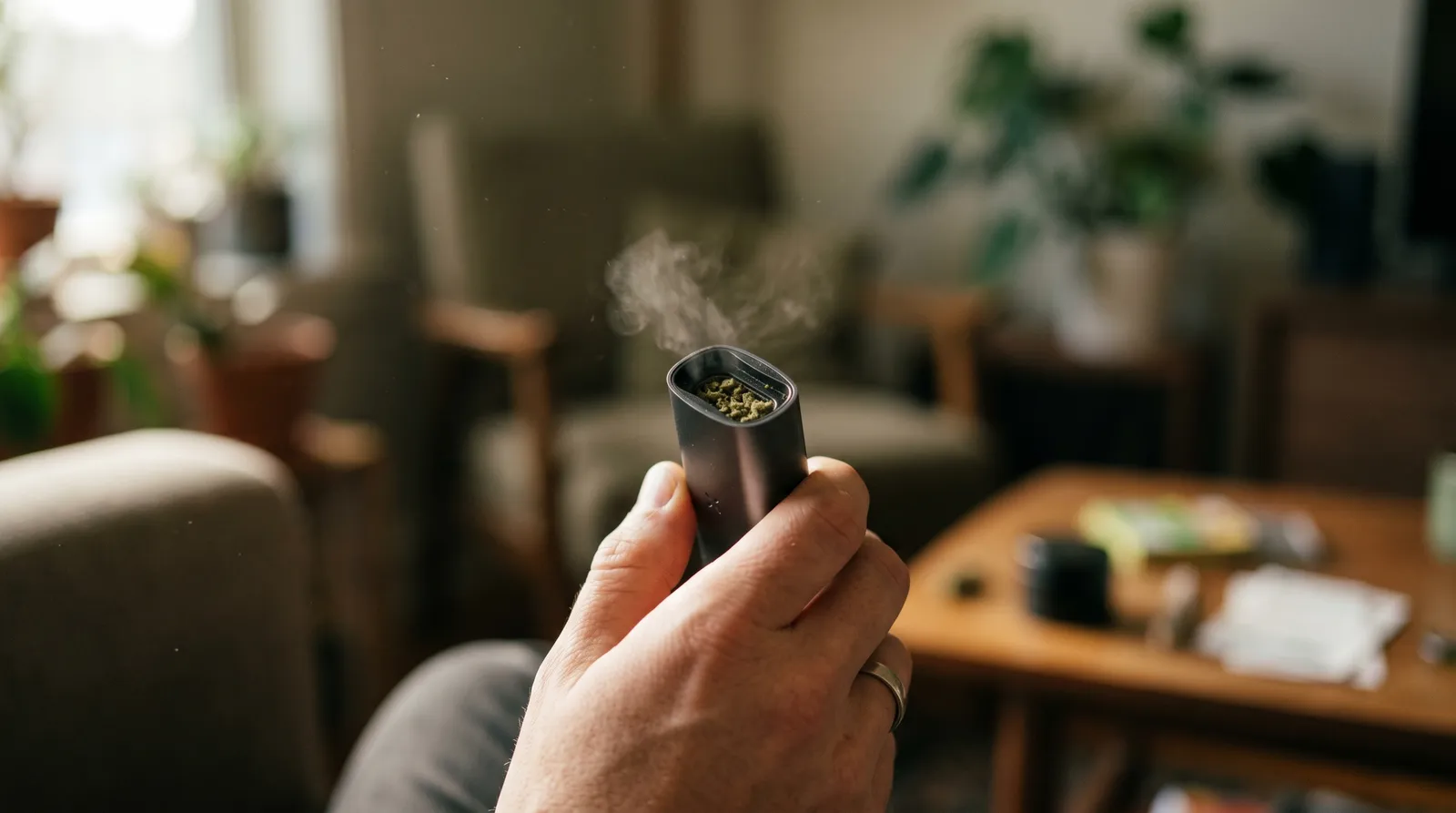
The best vaporizer depends on whether you prioritise portability, vapour quality, or session size. Desktop vaporizers like the Volcano Hybrid by Storz & Bickel and the Arizer Extreme Q deliver the most consistent convection vapour and are ideal for home use. Portable options like the Mighty+ by Storz & Bickel, the Arizer Solo 2, and the DaVinci IQ2 offer precise temperature control in a pocket-friendly format. Budget-conscious users often get excellent results from the XMAX V3 Pro or the Flowermate range. Browse the Azarius vaporizer category to find the right fit — and if you're unsure, the Azarius wiki article on choosing a vaporizer breaks down each type in detail.
We get asked "which vaporizer should I buy?" roughly ten times a day. Our honest answer is always the same: if you can afford it, get a Mighty+ or a Volcano — they're the workhorses that rarely disappoint. But if you're not sure vaping is for you yet, start with something in the €60–€100 range like the XMAX V3 Pro. A mediocre vaporizer used properly still beats a premium vaporizer collecting dust because you spent too much and felt guilty about it. The best device is the one you'll actually use.
A Note on Concentrates
Concentrates require a compatible device — one with a dedicated concentrate chamber or insert — because not all vaporizers are designed to handle them. Some vaporizers support both dried flower and concentrates (wax, shatter, rosin), but these are different materials requiring different chambers, temperatures, and techniques. Concentrates typically vaporise at higher temperatures than flower and deliver substantially higher cannabinoid concentrations per draw. If your device includes a concentrate pad or insert, start with a very small amount — concentrate potency is significantly higher than typical dried flower, so approach cautiously and gauge your response. The Azarius wiki article on cannabis concentrates covers this topic in detail, and you can buy concentrate-compatible vaporizers from the Azarius vaporizer category.
European Research and Regulatory Context
European monitoring bodies provide useful context for understanding how to use a vaporizer for cannabis within the broader public health field. The European Monitoring Centre for Drugs and Drug Addiction (EMCDDA, now EUDA) has noted in its annual European Drug Reports that vaporisation is increasingly common among European cannabis users, though combustion-based methods still dominate (EMCDDA, 2023). A 2020 Beckley Foundation report on cannabis policy and harm reduction highlighted vaporisation as one of several strategies that may reduce respiratory harms associated with cannabis inhalation, while emphasising that long-term evidence remains limited (Beckley Foundation, 2020). These European sources reinforce the clinical findings cited above: the direction of evidence favours vaporisation over smoking for respiratory outcomes, but definitive long-term conclusions are not yet available.
Health Context
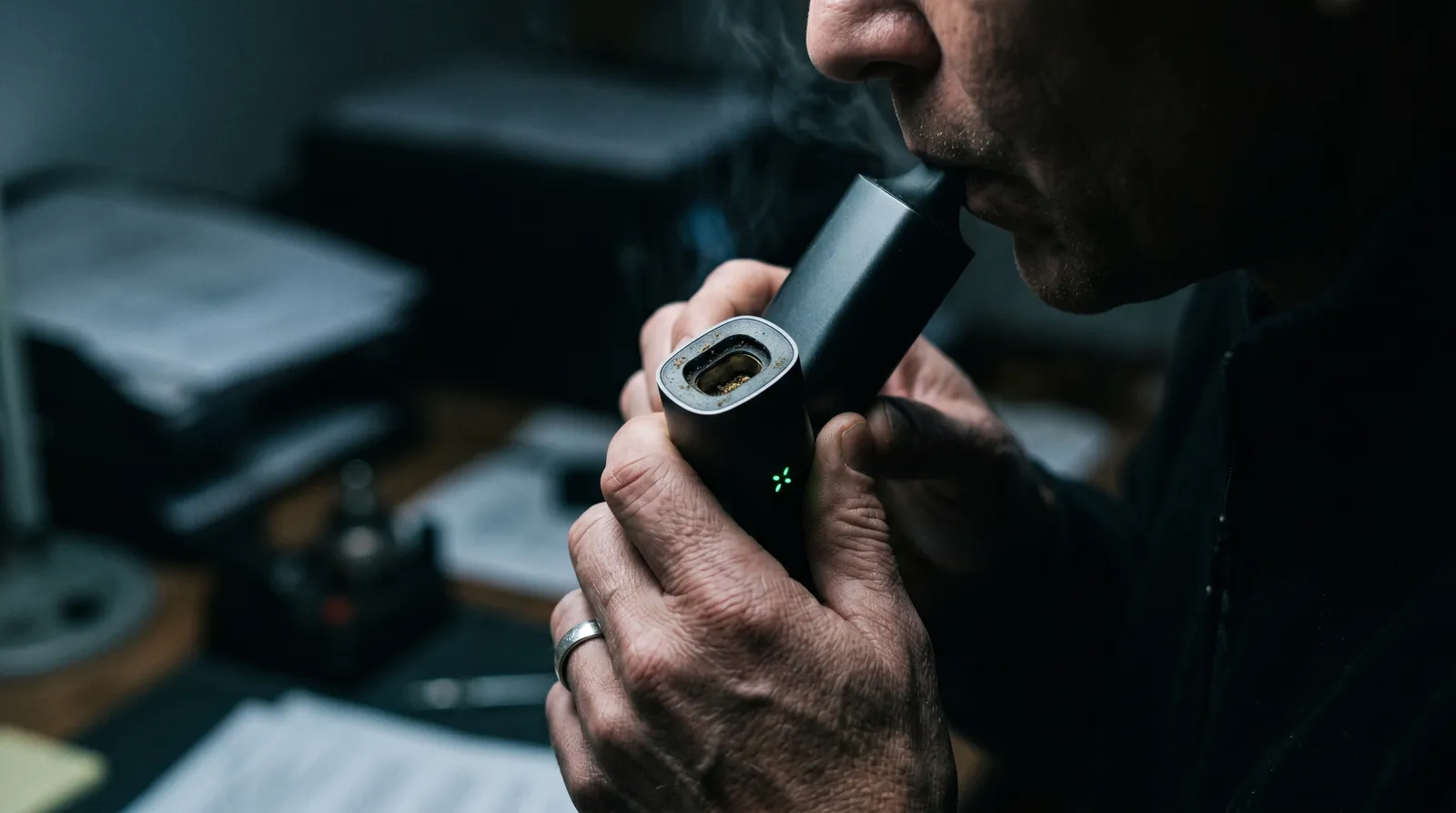
The clinical picture is encouraging but incomplete. A 2007 clinical trial published in Clinical Pharmacology & Therapeutics found that vaporising cannabis reduced expired carbon monoxide and self-reported respiratory symptoms compared to smoking, while delivering equivalent plasma-THC levels (Abrams et al., 2007). A later review by the National Academies of Sciences, Engineering, and Medicine (2017) concluded there was moderate evidence that cannabis vaporising reduces respiratory symptoms compared to smoking. Long-term data specific to vaporiser use, however, remains limited — most longitudinal cannabis studies don't distinguish between inhalation methods, so we're still waiting on decade-scale evidence for vaporising specifically.
If you take medications that interact with cannabinoids — particularly anything metabolised by CYP3A4 or CYP2C9 enzymes — consult the Azarius wiki article on cannabis interactions before use.
Last updated: April 2026
Questions fréquentes
8 questionsWhat temperature should I set my cannabis vaporizer to?
Why am I not getting visible vapour from my vaporizer?
How do I know when the bowl is finished in a vaporizer?
Is vaporising cannabis actually healthier than smoking it?
How fine should I grind cannabis for a vaporizer?
Can I save already vaped bud (AVB) for later use?
What is the difference between conduction and convection vaporizers?
How often should I clean my cannabis vaporizer?
À propos de cet article


Joshua Askew serves as Editorial Director for Azarius wiki content. He is Managing Director at Yuqo, a content agency specialising in cannabis, psychedelics and ethnobotanical editorial work across multiple languages. Th
Cet article wiki a été rédigé avec l’aide de l’IA et relu par Joshua Askew, Managing Director at Yuqo. Supervision éditoriale par Adam Parsons.
Avertissement médical. Ce contenu est fourni à titre informatif uniquement et ne constitue pas un avis médical. Consultez un professionnel de santé qualifié avant d'utiliser toute substance.
Dernière relecture le 24 avril 2026
References
- [1]Loflin, M. & Earleywine, M. (2015). No smoke, no fire: What the initial literature suggests regarding vapourized cannabis and respiratory risk. Canadian Journal of Respiratory Therapy, 51(1), 7–9.
- [2]Gieringer, D., St. Laurent, J. & Goodrich, S. (2004). Cannabis vaporizer combines efficient delivery of THC with effective suppression of pyrolytic compounds. Journal of Cannabis Therapeutics, 4(1), 7–27.
- [3]Zacny, J.P. & Chait, L.D. (1989). Breathhold duration and response to marijuana smoke. Pharmacology, Biochemistry and Behavior, 33(2), 481–484.
- [4]Spindle, T.R. et al. (2018). Acute effects of smoked and vaporized cannabis in healthy adults who infrequently use cannabis. JAMA Network Open, 1(7), e184841.
- [5]Abrams, D.I. et al. (2007). Vaporization as a smokeless cannabis delivery system. Clinical Pharmacology & Therapeutics, 82(5), 572–578.
- [6]National Academies of Sciences, Engineering, and Medicine. (2017). The Health Effects of Cannabis and Cannabinoids. Washington, DC: The National Academies Press.
- [7]European Monitoring Centre for Drugs and Drug Addiction. (2023). European Drug Report 2023: Trends and Developments. Luxembourg: Publications Office of the European Union.
- [8]Beckley Foundation. (2020). Cannabis Policy: Moving Beyond Stalemate. Oxford: Beckley Foundation Press.