
Carb Caps & Terp Pearls Guide: How to Use Them
Definition
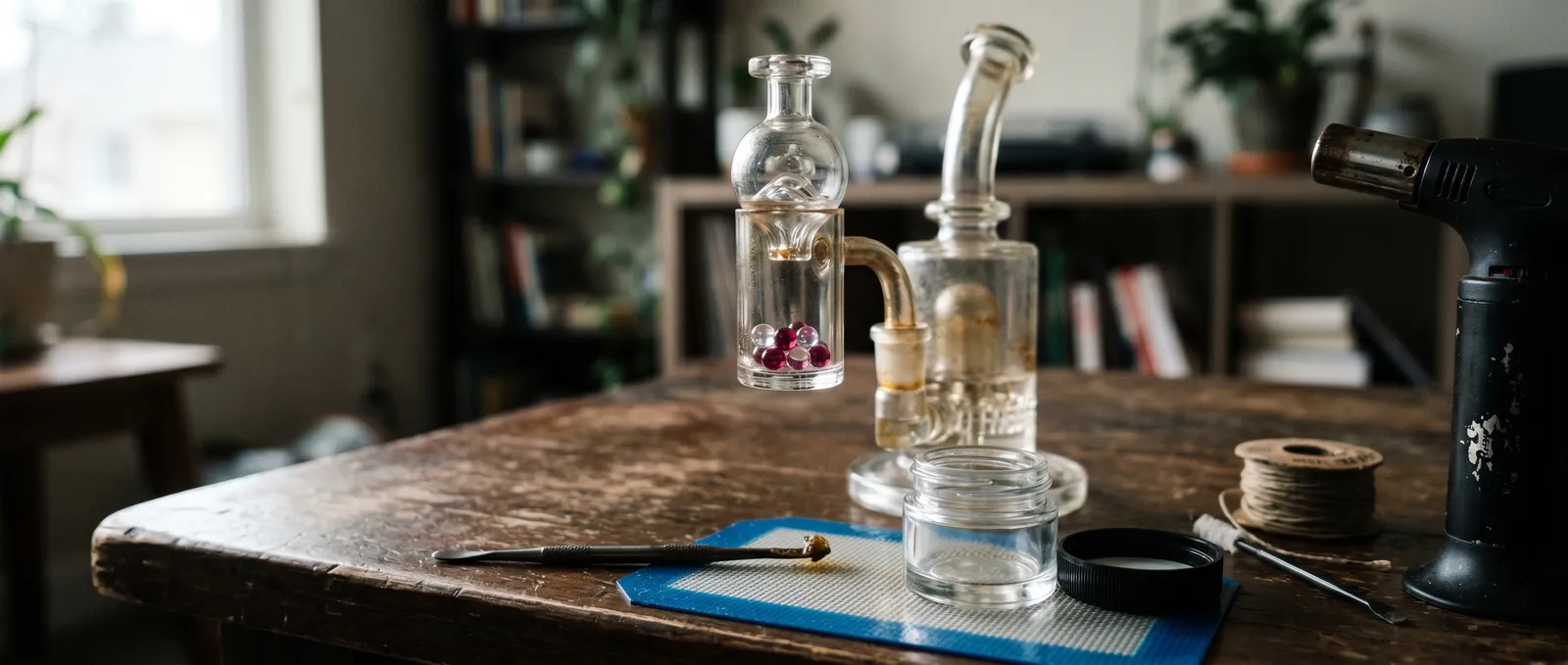
Carb caps restrict airflow over a heated banger, lowering internal air pressure so concentrates vaporise at lower temperatures. Terp pearls spin inside the banger to distribute concentrate evenly across the heated surface. Together, they reduce waste and preserve terpenes that degrade above 150 °C (Russo, 2011). This guide walks through choosing, using, and maintaining both.
What Carb Caps and Terp Pearls Actually Do
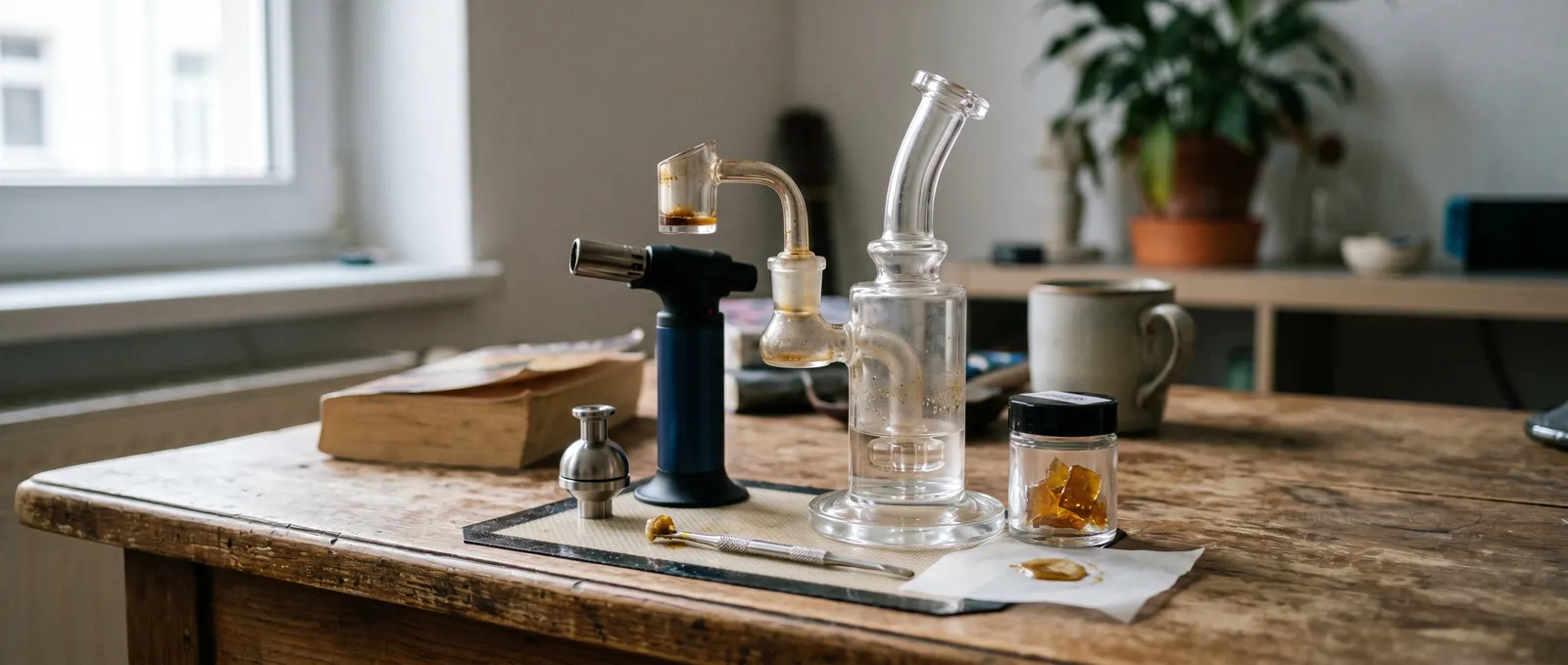
Dabbing hardware for adults (18+) — if you've got a quartz banger and a torch, you're halfway to a decent low-temperature dab. The other half is airflow control. A carb cap restricts and redirects the air entering your banger, dropping the internal air pressure so concentrates vaporise at lower temperatures — roughly 230–290 °C (450–550 °F) instead of the 370 °C+ (700 °F+) you'd hit with an open banger. Terp pearls sit inside the banger and spin when that redirected air hits them, spreading concentrate across the heated surface so nothing pools in one spot and chars.
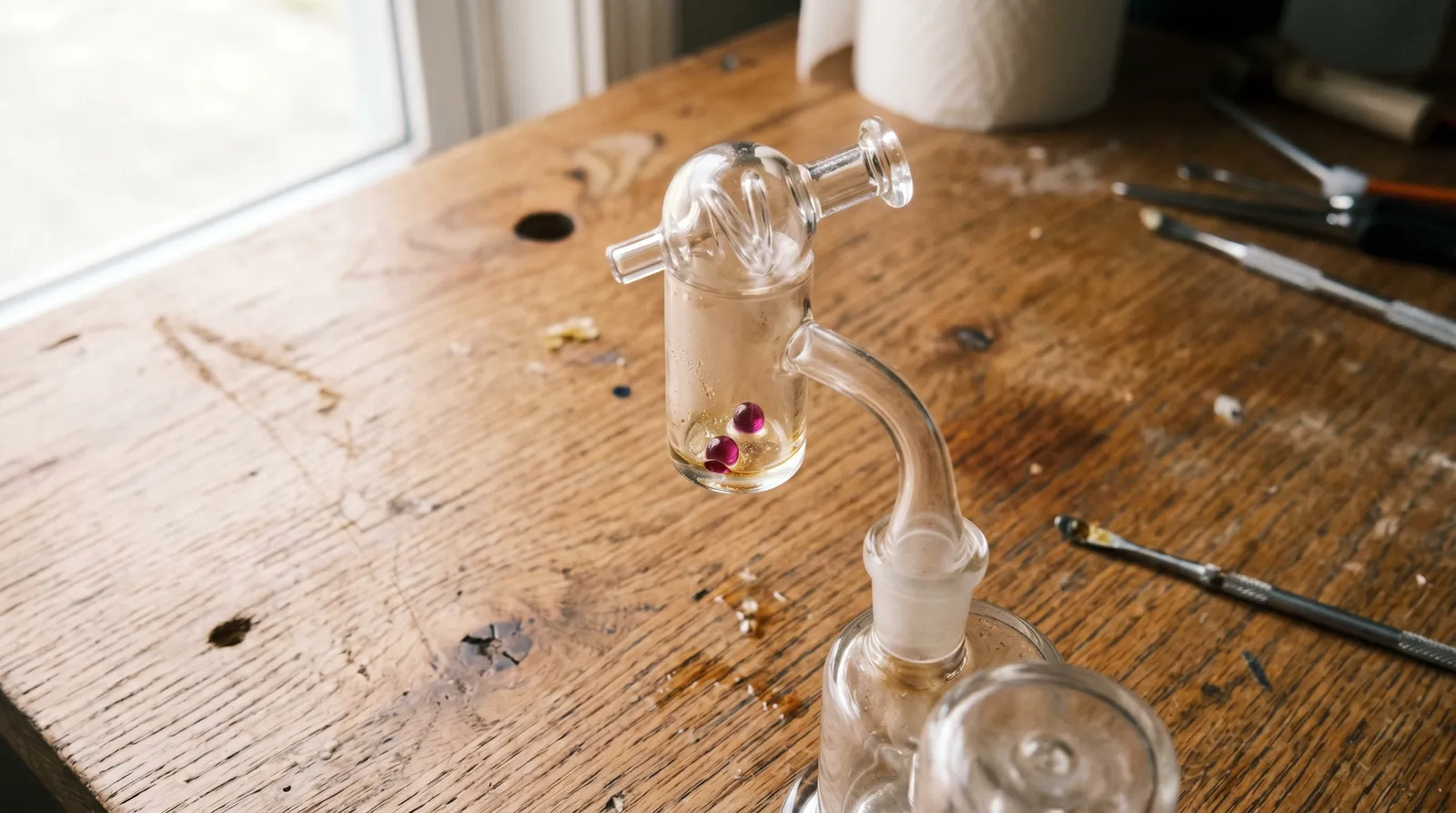
Together, they solve the two biggest problems in dabbing: wasted material and harsh, overheated vapour. Used properly, a cap and a couple of pearls can stretch the same amount of concentrate noticeably further while keeping flavour intact. According to a terpene volatility study by Russo (2011), many monoterpenes begin degrading above 150 °C, which means every degree you shave off your dab temperature preserves compounds that would otherwise combust into irritants.
Step 1 — Choose the Right Carb Cap Style
Not every carb cap works with terp pearls. There are three main styles, and only two of them reliably spin pearls. Here's the breakdown:
| Cap Style | Airflow Type | Spins Pearls? | Best For |
|---|---|---|---|
| Flat / standard cap | Straight down | No — air pushes down, not around | Basic low-temp dabs without pearls |
| Bubble cap | Directional (angled stem) | Yes — you manually angle the stem to spin pearls | Versatile; works with most banger shapes |
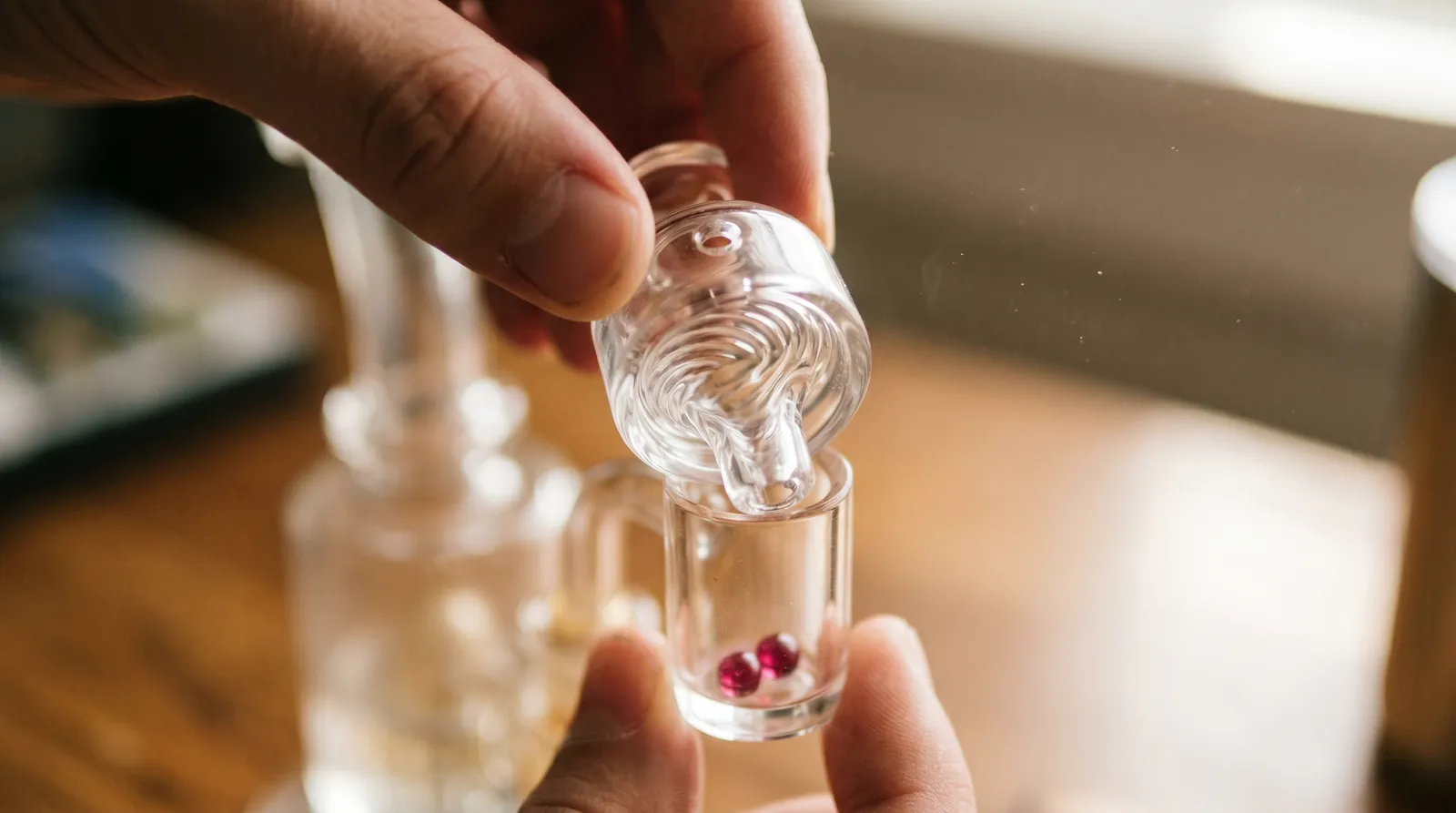
| Spinner / vortex cap | Angled internal channels | Yes — automatic cyclone airflow spins pearls hands-free | Dedicated pearl setups; flat-top bangers |
If you're planning to use terp pearls, a spinner (vortex) cap is the most consistent option. The angled air channels inside the cap create a cyclone effect that keeps pearls moving without you having to tilt or rotate anything. Bubble caps work too, but you'll need to angle the directional stem yourself while inhaling — a bit of a juggling act when you're also holding a hot rig.
Fit matters as well. The cap needs to sit snugly on your banger's opening without being airtight to the point where you can't draw at all. A slight wobble is fine; a 5 mm gap around the edges defeats the purpose. Most caps are sized for standard 25 mm flat-top bangers, so check your banger's inner diameter before buying.
Step 2 — Pick Your Terp Pearl Material and Size
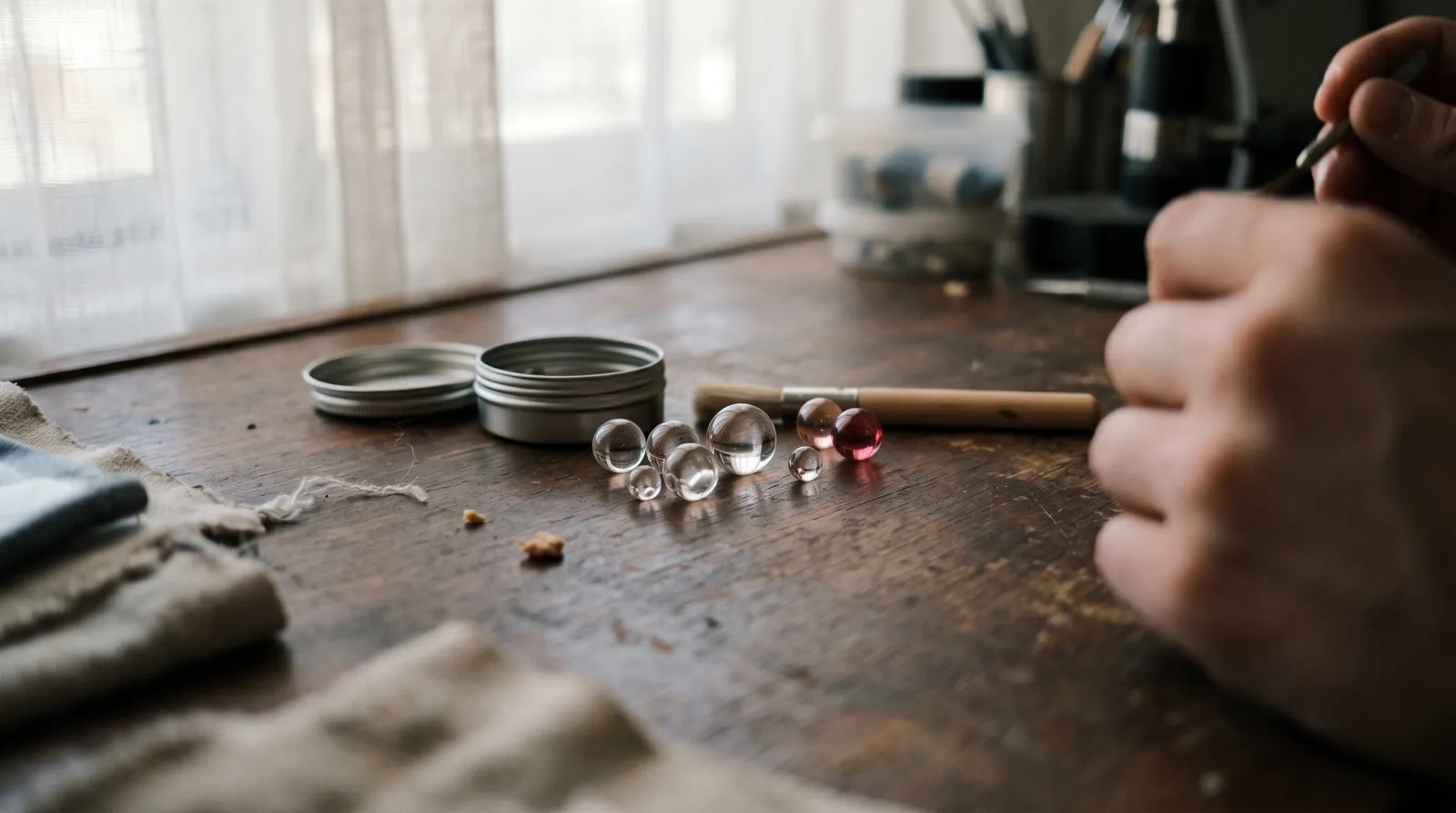
Terp pearls come in several materials, and the differences aren't just cosmetic. Each material handles heat retention and reactivity differently:
| Material | Heat Retention | Durability | Notes |
|---|---|---|---|
| Quartz | Moderate | Good — thermal shock resistant | Most common; heats and cools with the banger naturally |
| Ruby (synthetic corundum) | High | Excellent — extremely hard | Retains heat longer; extends dab time by several seconds |
| Silicon carbide (SiC) | High | Excellent | Similar to ruby; heats evenly, easy to clean |
| Borosilicate glass | Low | Moderate — can crack with rapid temperature changes | Budget option; works but doesn't add much heat retention |
| Ceramic | Moderate-high | Moderate — can chip | Good heat retention but fragile if dropped |
For most people, quartz pearls are the sensible starting point — they're affordable, they clean easily, and they match the thermal behaviour of a quartz banger without complicating your heat-up routine. Ruby and SiC pearls are worth the upgrade if you find your dabs cooling down too quickly, because they hold heat noticeably longer and can add 5–10 seconds of effective vaporisation time to each dab.
Size: 6 mm pearls are the standard for bangers with a 25 mm inner diameter. Use two. Three can work in larger bangers (30 mm+), but cramming too many pearls into a small banger restricts airflow and stops them spinning — which is the entire point. If your banger is on the smaller side (20 mm), drop to a single 4 mm pearl.
Step 3 — Heat Your Banger Correctly
This is where most people go wrong, and it has nothing to do with the pearls themselves. The standard advice — heat until red-hot, then wait — is a recipe for scorched concentrate and wasted terpenes.
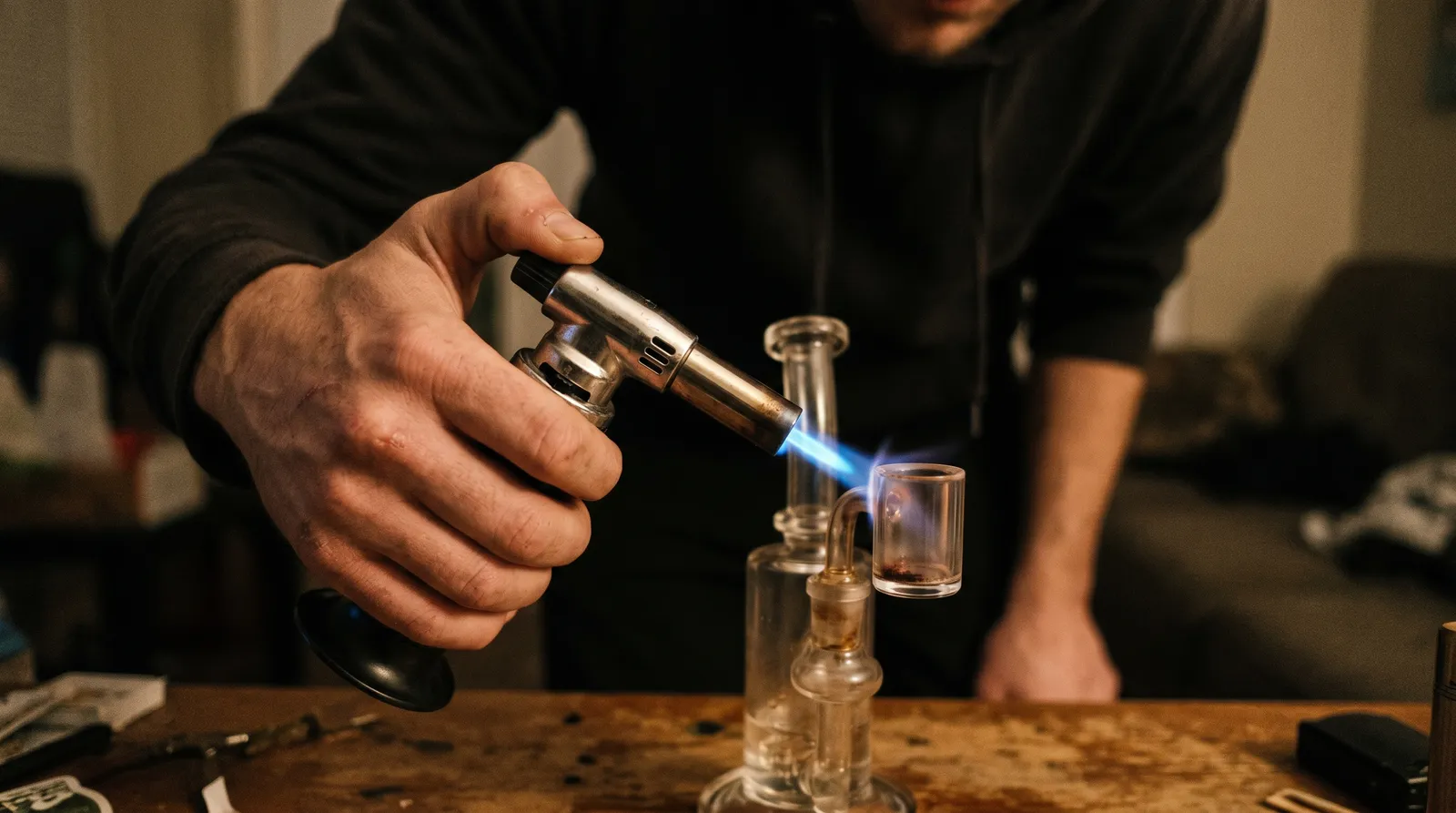
The target range: 230–290 °C (roughly 450–550 °F) at the banger floor. At these temperatures, concentrates vaporise fully without combusting, and the terpene profile stays largely intact. Above 315 °C (600 °F), you start losing lighter terpenes like myrcene and limonene to thermal degradation. Above 370 °C (700 °F), you're effectively combusting — harsh on the throat, wasteful, and it leaves a dark residue that's difficult to clean.
With a torch: Heat the bottom of the banger evenly for 25–30 seconds (thicker quartz needs longer — up to 45 seconds for 4 mm walls). Then wait. Cool-down times vary by banger thickness and ambient temperature, but a rough guide is 45–60 seconds for a standard 2 mm banger and 60–90 seconds for a thick-walled one. An infrared thermometer gun removes the guesswork entirely — they cost about as much as a decent carb cap and pay for themselves in saved concentrate within a week.
Cold-start method (reverse dab): Drop your concentrate and pearls into the banger cold, cap it, then heat the bottom gently with a torch until vapour appears. Stop heating immediately. This method is more forgiving for beginners because you're watching for vapour rather than counting seconds — though it does produce slightly less dense clouds than a well-timed traditional dab.
A staff debate that never fully resolved: whether cold-start dabs actually preserve more terpenes or just feel smoother because the overall temperature stays lower. The honest answer is that nobody's published a head-to-head gas chromatography comparison of cold-start versus timed traditional dabs — so the "better flavour" claim remains anecdotal, even if it's widely repeated.
Step 4 — Load, Drop, and Cap
Here's the actual sequence, once your banger is at temperature:
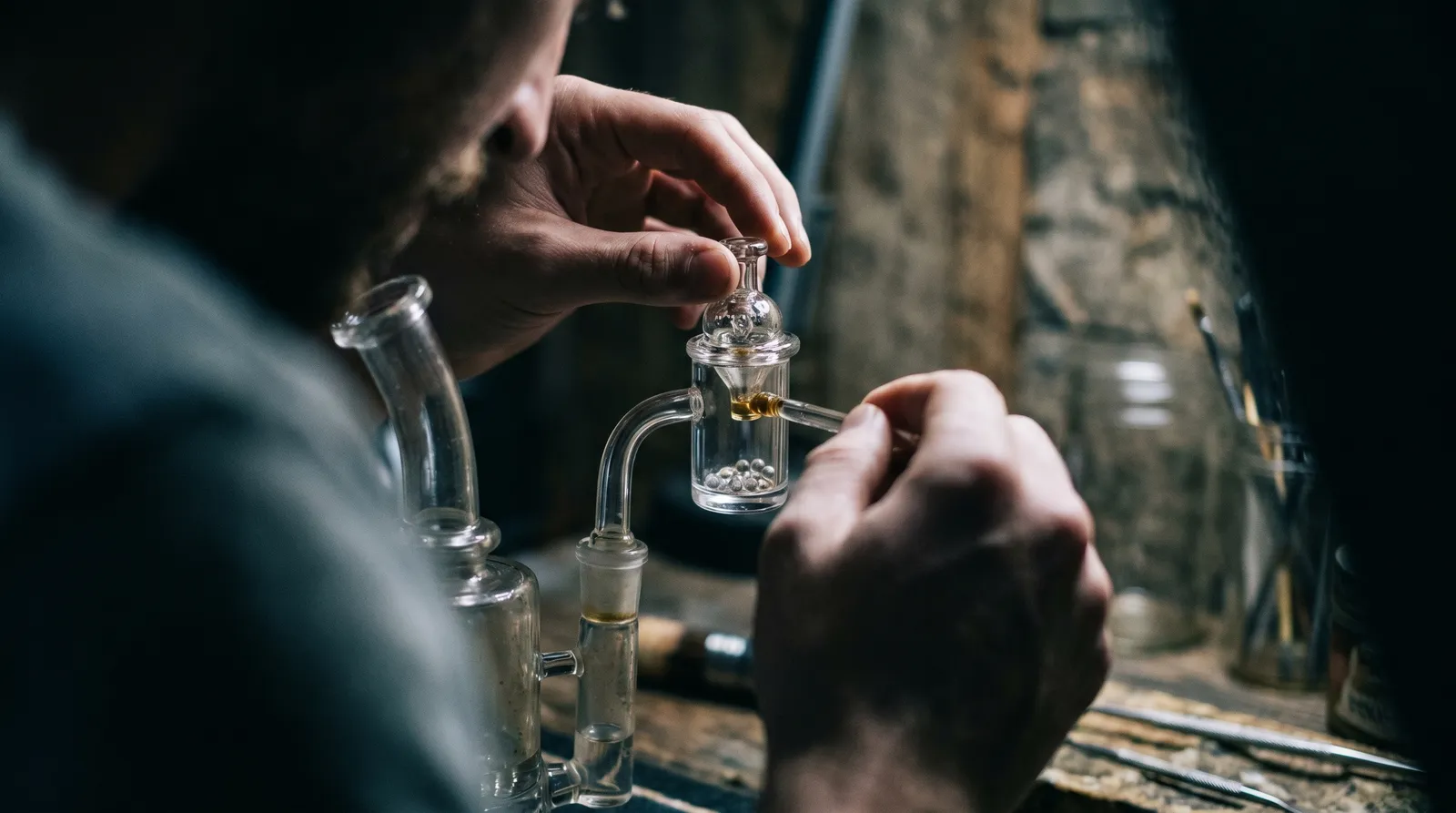
- Pearls go in first (if using the traditional heat-then-dab method). Drop them into the banger before you start heating so they reach the same temperature as the quartz floor. Dropping room-temperature pearls into a hot banger creates a localised cold spot and can crack borosilicate pearls outright.
- Heat and cool as described in Step 3. If you're cold-starting, load pearls and concentrate together into the cold banger.
- Drop your concentrate using a dab tool — a scoop-style tool works best for softer concentrates; a pointed pick for shatter. Aim for the centre of the banger floor, between the pearls.
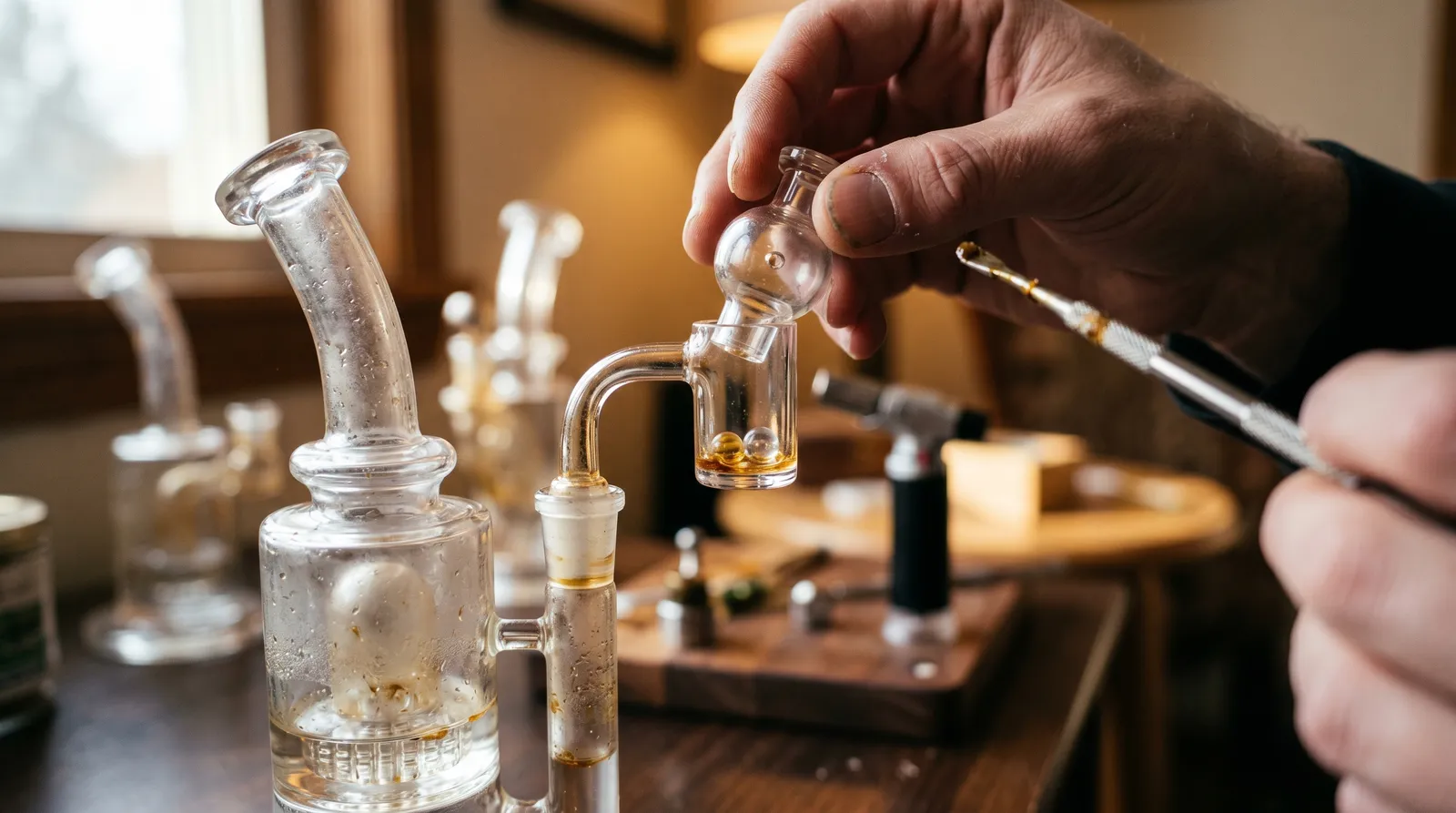
- Cap immediately. The moment concentrate hits the banger, place your carb cap on top. This is where the pressure drop happens — restricting airflow lowers the boiling point of the concentrate, so it vaporises at the banger's current temperature rather than needing more heat.
- Inhale gently. With a spinner cap, you should see the pearls begin to rotate as you draw. If they're not spinning, your draw might be too hard (pulling air around the cap's seal rather than through its channels) or the cap doesn't fit your banger well. Ease up on the draw pressure — a slow, steady pull works better than a hard rip.
- Rotate if using a bubble cap. Tilt the directional stem to push air across the banger floor in a circular path. The pearls will follow the airflow.
A well-executed low-temp dab with spinning pearls should produce smooth, flavourful vapour for 15–30 seconds. If you're getting harsh hits that taste burnt, your banger was too hot. If you're getting almost no vapour, it was too cool — reheat gently for 3–5 seconds with the cap still on.
Step 5 — Clean Everything While It's Warm
This is non-negotiable if you want your gear to last and your next dab to taste like concentrate rather than yesterday's residue.
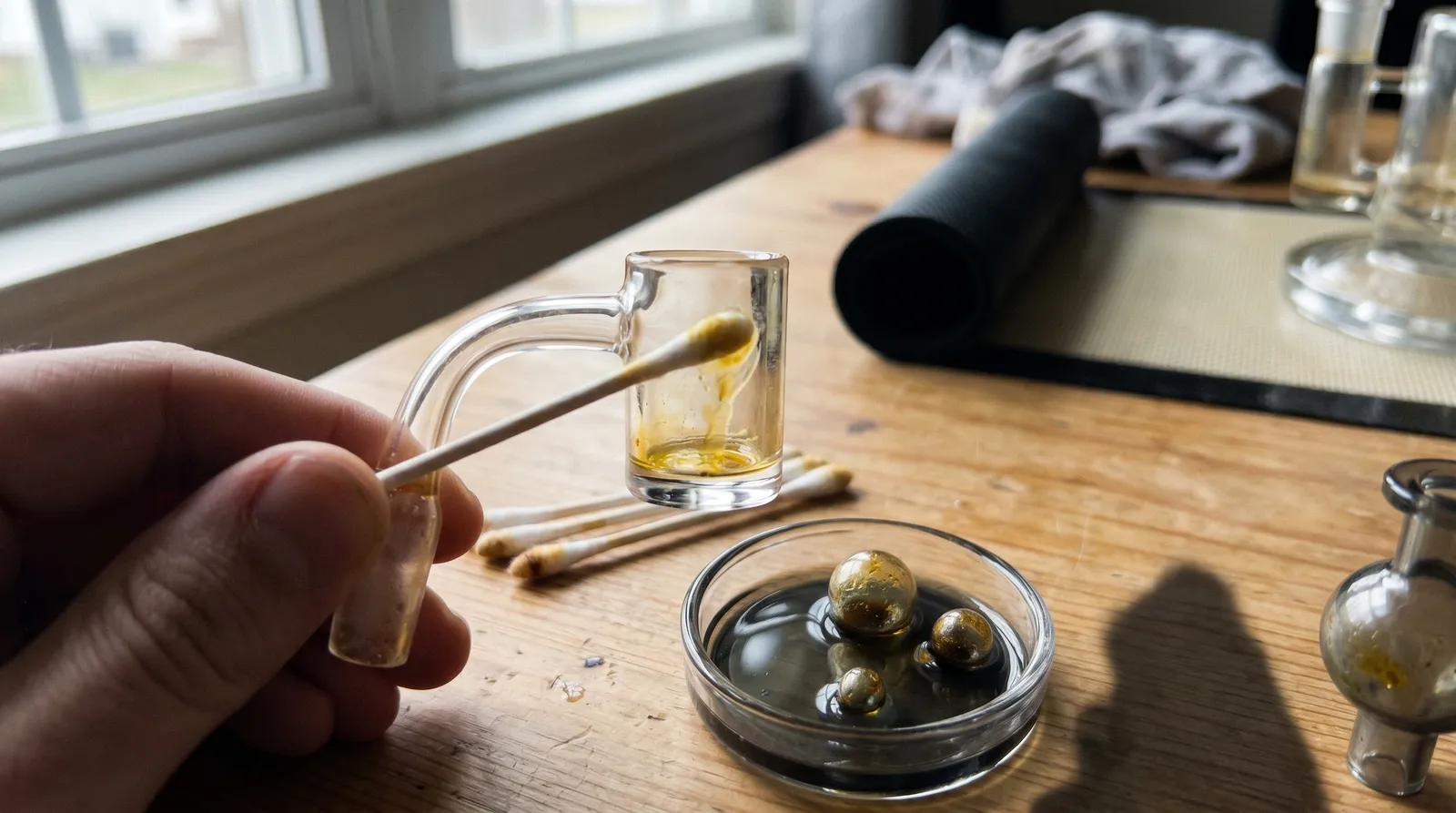
Immediately after each dab: While the banger is still warm (not hot — give it 30 seconds), swab the inside with a dry cotton swab to pick up any remaining oil. Follow with a second swab dipped in isopropyl alcohol (90%+ concentration). The residue should lift off easily if your dab was at the right temperature. If you're scraping at dark, carbonised buildup, you're dabbing too hot.
Terp pearls: Drop them into a small dish of isopropyl alcohol after your session. Let them soak for 10–15 minutes, then rinse with warm water and let them air-dry completely before the next use. Quartz and ruby pearls handle this well. Borosilicate glass pearls can crack if you drop them straight from a hot banger into cold iso — let them cool first.
Carb caps: Wipe the underside with an iso-soaked swab after each session. Residue builds up on the part that sits over the banger opening, and a sticky cap doesn't seal properly.
Deep clean (weekly if you dab daily): Soak the banger, pearls, and cap in isopropyl alcohol for 30–60 minutes. For stubborn buildup on the banger, heat it gently with a torch until residue turns white, then let it cool and soak. Work in a ventilated space — isopropyl fumes near an open flame are a genuine hazard.
Using Terp Pearls with Electric Dab Rigs and Dab Pens
Electric dab rigs handle temperature control for you, which makes them a natural partner for terp pearls — no torch timing, no guessing. Most e-rigs with bucket-style atomisers accept 6 mm pearls without issues. Set your temperature in the 230–290 °C range and let the device hold it steady while the pearls do their work.
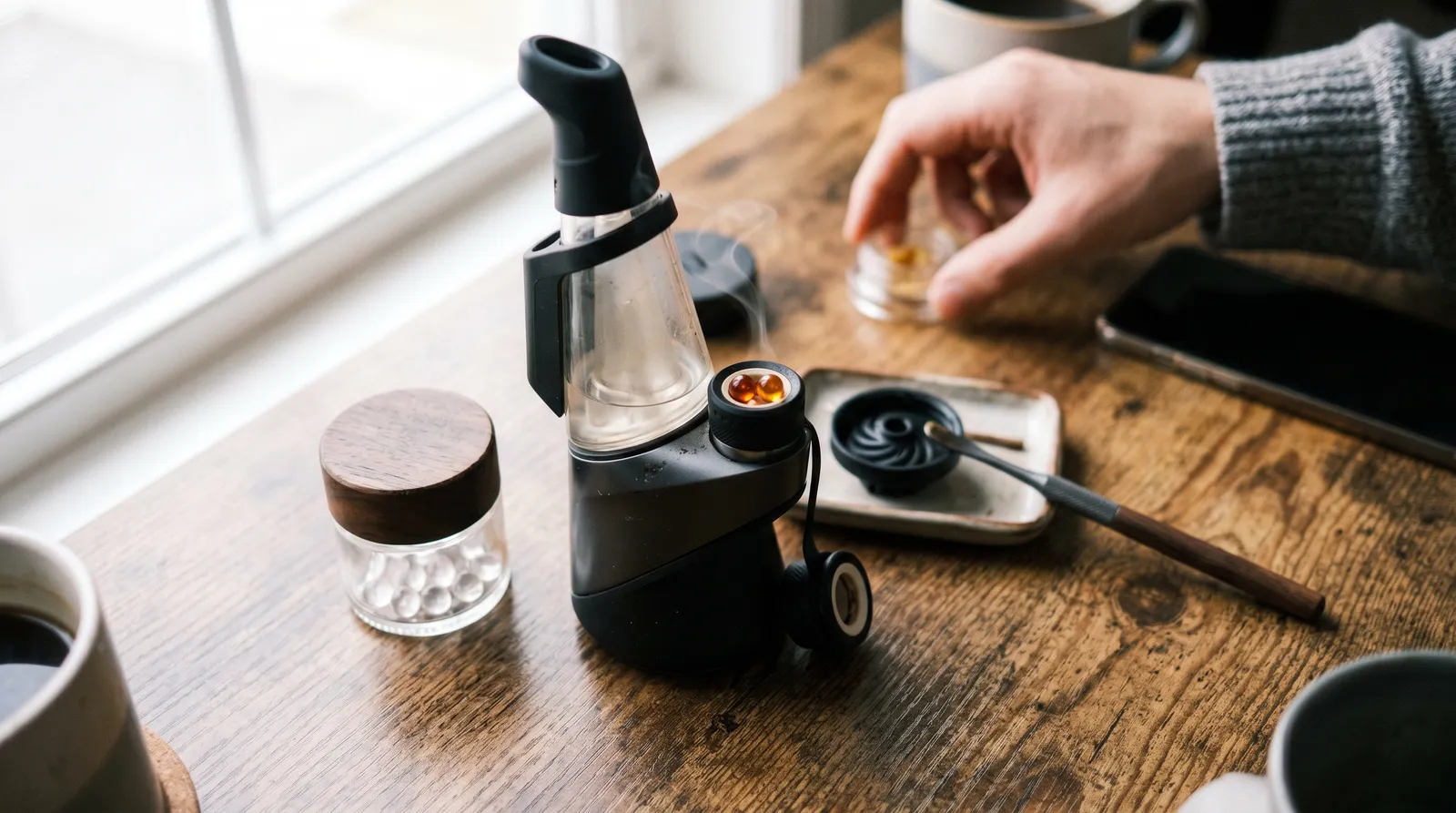
Dab pens are a different story. Most pen-style concentrate vaporisers have narrow chambers that physically can't accommodate pearls, and their coil-based heating elements don't benefit from the heat distribution that pearls provide. Pearls are really designed for open-bucket bangers — whether heated by torch or electronic element.
One thing to watch with e-rigs: some ceramic heating elements can be scratched by harder pearl materials like ruby or SiC. Quartz pearls are the safest bet for electronic setups unless the manufacturer explicitly states otherwise.
Common Mistakes and How to Avoid Them
- Too many pearls. Two is the sweet spot for standard bangers. More pearls means less room for concentrate and restricted airflow. The pearls need space to actually move.
- Wrong cap for the job. A flat cap won't spin pearls. If you've bought terp pearls and they just sit there, the cap is almost certainly the problem — not the pearls.
- Inhaling too hard. A forceful draw pulls air around the cap's seal rather than through its directional channels. Slow and steady keeps the vortex intact.
- Skipping the swab. Residue accumulates fast. A dirty banger changes the flavour of every subsequent dab and eventually causes pearls to stick rather than spin.
- Red-hot heating. If your banger glows, you've gone well past the useful temperature range. You're combusting concentrate, degrading terpenes, and shortening the life of your quartz through devitrification — that cloudy, rough texture that develops on overheated quartz and never fully cleans off.
Related Products
Azarius stocks quartz bangers, carb caps (including spinner and bubble styles), terp pearls, dab torches, and dab tools — everything covered in this guide. For the full dabbing hardware range, see the dabbing accessories section of the headshop.
This guide covers hardware for adults (18+). Use of vaporizers, bongs, pipes, dab rigs and rolling accessories is for adult use only. Verify your local laws on the substances you choose to use — Azarius does not provide legal advice. Consult a qualified professional if you have a health condition or take medication.
Last updated: April 2026
Questions fréquentes
8 questionsDo terp pearls work with any carb cap?
How many terp pearls should I put in my banger?
Can terp pearls melt inside a banger?
Are terp pearls compatible with electric dab rigs?
Why are my terp pearls not spinning?
How do you clean terp pearls after dabbing?
What size terp pearls should I use for my banger?
What is the ideal dab temperature when using a carb cap and terp pearls?
À propos de cet article


Adam Parsons is an external cannabis and psychedelics writer and editor who contributes to Azarius's wiki as both author and reviewer. On the writing side, he authors Azarius's kratom and kanna clusters, drawing on exten
Cet article wiki a été rédigé avec l’aide de l’IA et relu par Adam Parsons, External contributor. Supervision éditoriale par Joshua Askew.
Avertissement médical. Ce contenu est fourni à titre informatif uniquement et ne constitue pas un avis médical. Consultez un professionnel de santé qualifié avant d'utiliser toute substance.
Dernière relecture le 25 avril 2026
Articles liés
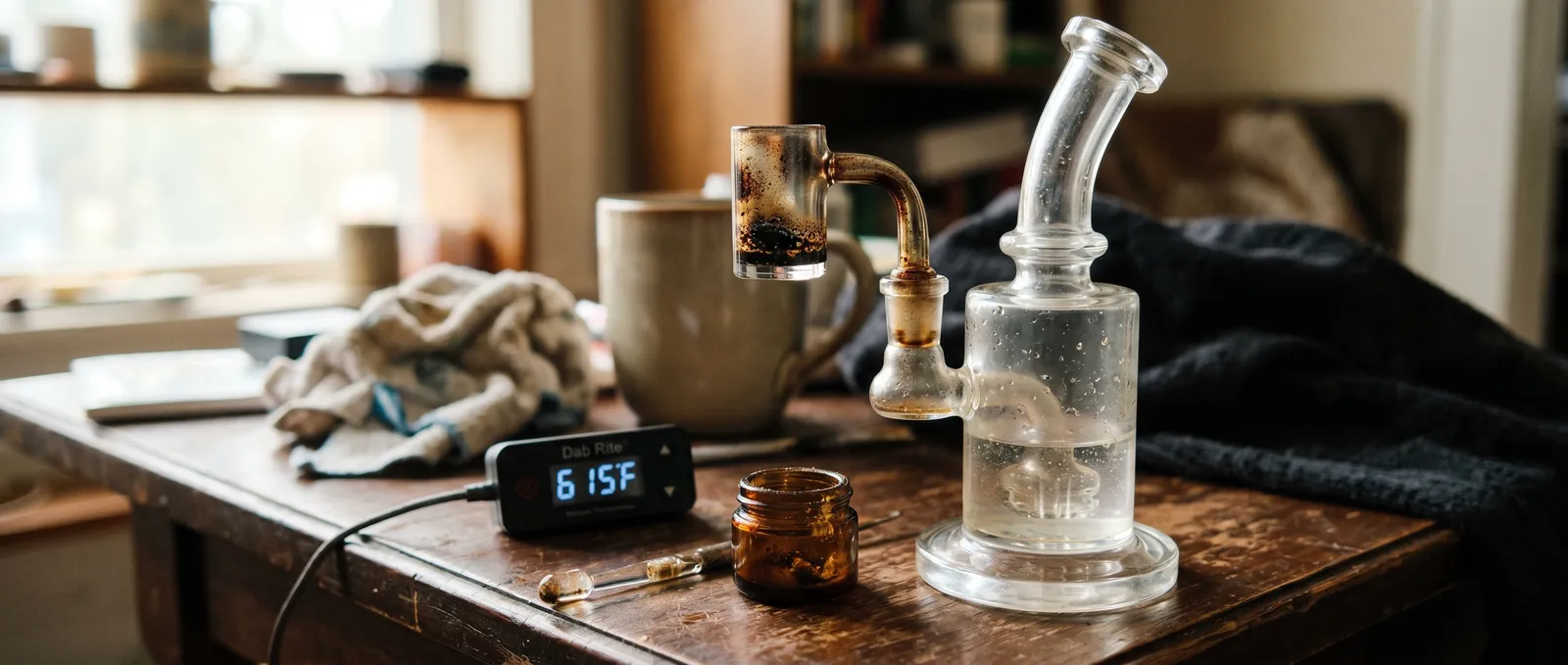
Banger en quartz : température, chauffe et entretien
Un banger en quartz est un récipient en dioxyde de silicium fondu conçu pour vaporiser des concentrés à des températures précises.
Carb caps et terp pearls : guide pratique du dabbing
Un carb cap restreint le flux d'air dans un banger en quartz pour abaisser la pression interne et permettre aux concentrés de se vaporiser à basse…
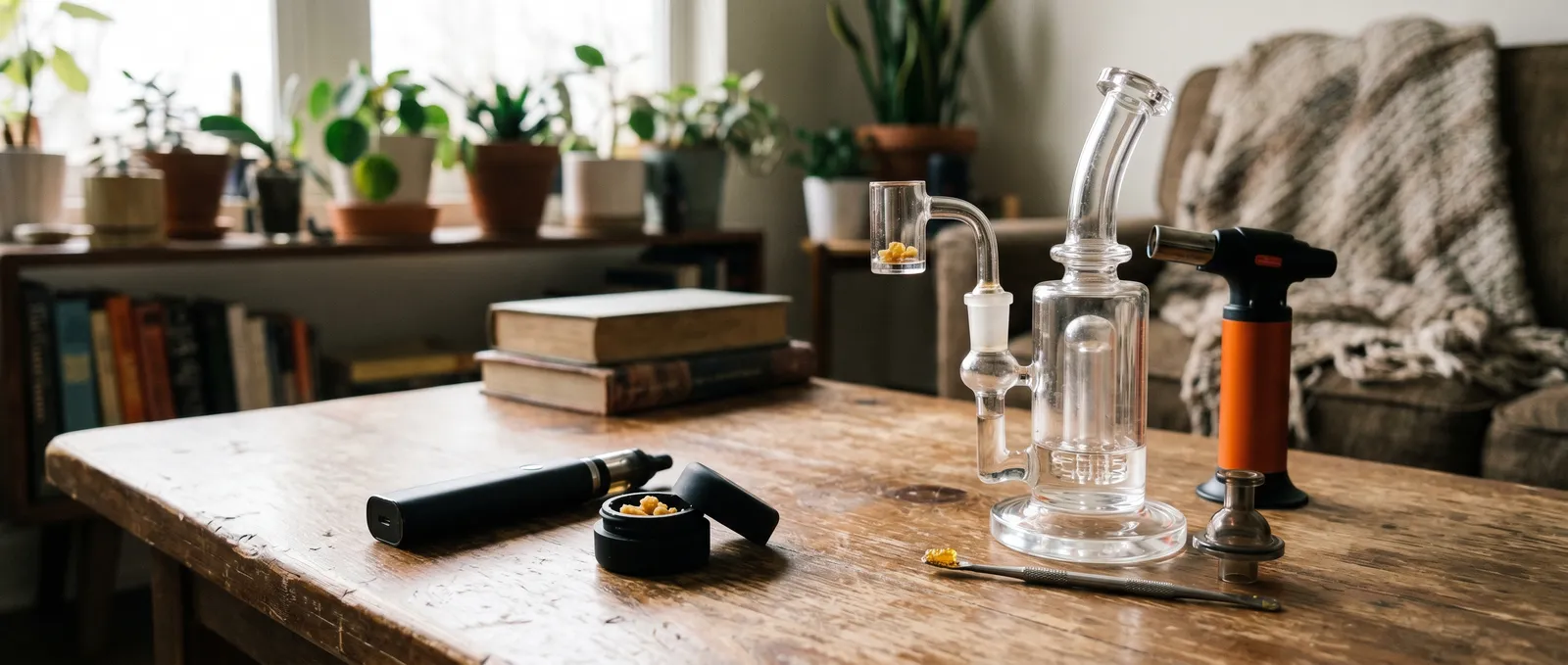
Dab pen ou dab rig : guide comparatif complet
Un dab pen est un vaporisateur portable sur batterie pour concentrés ; un dab rig est une pipe à eau en verre chauffée au chalumeau.
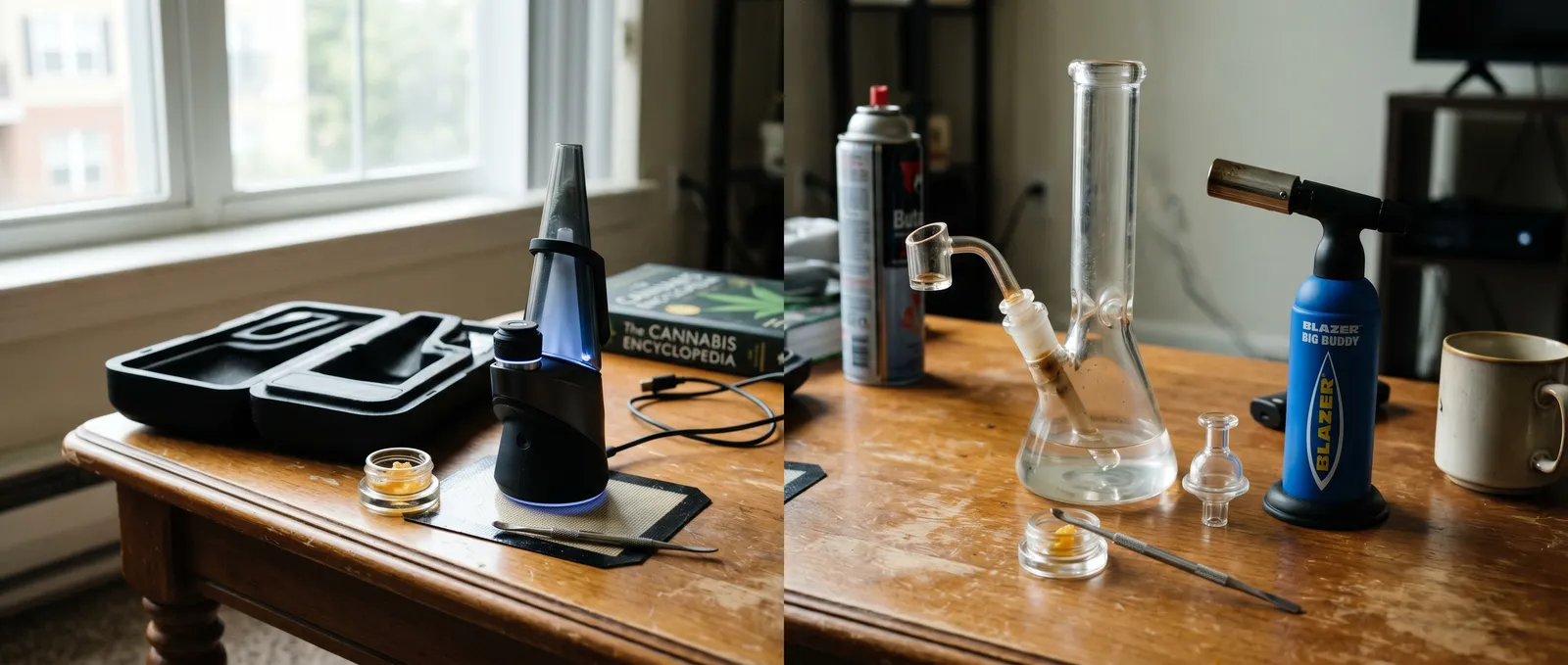
E-rig vs chalumeau : comparatif complet pour le dabbing
Le dabbing repose sur deux approches matérielles distinctes : le rig électronique (e-rig), qui chauffe une chambre à température contrôlée par firmware, et…
Dabbing pour débutants : tout le matériel nécessaire
Le dabbing consiste à vaporiser un concentré de cannabis sur une surface en quartz chauffée, puis à inhaler la vapeur filtrée par l'eau d'un petit rig dédié.