
Electric Dab Rigs vs Torch Dabs: Full Comparison
Definition
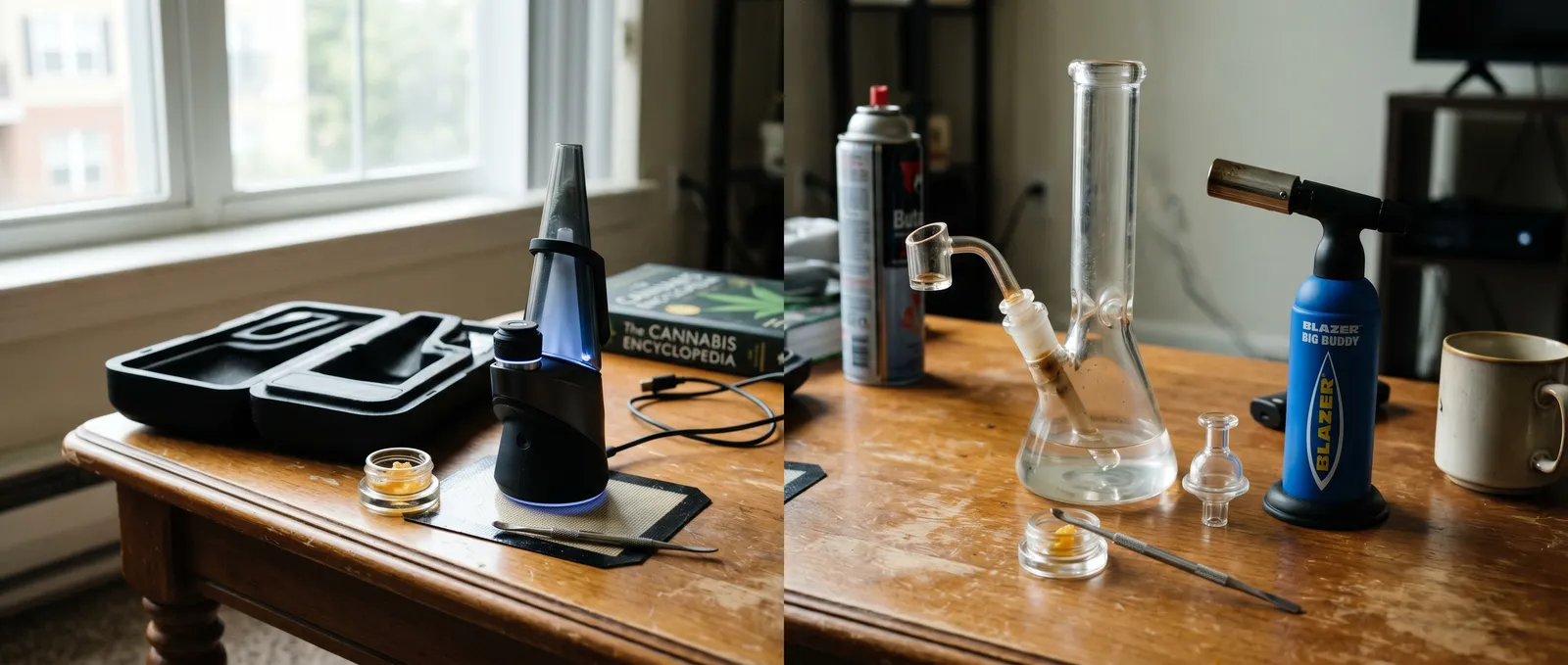
Electric dab rigs use battery-powered heating elements to vaporise concentrates at precise temperatures, while torch dabs rely on a butane flame aimed at a quartz banger with timing-based temperature estimation. A 2017 study found that temperatures above 322 °C produced significant terpene degradation by-products (Meehan-Atrash et al., 2017), making temperature control the central difference between these two approaches.
Electric Dab Rigs vs Torch Dabs: At a Glance
Dabbing hardware for adults (18+) splits into two camps: electronic rigs that heat a chamber to a set temperature, and traditional torch-and-banger setups where you aim a butane flame at quartz and time the cool-down yourself. Both vaporise concentrates. Both work. But they differ sharply in precision, portability, ritual, safety profile, and cost. The comparison table below lays out the key dimensions before we unpack each one.
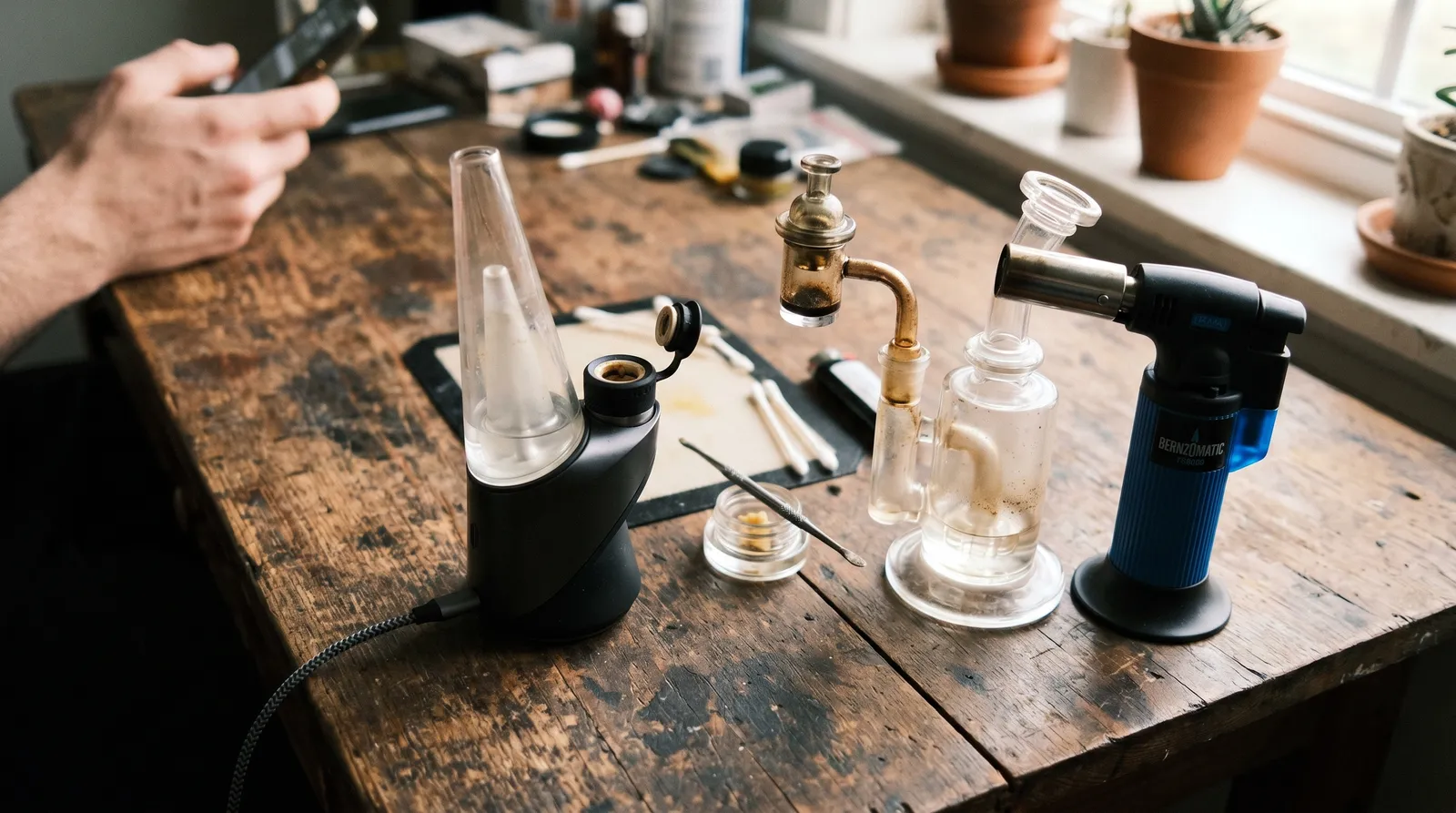
| Dimension | Electric Dab Rig (E-Rig) | Torch and Banger |
|---|---|---|
| Heating method | Ceramic or quartz atomiser, battery-powered coil | Butane torch aimed at a quartz banger; user times cool-down |
| Temperature control | Digital presets, typically 150–370 °C (300–700 °F) | None built-in — estimated by timing or infrared thermometer |
| Heat-up time | 15–30 seconds | 30–60 seconds heating + 30–60 seconds cool-down |
| Flavour consistency | High — same temp every time | Variable — depends on timing skill |
| Portability | Moderate — battery-dependent, compact units exist | Fully portable — no battery, but requires butane canister |
| Safety risk | Lower — no open flame, enclosed heating element | Higher — exposed flame, hot glass, butane handling |
| Maintenance | Atomiser replacement, battery care, regular swabbing | Banger seasoning, periodic replacement, torch refilling |
| Entry cost | Higher — complete e-rig units cost more upfront | Lower — a quartz banger, glass rig, and torch can be assembled cheaply |
| Ongoing cost | Replacement atomisers, charging | Butane refills, occasional banger replacement |
| Learning curve | Shallow — press button, wait, inhale | Steeper — timing, torch angle, cool-down estimation |
| Dab size flexibility | Better for small to medium loads | Handles everything from microdabs to large globs |
| Ritual / tactile appeal | Minimal — appliance-like | High — hands-on, glass aesthetic, community tradition |
Temperature Control: Why It Matters
Temperature is the single biggest variable in dabbing. It determines whether you taste terpenes, waste concentrate, or inhale harsh by-products. A 2017 study in ACS Omega found that dabbing at temperatures above roughly 322 °C (611 °F) produced significant levels of methacrolein and benzene from terpene degradation (Meehan-Atrash et al., 2017). Below that threshold, the vapour was substantially cleaner. That finding alone explains why temperature precision matters so much.
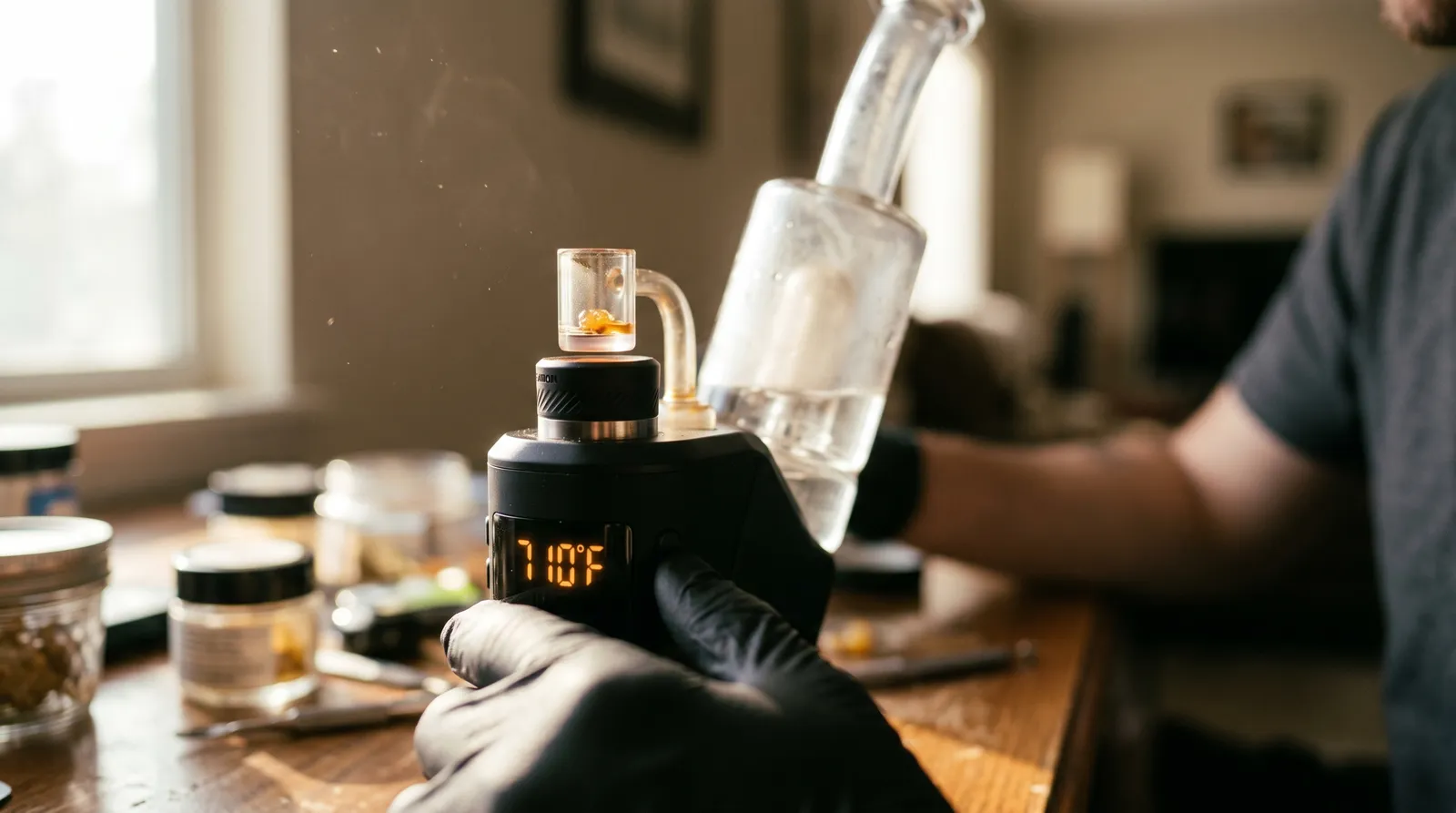
Electric rigs nail this. You pick a setting — say 260 °C for a flavour-forward low-temp dab, or 315 °C for thicker clouds — and the device holds it there. No guesswork. No infrared thermometer. No counting "one-Mississippi" while staring at cooling quartz.
Torch setups, by contrast, give you zero feedback unless you add a separate infrared temperature gun. The classic method is: heat the banger until it glows faintly, then wait 30–60 seconds and hope you land in the right window. Experienced users develop a feel for it, but "experienced" here means dozens of wasted dabs while you calibrate your timing. And your timing changes with ambient temperature, banger thickness, and how long you torched in the first place.
The practical upshot: if terpene preservation and consistent flavour are priorities, an e-rig delivers them with less effort. If you enjoy the ritual of dialling things in by hand and don't mind the occasional overheated hit, torch dabbing rewards skill with a satisfying sense of craft.
Safety: Open Flame vs Enclosed Element
A butane torch is a small blowtorch. It produces a flame that can exceed 1,300 °C (2,370 °F). That flame is pointed at glass, on a table, possibly near silicone mats, dab tools, and — let's be realistic — people who may not be at peak coordination. Burns from bangers and torches are common enough that online dabbing communities have a running joke about "banger kisses." It's less funny when it happens to you.
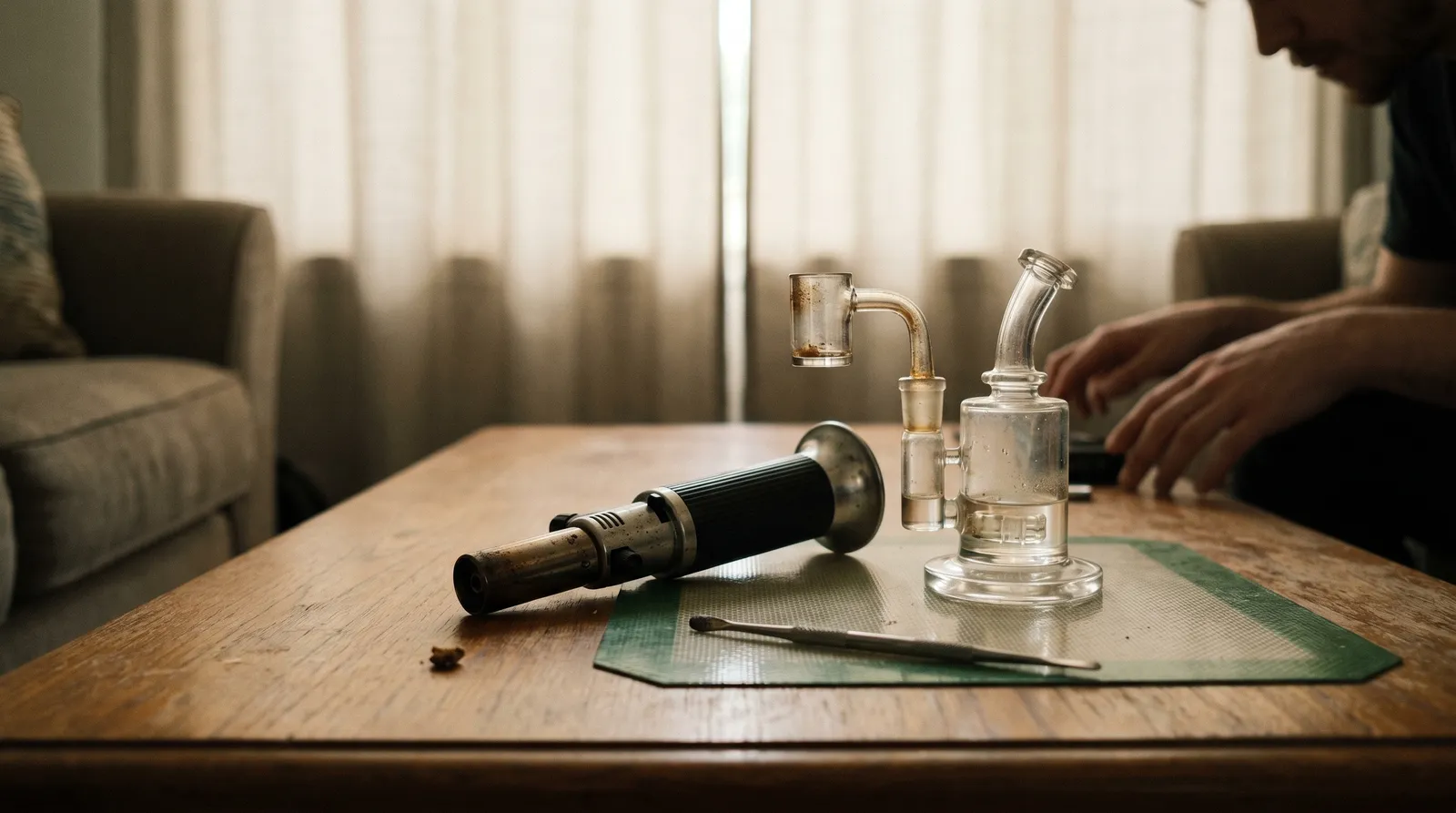
Beyond direct burns, there's the butane itself. Refilling torches requires pressurised canisters. Leaking torches or improper storage can create fire hazards. And torching a banger to red-hot temperatures — above roughly 370 °C (700 °F) — doesn't just degrade terpenes; it can cause the concentrate to combust rather than vaporise, producing harsher irritants. A 2020 analysis in Inhalation Toxicology noted that higher dabbing temperatures correlated with increased levels of potentially harmful degradation products (Raber et al., 2020).
Electric rigs sidestep most of this. No open flame. The heating element is enclosed. Maximum temperatures are capped by the firmware — most e-rigs won't let you exceed 370 °C even if you wanted to. You can still burn yourself on a hot atomiser if you disassemble the unit immediately after use, but the risk profile is meaningfully lower.
That said, e-rigs introduce their own safety considerations: lithium-ion batteries. Store the device at room temperature. Don't charge it unattended on soft surfaces. If the battery casing is cracked or swollen, stop using it immediately. These are the same precautions that apply to any rechargeable vaporiser — nothing exotic, but worth stating plainly.
Flavour and Vapour Quality
Low-temperature dabs — roughly 230–290 °C (450–550 °F) — produce the most flavourful vapour because more terpenes survive intact. Both methods can technically hit this range, but e-rigs hold it steadily while torch setups pass through it on the way down from a higher peak.
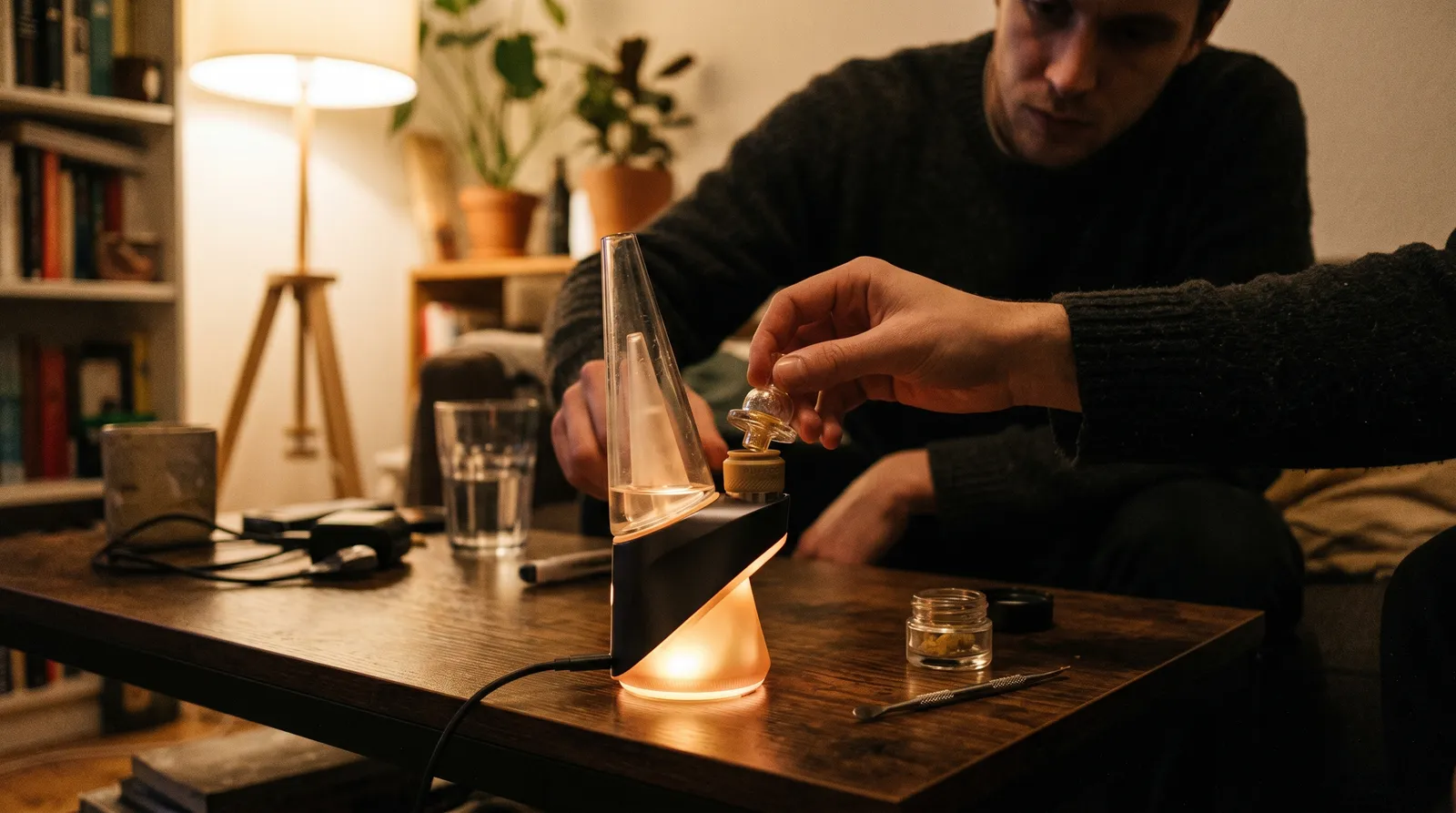
With a torch, you heat the banger well above your target and then wait for it to cool into the sweet spot. The problem: that sweet spot lasts maybe 10–15 seconds before the banger drops below effective vaporisation temperature. If your dab is large, the tail end may not vaporise fully, leaving a puddle of wasted concentrate. Reheating means another torch cycle.
E-rigs maintain the set temperature throughout the draw. The heating element compensates as the concentrate absorbs energy, so you get consistent vapour from first inhale to last. For small, flavour-focused dabs, this is a genuine advantage. For larger loads, some e-rig atomisers can struggle to keep up — the chamber is smaller than a standard banger, and the battery draw increases with extended sessions.
Staff split cleanly on this one. Half the team swears by low-temp e-rig hits for weeknight use — less fuss, no torch to refill, consistent taste. The other half keeps a torch rig on the shelf for weekends, arguing that a properly timed cold-start dab on thick quartz produces a richness no e-rig atomiser quite matches. Both camps agree on one thing: red-hot bangers are a waste of concentrate and terpenes.
Portability and Convenience
Neither method is truly pocket-sized, but they differ in what "portable" means.
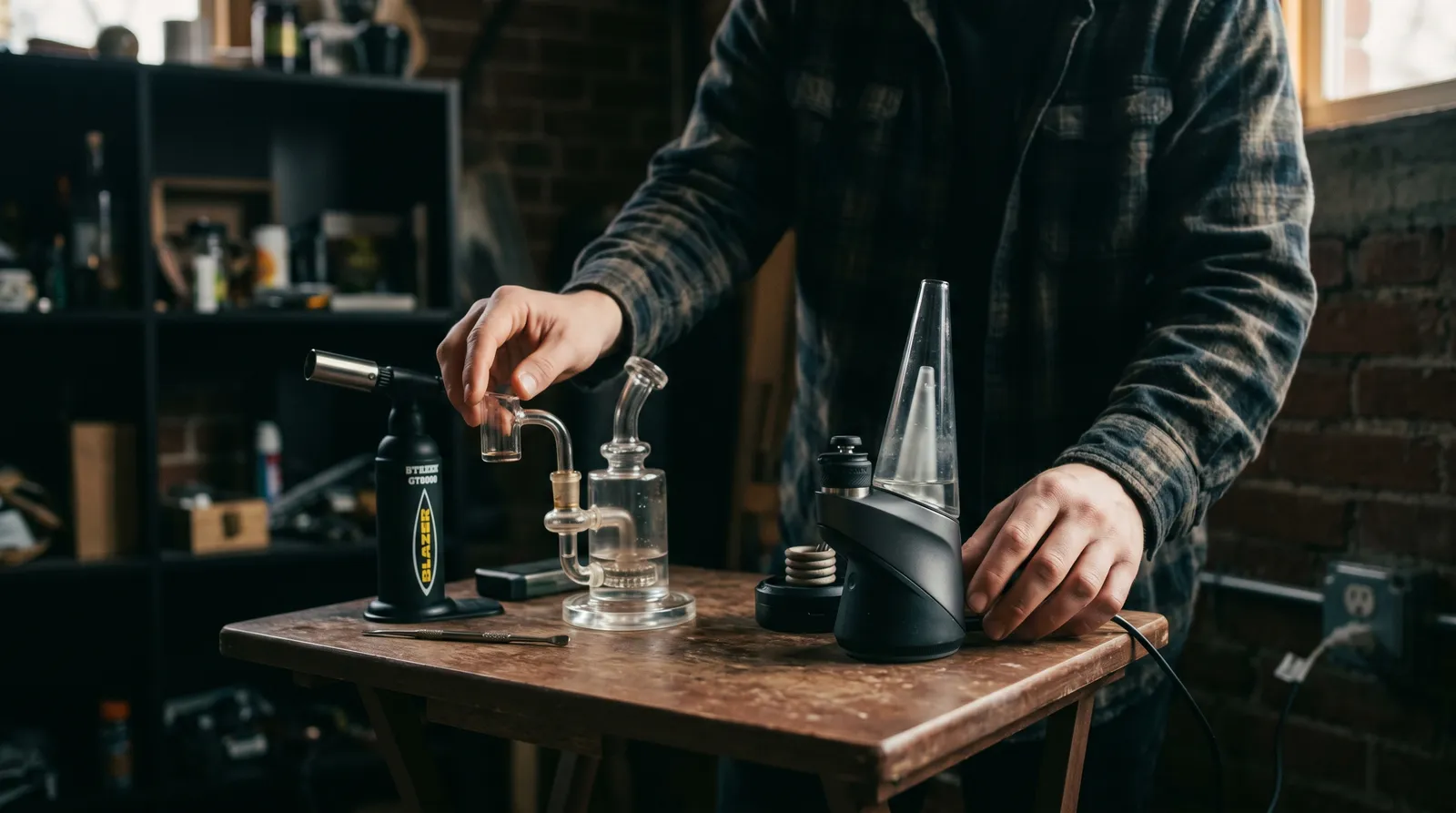
A torch rig is technically portable in the sense that it has no battery — you can use it anywhere you have a flat surface and butane. But "anywhere" still means carrying a glass rig, a torch, a butane canister, a dab tool, a carb cap, and your concentrate. That's a kit, not a grab-and-go device. Glass rigs also break. Silicone travel rigs exist but sacrifice the flavour purity of borosilicate.
Electric rigs are self-contained. Charge the battery, load the chamber, press a button. Some compact e-rigs are small enough to fit in a jacket pocket. The trade-off is battery life: most units deliver 15–30 sessions per charge, depending on temperature and draw length. If the battery dies mid-session, you're done until you find a USB-C cable.
For home use, the portability difference barely matters — both sit on a desk or table. For travel or outdoor use, compact e-rigs have a clear edge in convenience, while torch rigs win on indefinite runtime (as long as you have butane).
Cost Breakdown
Torch setups have a lower entry price. A decent quartz banger, a basic glass rig, a carb cap, a dab tool, and a refillable torch can be assembled for a fraction of what a dedicated e-rig costs. Ongoing expenses are butane refills and the occasional banger replacement — quartz degrades over time, especially with aggressive torching, developing a cloudy "chazzed" appearance that affects heat distribution.
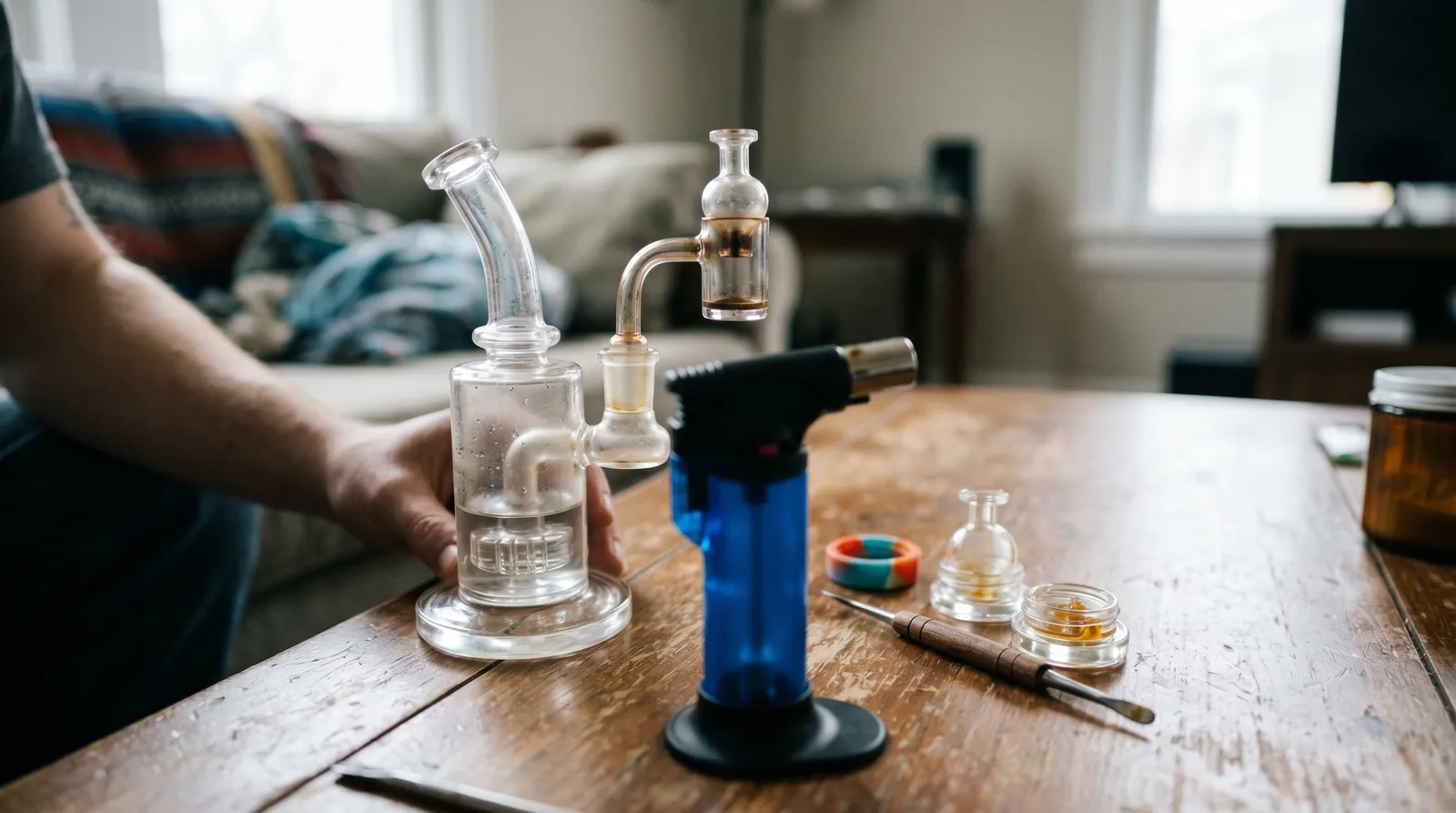
Electric rigs cost more upfront. You're paying for the battery, the heating element, the firmware, and the integrated water filtration in many models. Ongoing costs include replacement atomisers (the heating chamber wears out after a few hundred sessions, depending on use) and electricity for charging. Atomiser replacements vary in price but are a recurring expense that torch users don't face.
Over a year of regular use, the total cost of ownership tends to converge. Torch users spend less initially but accumulate butane and banger costs. E-rig users front-load the investment but spend less per session thereafter — though atomiser replacements can spike the annual total if you dab frequently.
Maintenance and Cleaning
Both methods demand regular cleaning. Concentrate residue builds up fast, and neglected hardware tastes awful.
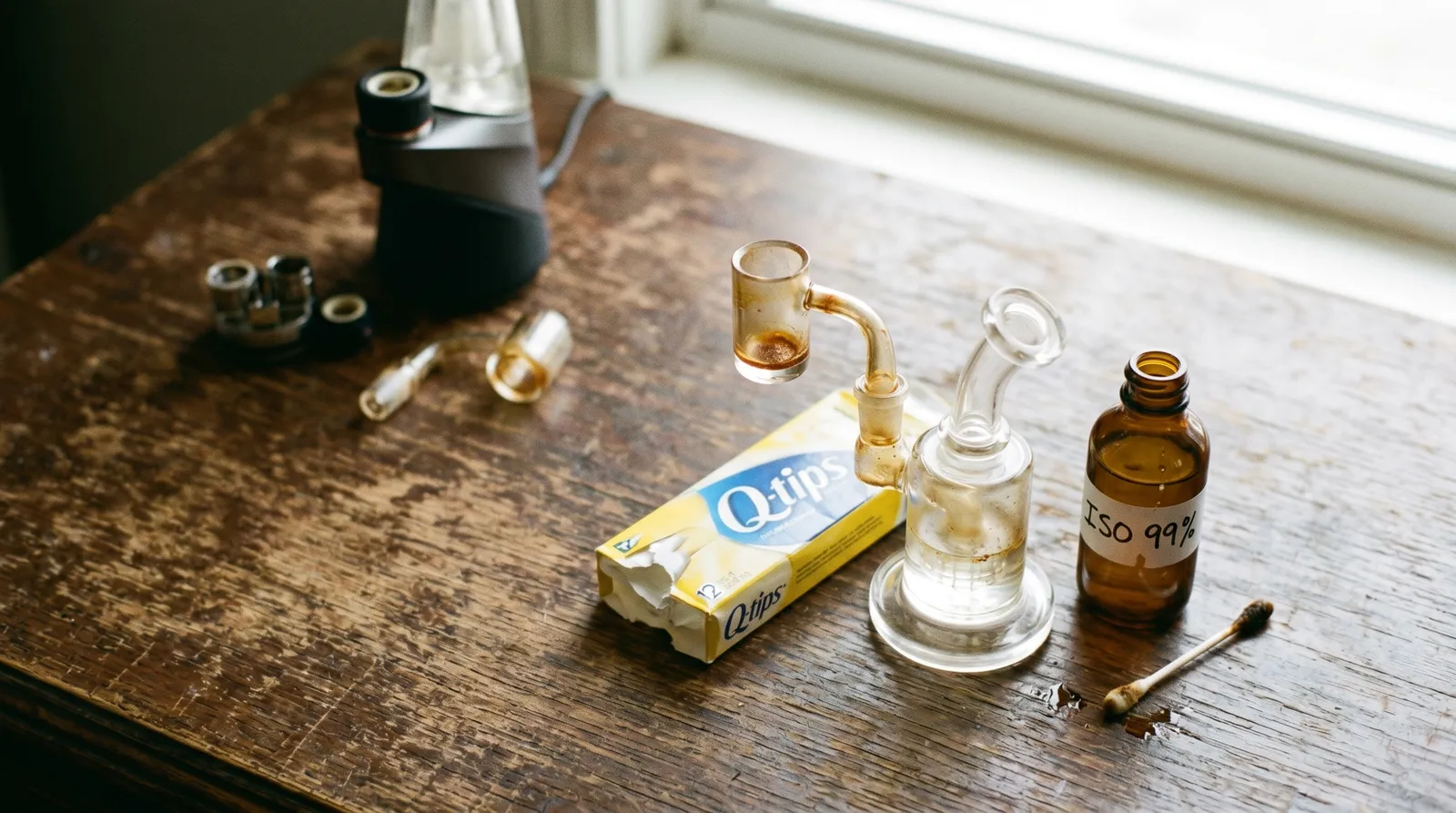
For torch rigs, cleaning is straightforward: swab the banger with a cotton swab after each dab while it's still warm, and periodically soak it in isopropyl alcohol. The glass rig itself needs regular rinsing — warm water and isopropyl, shaken and drained. Reclaim (the residue that collects in the rig's water chamber and downstem) should be cleared regularly to prevent airflow restriction. Always let isopropyl evaporate completely before applying heat — alcohol vapour near a flame is a genuine hazard.
E-rigs require the same post-dab swabbing of the atomiser chamber, plus periodic deep-cleaning of the vapour path and any water filtration attachment. Atomiser maintenance is more delicate — aggressive scraping can damage the ceramic or quartz heating surface. Some users find that e-rig chambers are harder to clean thoroughly because of their smaller, enclosed design compared to an open banger.
Who Should Pick Which
There's no universal winner. The right choice depends on what you value.
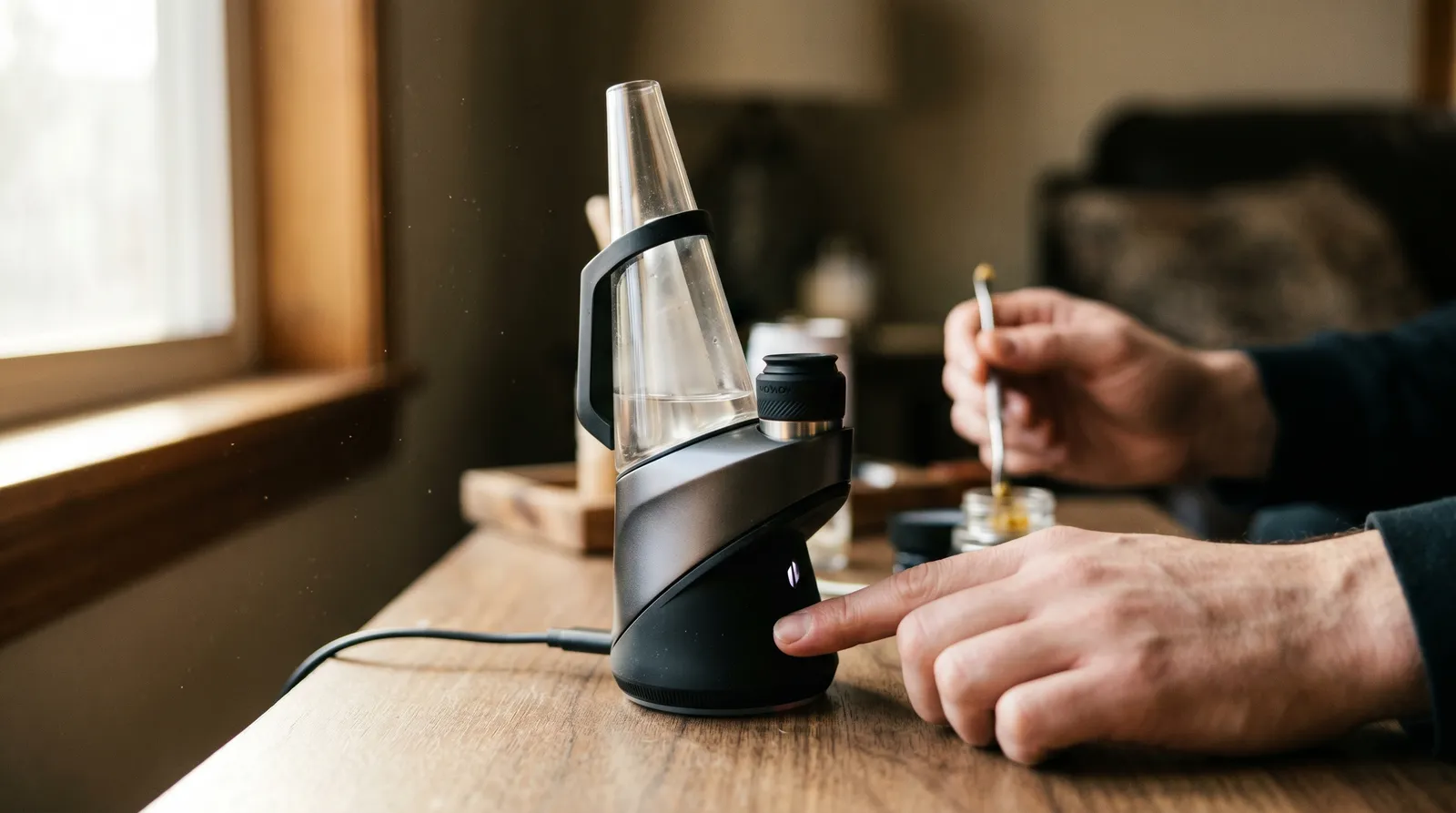
An electric dab rig makes sense if you prioritise consistency, safety, and convenience. You want to press a button, get the same temperature every time, and not think about torch fuel or timing. You take smaller dabs focused on flavour. You might dab on the go occasionally. You don't mind the higher upfront cost or the need to replace atomisers periodically.
A torch-and-banger setup makes sense if you enjoy the hands-on ritual, want maximum flexibility on dab size, and prefer the lower entry cost. You're comfortable learning the timing. You like the aesthetic of glass rigs and the tactile satisfaction of a well-executed cold-start dab. You don't need portability beyond your home setup.
That's not indecision; it's just recognising that the two methods serve different moods.
References
- Meehan-Atrash, J., Luo, W., & Strongin, R. M. (2017). Toxicant formation in dabbing: the terpene story. ACS Omega, 2(9), 6112–6117.
- Raber, J. C., Elzinga, S., & Kaplan, C. (2015). Understanding dabs: contamination concerns of cannabis concentrates and cannabinoid transfer during the act of dabbing. The Journal of Toxicological Sciences, 40(6), 797–803. (Updated analysis referenced in 2020 inhalation toxicology review literature.)
- Loflin, M., & Earleywine, M. (2014). A new method of cannabis ingestion: the dangers of dabs? Addictive Behaviors, 39(10), 1430–1433.
This guide covers hardware for adults (18+). Use of vaporizers, bongs, pipes, dab rigs and rolling accessories is for adult use only. Verify your local laws on the substances you choose to use — Azarius does not provide legal advice. Consult a qualified professional if you have a health condition or take medication.
Last updated: April 2026
Questions fréquentes
8 questionsIs an electric dab rig safer than a torch?
Do electric dab rigs produce better flavour than torch setups?
How long do e-rig atomisers last before replacement?
Can you take large dabs with an electric rig?
What temperature range is best for dabbing concentrates?
Do you need a separate thermometer for torch dabbing?
How much does it cost to maintain an electric dab rig vs a torch setup?
Are electric dab rigs suitable for beginners who have never dabbed before?
À propos de cet article


Adam Parsons is an external cannabis and psychedelics writer and editor who contributes to Azarius's wiki as both author and reviewer. On the writing side, he authors Azarius's kratom and kanna clusters, drawing on exten
Cet article wiki a été rédigé avec l’aide de l’IA et relu par Adam Parsons, External contributor. Supervision éditoriale par Joshua Askew.
Avertissement médical. Ce contenu est fourni à titre informatif uniquement et ne constitue pas un avis médical. Consultez un professionnel de santé qualifié avant d'utiliser toute substance.
Dernière relecture le 25 avril 2026
Articles liés
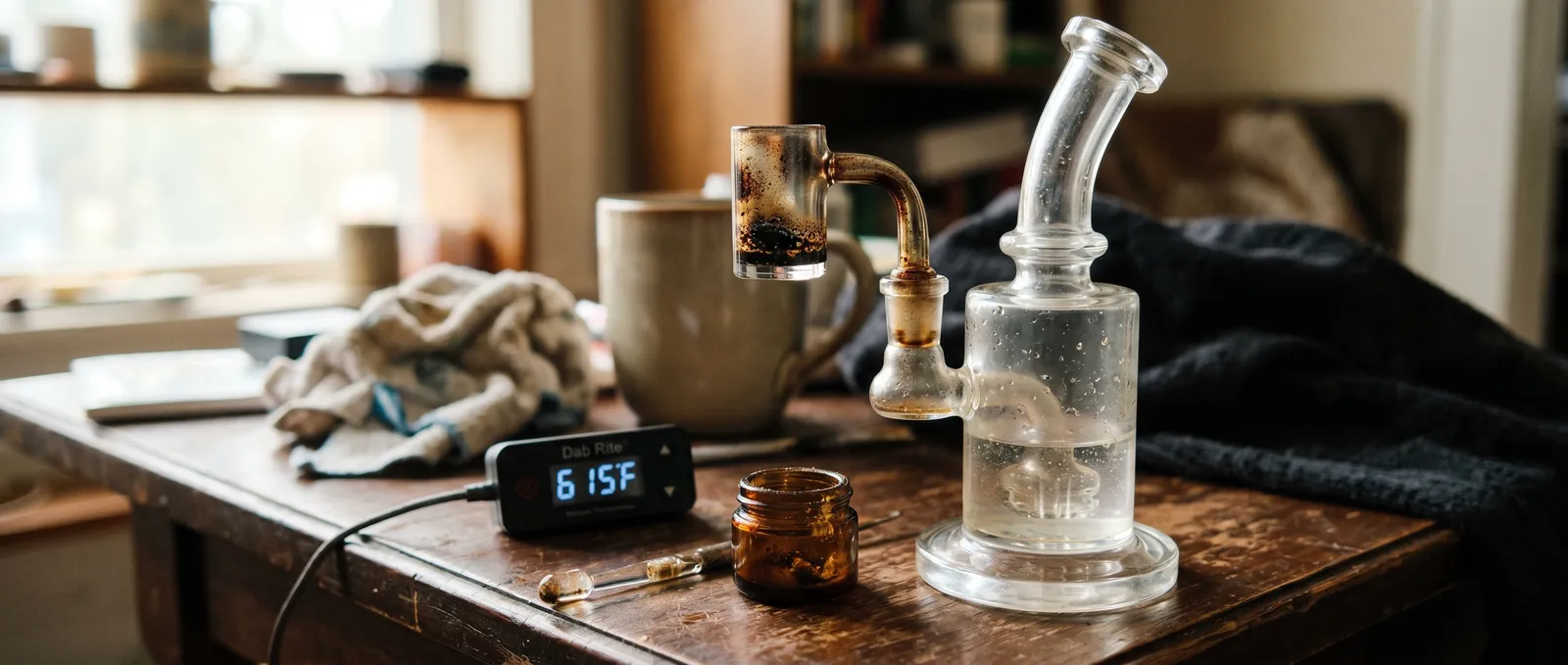
Banger en quartz : température, chauffe et entretien
Un banger en quartz est un récipient en dioxyde de silicium fondu conçu pour vaporiser des concentrés à des températures précises.
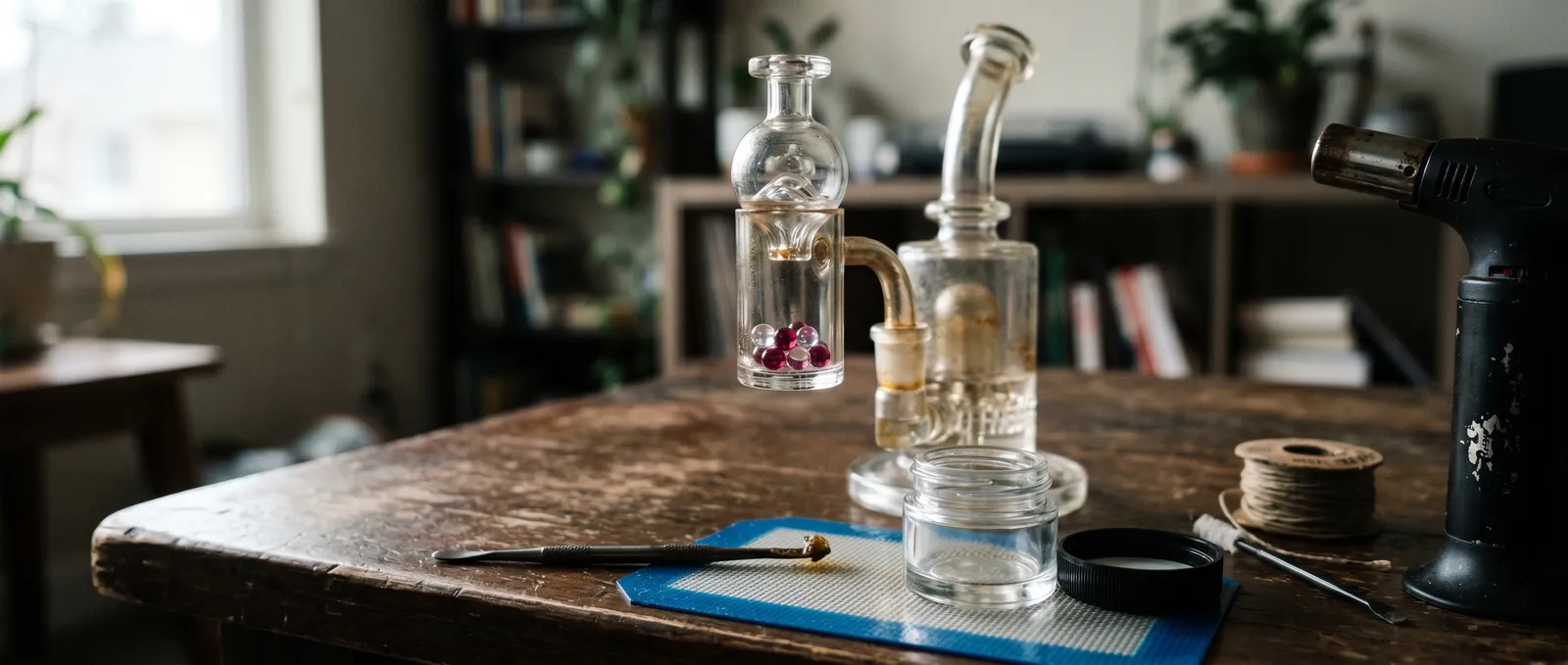
Carb caps et terp pearls : guide pratique du dabbing
Un carb cap restreint le flux d'air dans un banger en quartz pour abaisser la pression interne et permettre aux concentrés de se vaporiser à basse…
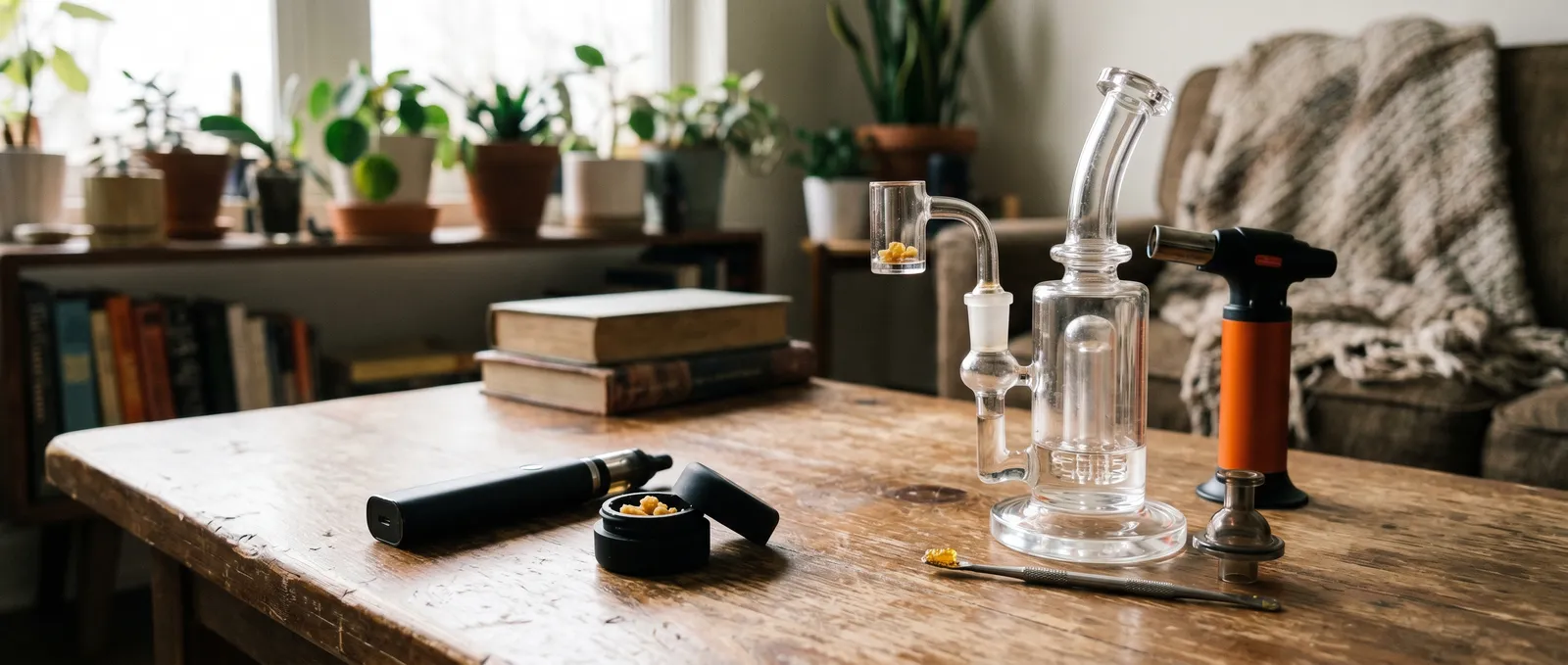
Dab pen ou dab rig : guide comparatif complet
Un dab pen est un vaporisateur portable sur batterie pour concentrés ; un dab rig est une pipe à eau en verre chauffée au chalumeau.
E-rig vs chalumeau : comparatif complet pour le dabbing
Le dabbing repose sur deux approches matérielles distinctes : le rig électronique (e-rig), qui chauffe une chambre à température contrôlée par firmware, et…
Dabbing pour débutants : tout le matériel nécessaire
Le dabbing consiste à vaporiser un concentré de cannabis sur une surface en quartz chauffée, puis à inhaler la vapeur filtrée par l'eau d'un petit rig dédié.