
Quartz Banger Temperature and Care Guide
Definition
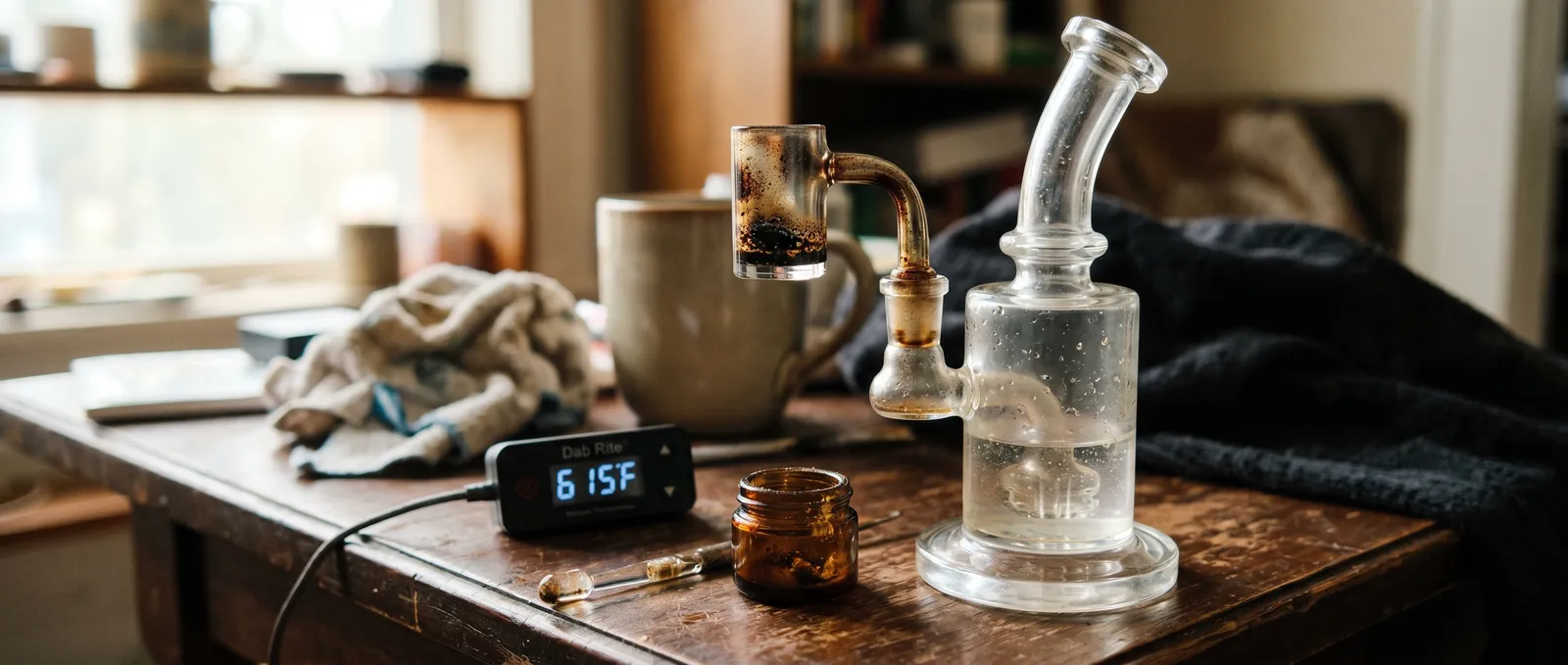
A quartz banger's performance depends almost entirely on temperature control and maintenance. Research shows that surface temperatures above 750 °F generate harmful byproducts like benzene and methacrolein (Meehan-Atrash et al., 2017). Keeping dabs in the 450–580 °F range preserves terpene flavour while avoiding combustion — and cleaning after every dab prevents the permanent clouding that ruins heat retention.
Why Temperature Matters More Than Your Torch
A quartz banger is just a bucket of fused silicon dioxide until you add heat — and the temperature you choose changes everything about the session. Too hot, and you scorch your concentrate into a charred, harsh-tasting mess. Too cool, and it pools at the bottom without vaporising properly. The sweet spot sits in a surprisingly narrow band, and nailing it consistently is what separates a satisfying dab from a wasted one.
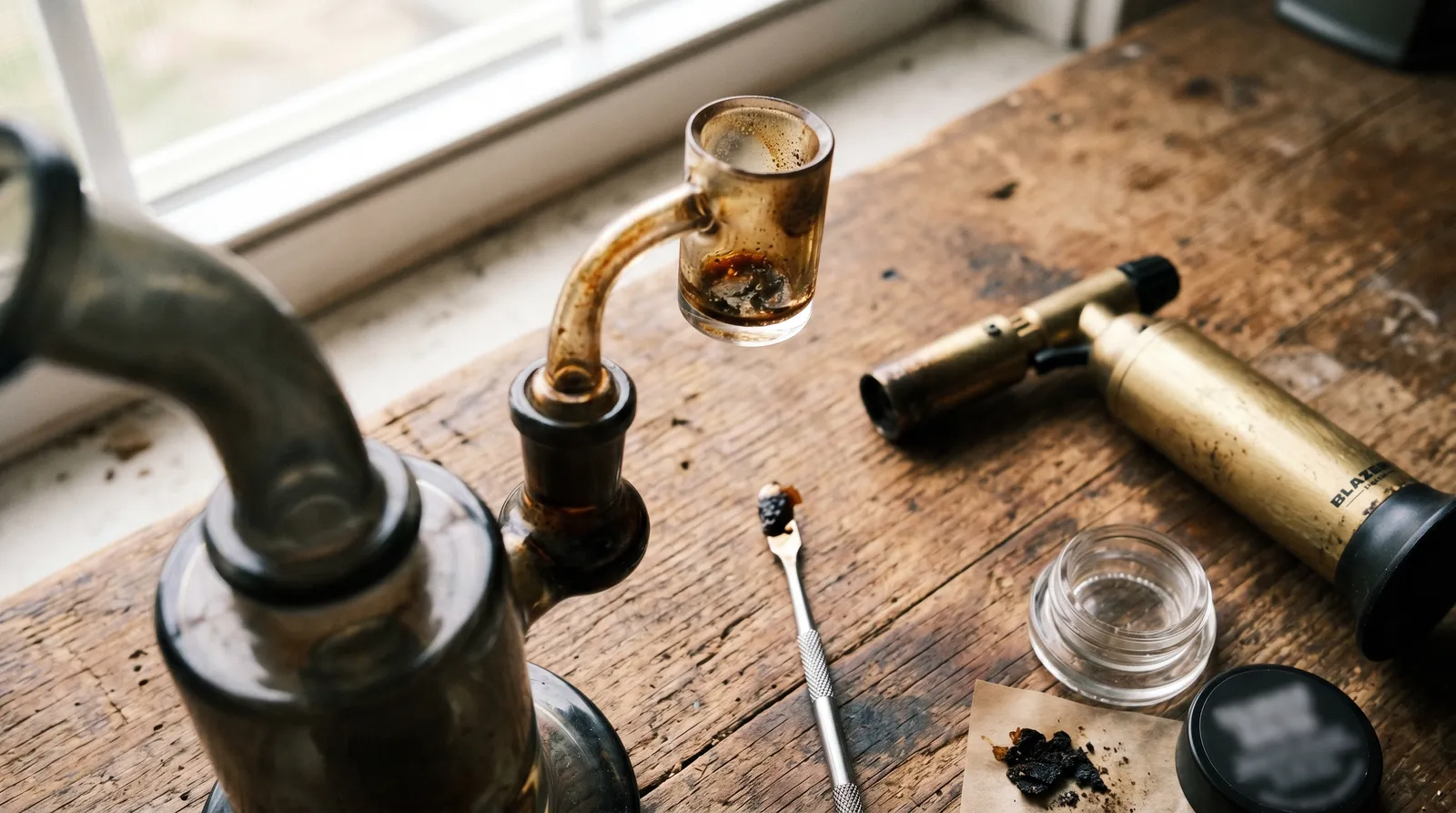
According to a study published in ACS Omega, dabbing temperatures above roughly 750 °F (400 °C) generated significant levels of methacrolein and benzene — degradation byproducts you genuinely don't want in your lungs (Meehan-Atrash et al., 2017). That finding alone should convince anyone still heating their banger until it glows red to rethink their approach. The hardware is adult-use only (18+), and getting the technique right is part of using it responsibly.
Step 1: Know Your Temperature Zones
There's no single "correct" temperature — it depends on what you're after. But the physics and chemistry give us clear zones to work within. Here's the breakdown:
| Zone | Approx. Range | What Happens | Flavour & Vapour |
|---|---|---|---|
| Low temp | 300–450 °F (150–230 °C) | Terpenes vaporise first; concentrate may pool and not fully vaporise | Maximum flavour, thin vapour, some residue left behind |
| Medium temp | 450–550 °F (230–290 °C) | Terpenes and cannabinoids vaporise efficiently; minimal degradation | Good balance of flavour and visible vapour production |
| High temp | 550–650 °F (290–345 °C) | Rapid vaporisation; some terpene loss, stronger throat hit | Thick vapour, reduced flavour nuance, harsher on throat |
| Danger zone | 700 °F+ (370 °C+) | Combustion and chemical degradation — benzene and methacrolein form | Harsh, burnt taste; potential health risk; wastes concentrate |
Most experienced dabbers land somewhere in the 480–580 °F range. That medium zone preserves the terpene profile — the compounds responsible for aroma and flavour — while still producing satisfying vapour. A 2019 Portland State University follow-up confirmed that keeping surface temperatures below 600 °F dramatically reduced toxic byproduct formation (Meehan-Atrash & Strongin, 2019).
Step 2: Heat Your Banger Properly
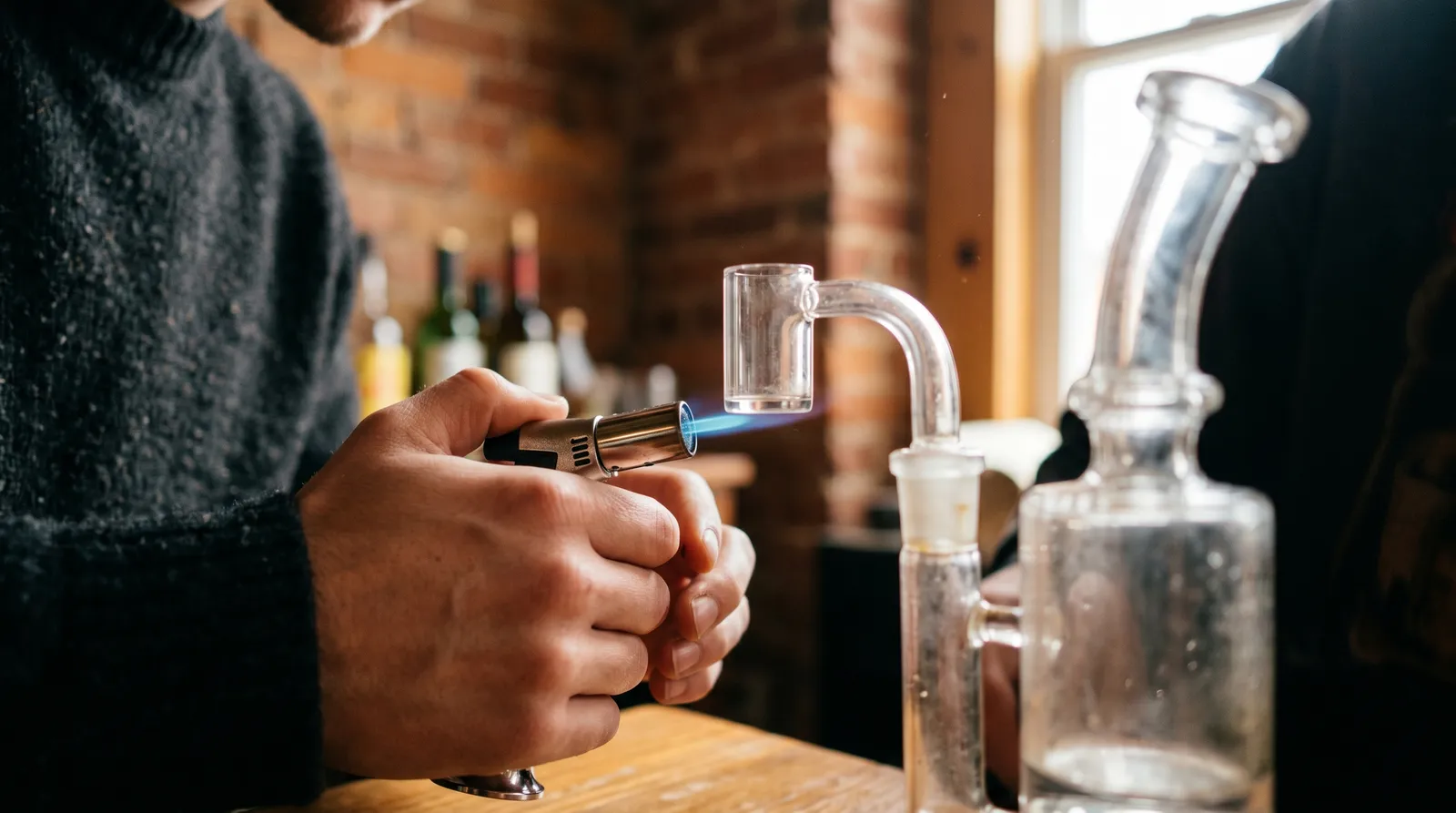
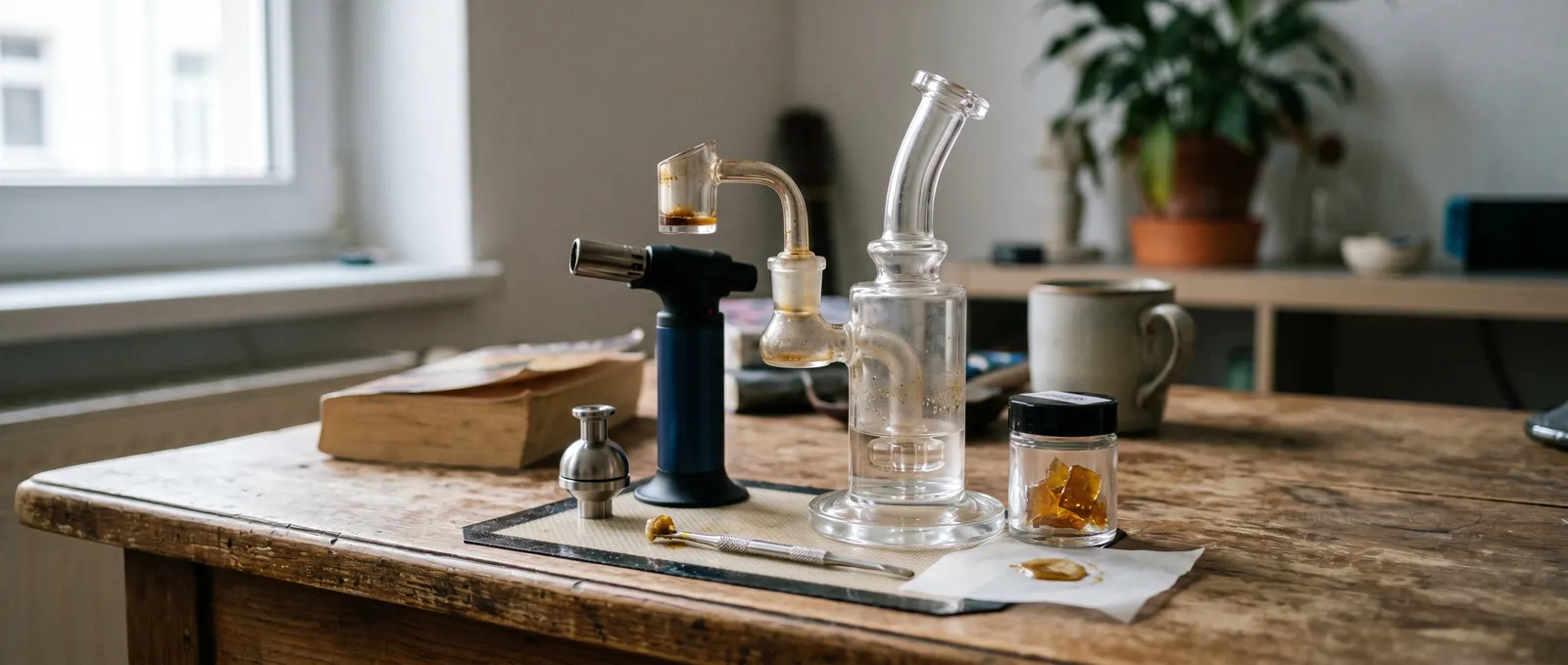
Grab your dab torch (a standard butane torch — not a kitchen lighter, not a candle) and aim the flame at the bottom and lower walls of the banger. Keep the flame moving in slow circles rather than blasting one spot. A standard-thickness quartz banger typically needs 30–45 seconds of heating to reach working temperature, though this varies with wall thickness and banger size.
Thicker-walled bangers (3–4 mm) take longer to heat — sometimes up to 60 seconds — but they retain heat more evenly and cool down more slowly. Thinner walls heat fast and cool fast, which makes timing trickier. If you're new to dabbing, a thicker banger is more forgiving.
One critical point: never heat a quartz banger until it glows red. If you can see colour in the quartz, you've blown past 900 °F and you're well into the danger zone. At that point, any concentrate you drop in will combust rather than vaporise, and you're inhaling degradation products rather than terpenes and cannabinoids.
Step 3: Cool Down and Time It
Here's where most people go wrong. After heating, you don't drop your concentrate in immediately — you wait. The cool-down period is what gets you into that 450–580 °F sweet spot. For a standard quartz banger:
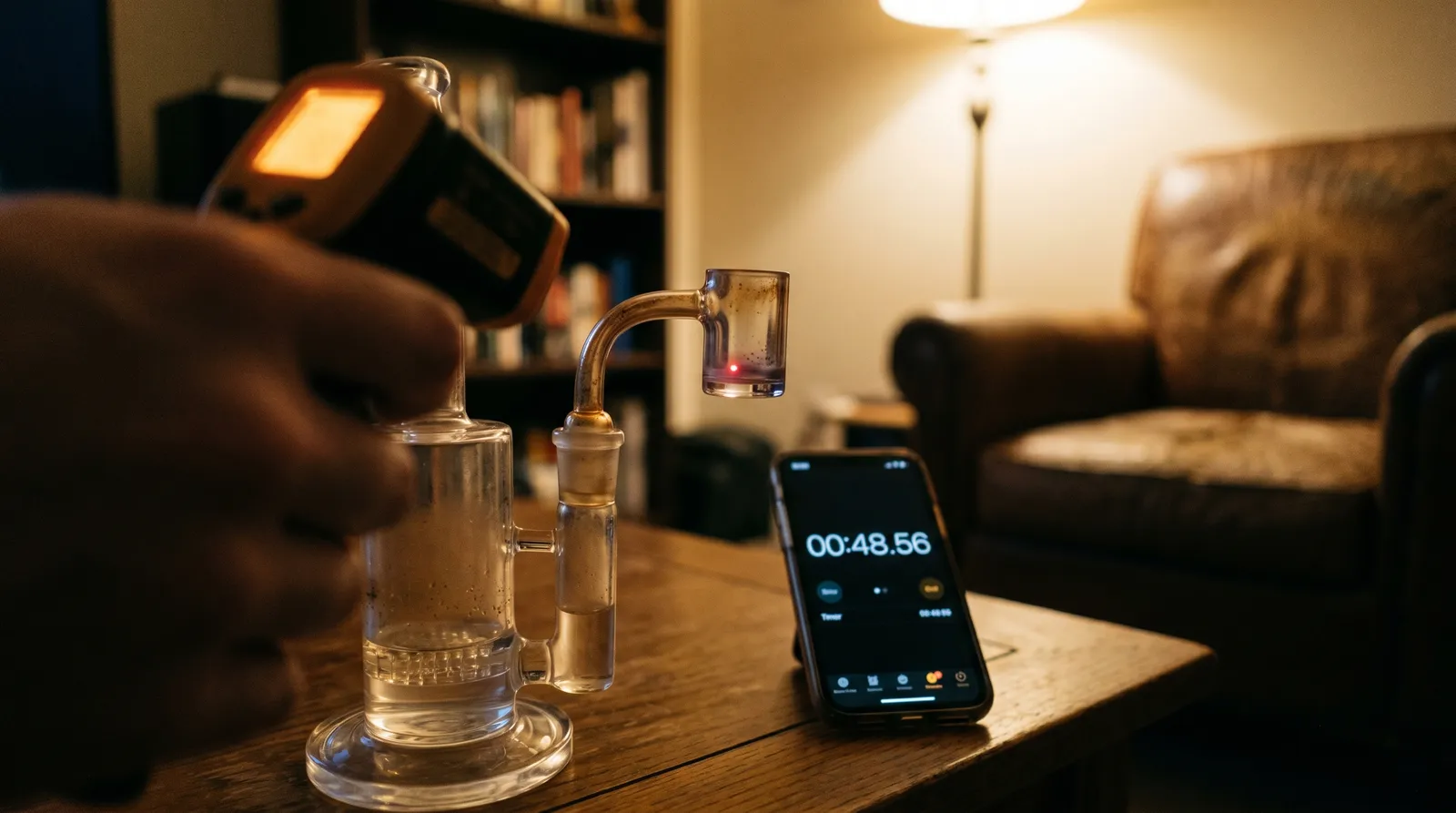
- Thin-walled banger (2 mm): wait roughly 20–30 seconds after heating
- Medium-walled banger (3 mm): wait roughly 30–45 seconds
- Thick-walled banger (4 mm): wait roughly 45–60 seconds
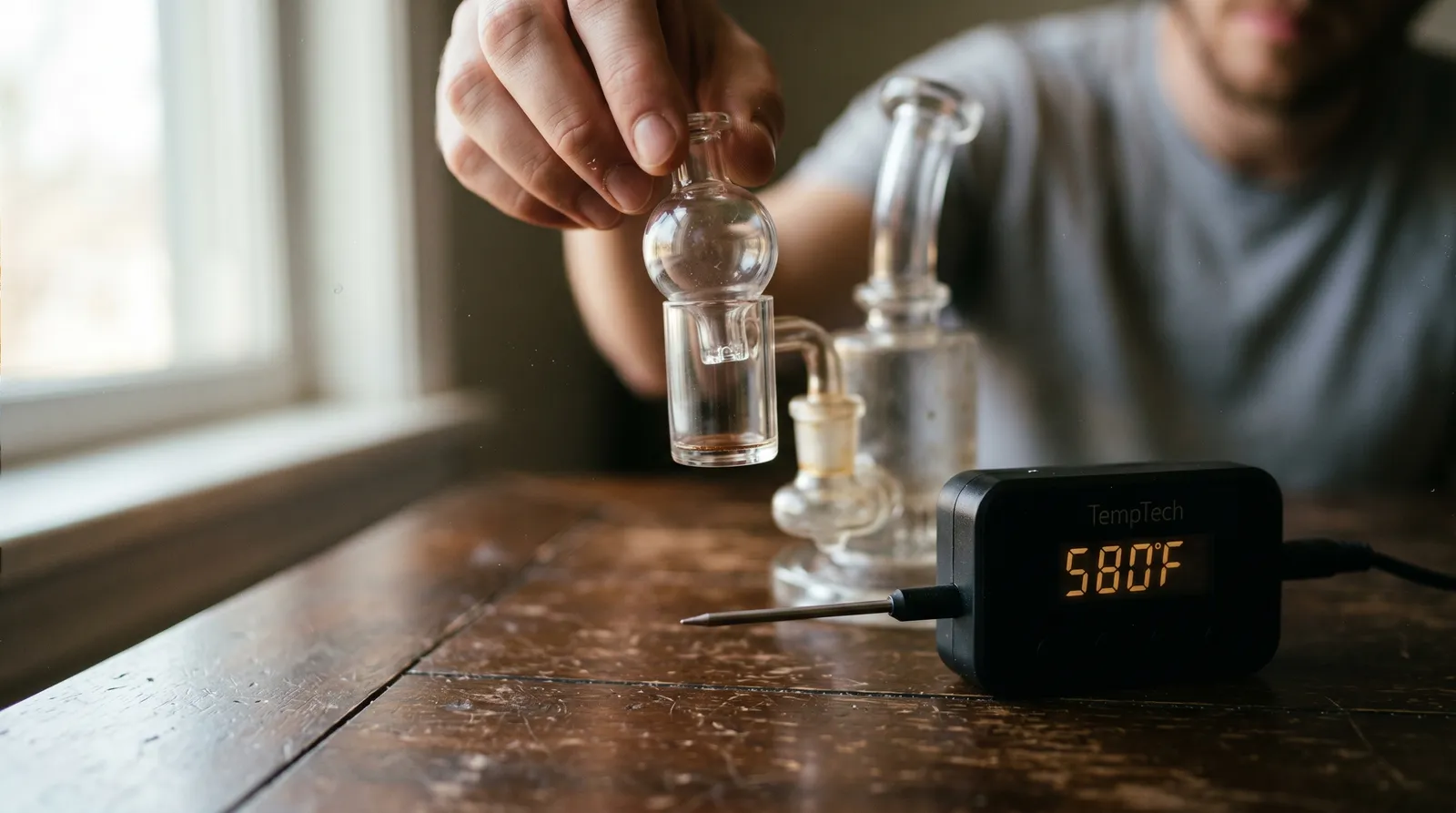
These are starting points, not gospel. Your room temperature, altitude, and even how draughty your space is will shift the numbers. The real move is to get a small infrared thermometer — they cost about as much as a decent carb cap — and actually measure the surface temp before you dab. Once you've calibrated your personal timing with a few measured sessions, you can ditch the thermometer and go by feel.
Two staff members tested the same banger with an IR thermometer last winter: one working near the shop's front door (around 16 °C ambient) and one in the back office (22 °C). The difference in cool-down time to reach 500 °F was a full 8 seconds — enough to noticeably change flavour. If you dab near an open window or in a cold garage, factor that in.
Step 4: Try the Cold-Start (Reverse Dab) Method
The cold-start technique flips the conventional order. Instead of heating first and then loading, you place your concentrate into the banger at room temperature, cap it with a carb cap, and then apply heat from below with your torch. As soon as the concentrate begins to bubble and produce vapour — usually within 10–15 seconds of gentle torching — you stop heating and inhale.
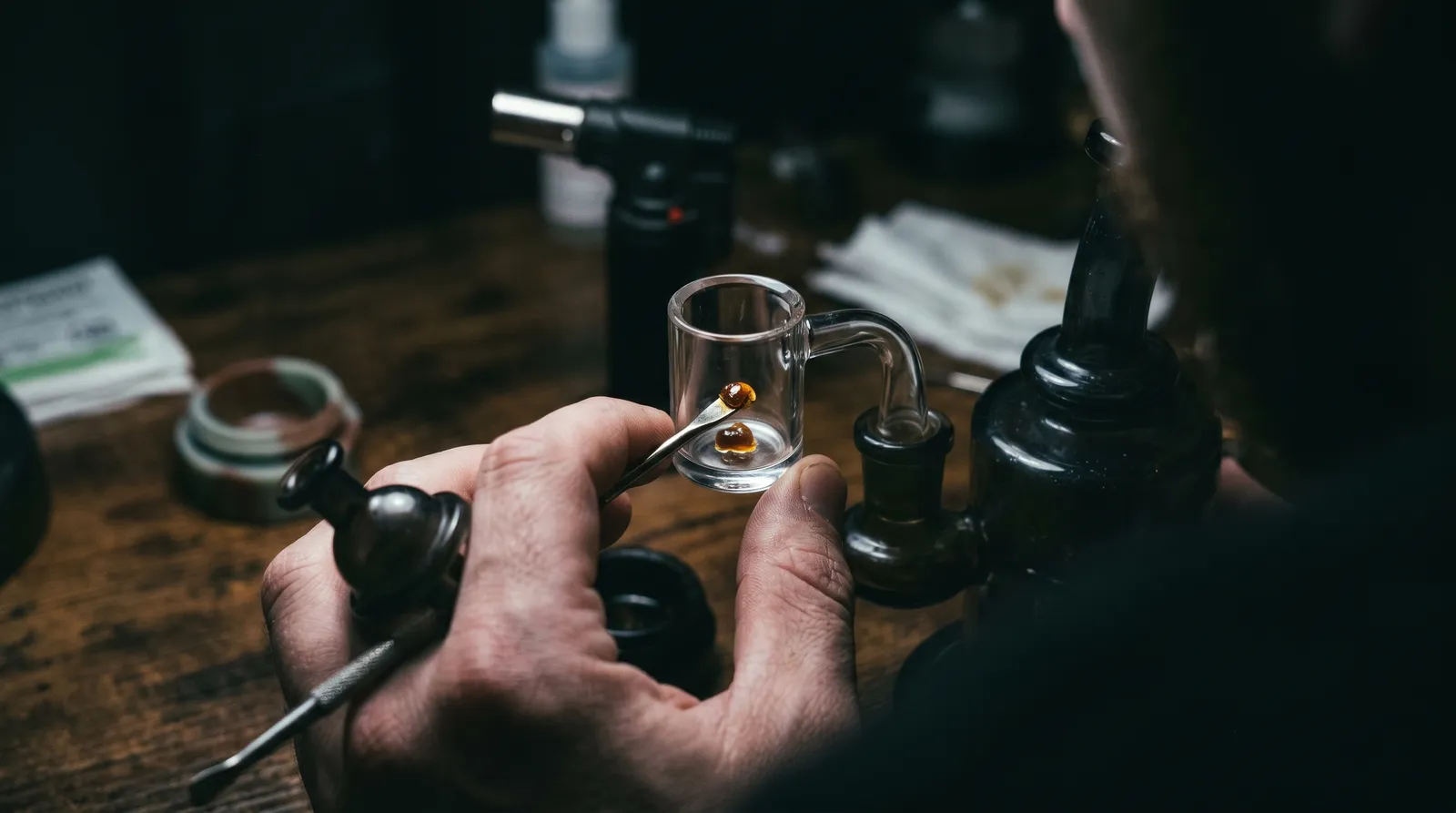
Why bother? A few reasons:
- Temperature control: You're watching the concentrate respond in real time, so you stop heating the moment vaporisation begins. Overshooting is nearly impossible.
- Flavour: Because you're starting from the lowest effective temperature and only going up, you catch the full terpene spectrum before it degrades.
- Less waste: The banger spends less time at extreme heat, which also means less thermal stress on the quartz itself.
- Safer: Shorter torch time, lower peak temperatures, less risk of burns.
The trade-off is thinner vapour production compared to a traditional medium-temp dab. If you want clouds, the cold-start method may feel underwhelming. But for flavour chasers, it's hard to beat. Pair it with terp pearls spinning inside the banger — the movement distributes concentrate across more heated surface area — and you get better vaporisation without cranking the heat.
Step 5: Clean After Every Single Dab
This is the part nobody wants to hear: you need to clean your banger after every use. Not every session — every dab. Leftover concentrate carbonises during the next heat cycle, building up a dark residue called "chazzed" quartz. Once a banger is chazzed, its heat retention changes, flavour degrades permanently, and no amount of scrubbing brings it back to factory condition.
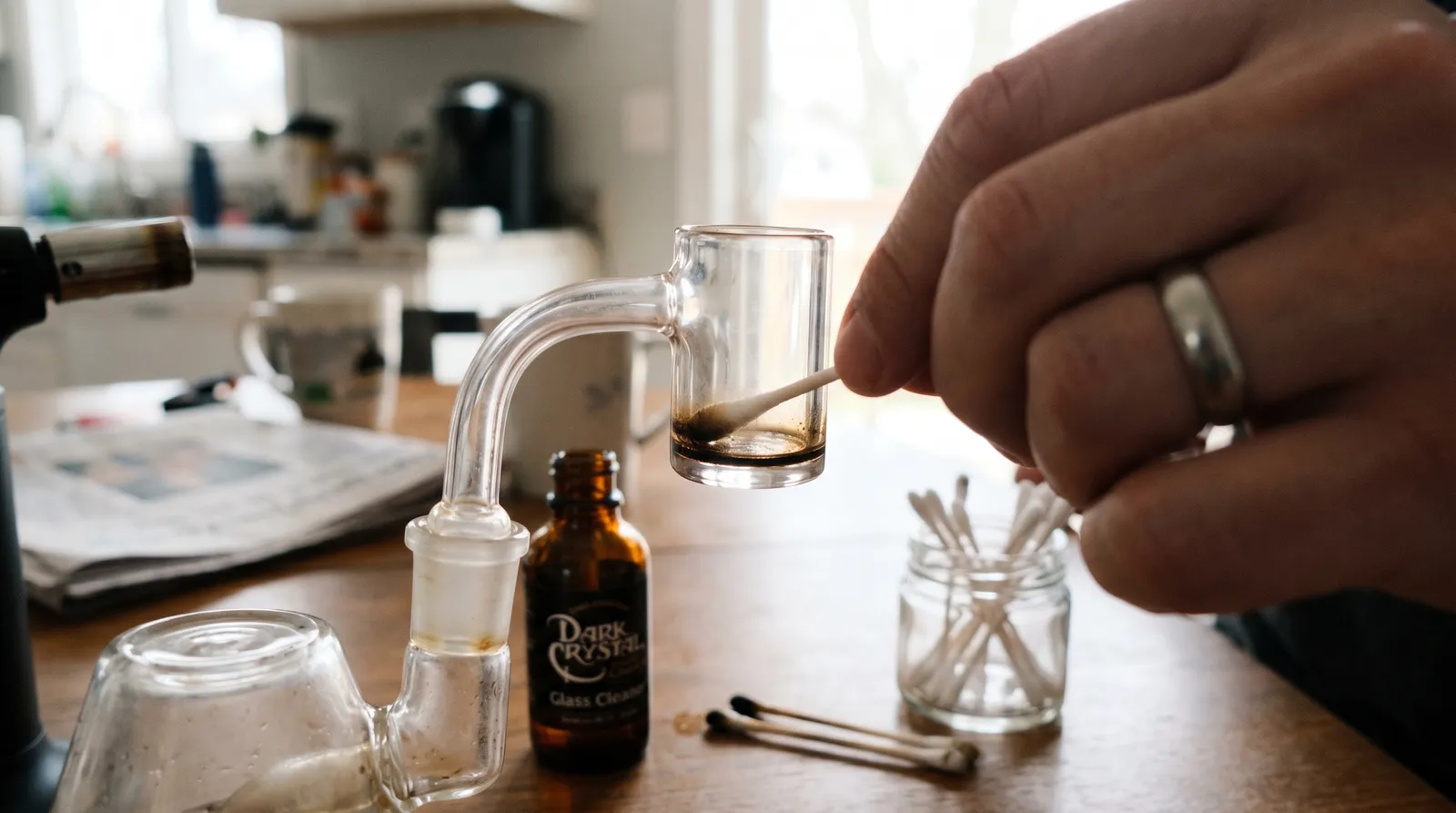
The routine takes about 15 seconds:
- While the banger is still warm (not hot — don't burn yourself), use a dry cotton swab to mop up any pooled residual concentrate.
- Dip a fresh cotton swab in isopropyl alcohol (90%+ concentration) and wipe the inner walls and base. The residual heat helps the iso evaporate quickly.
- Let it air-dry completely before your next heat cycle. Heating a banger with iso residue inside it produces unpleasant fumes — always ventilate your space when using isopropyl near heat sources.
For deeper cleaning — say, once a week if you dab daily — you can soak the banger in isopropyl alcohol overnight. Some people heat the iso in a sealed bag placed in warm water to speed things up, but never microwave iso or heat it with an open flame. Isopropyl is flammable; its vapour ignites easily. Room-temperature soaking works fine, it just takes longer.
Step 6: Extend Your Banger's Lifespan
Good quartz resists thermal shock far better than borosilicate glass — you can torch it repeatedly without it cracking, which is the whole reason quartz bangers exist. But "resistant" doesn't mean "immune." A few habits will keep yours performing well for months rather than weeks:
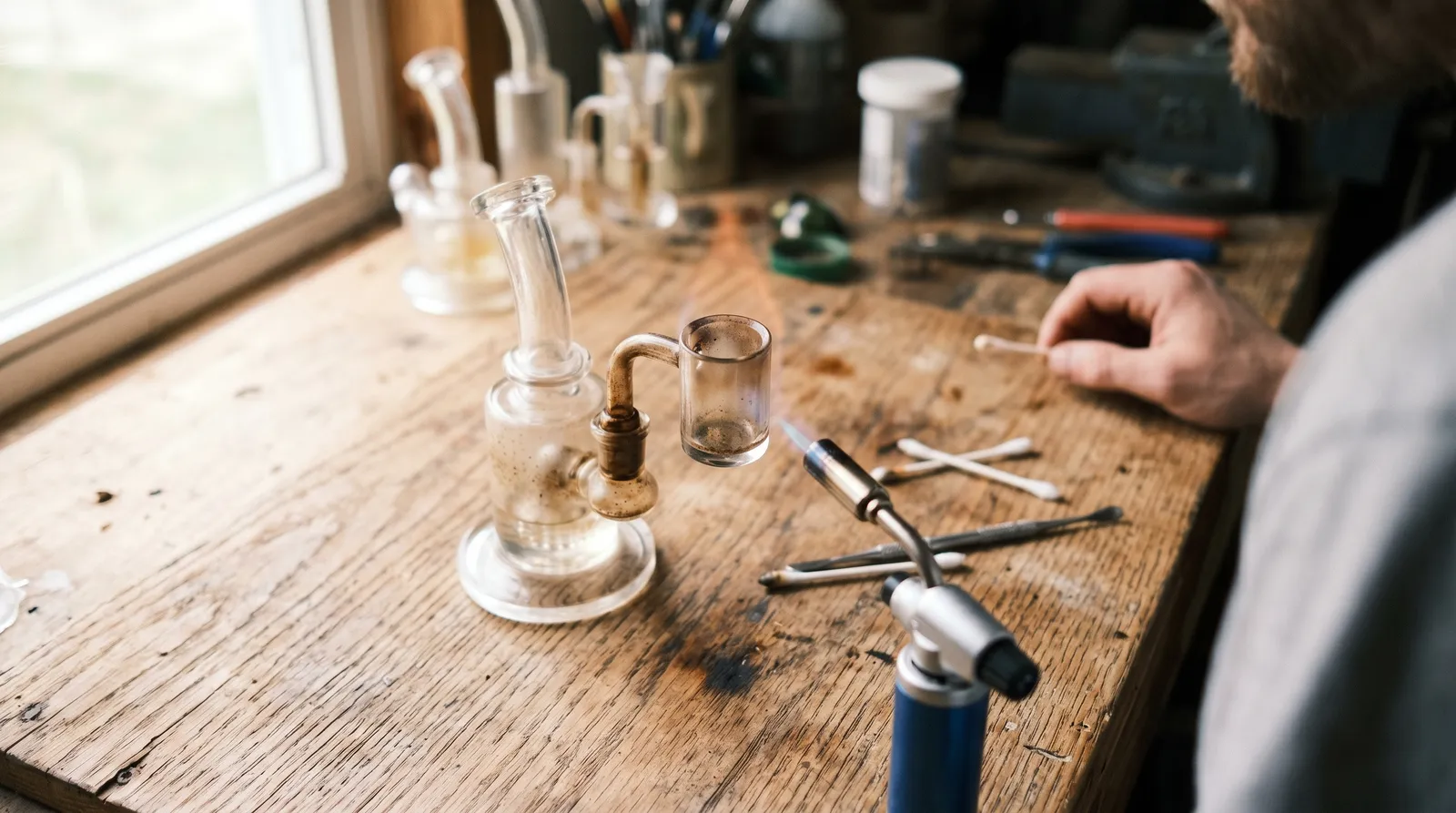
- Avoid thermal shock from water. Don't dunk a hot banger into cold water to cool it down. The rapid temperature change can cause micro-fractures that weaken the quartz over time. Let it air-cool.
- Don't overheat. Every time you heat quartz past 1,000 °F, you're accelerating devitrification — the process where the amorphous silica structure starts crystallising, turning the quartz cloudy and brittle. Keep your heating times reasonable and you'll slow this process considerably.
- Store it safely. Quartz bangers chip easily on hard surfaces. If you remove yours between sessions, wrap it in a cloth or keep it in a padded case.
- Inspect the joint. The weld between the bucket and the joint is the weakest point. If you see a hairline crack forming there, retire the banger — a failure under torch heat is a burn risk.
How long does a well-maintained banger last? That depends on usage frequency, heating discipline, and the quality of the quartz itself. Numbers vary widely, but a thick-walled banger cleaned after every dab and never overheated can last six months to a year of regular use. A thin-walled banger torched to red every time might cloud up in a few weeks.
Gear That Helps
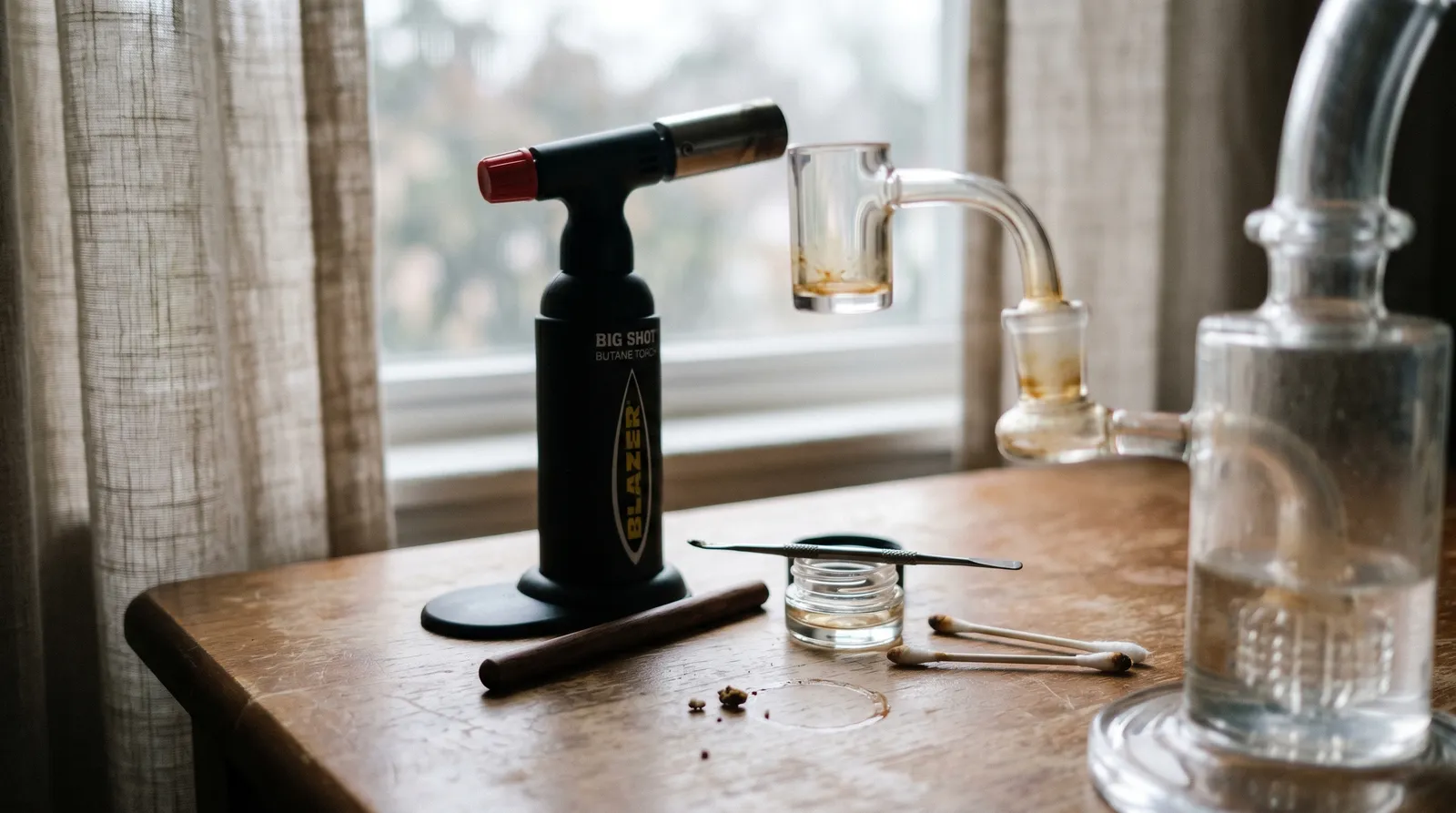
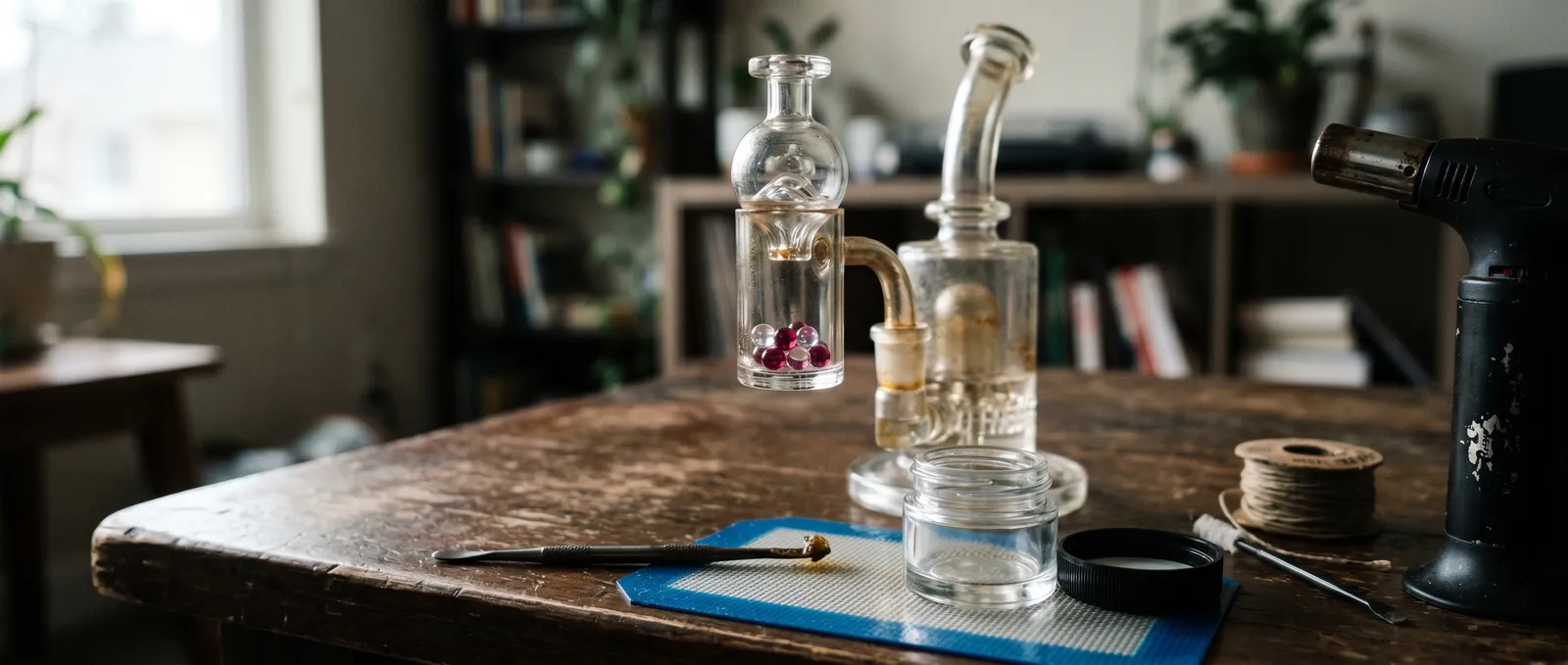
A quartz banger doesn't work in isolation — a few accessories make temperature control and cleaning significantly easier. A good carb cap restricts airflow and lowers the effective boiling point inside the banger, letting you dab at lower temperatures. Terp pearls (small quartz or ceramic balls that spin inside the bucket) spread concentrate across more surface area for more even vaporisation. And a directional carb cap designed to spin those pearls makes the whole setup work better than a flat cap.
For cleaning, keep a jar of 90%+ isopropyl alcohol and a bag of pointed cotton swabs next to your rig. Making it convenient is half the battle — if you have to dig supplies out of a cupboard, you'll skip the swab and your banger pays the price.
For a deeper look at rig setup and compatible accessories, see our dab rigs buyer's guide article.
This guide covers hardware for adults (18+). Use of vaporizers, bongs, pipes, dab rigs and rolling accessories is for adult use only. Verify your local laws on the substances you choose to use — Azarius does not provide legal advice. Consult a qualified professional if you have a health condition or take medication.
References
- Meehan-Atrash, J., Luo, W., & Strongin, R. M. (2017). Toxicant formation in dabbing: The terpene story. ACS Omega, 2(9), 6112–6117.
- Meehan-Atrash, J., & Strongin, R. M. (2019). Pine rosin identified as a toxic cannabis extract adulterant. Forensic Science International, 312, 110301.
- Raber, J. C., Elzinga, S., & Kaplan, C. (2015). Understanding dabs: Contamination concerns of cannabis concentrates and cannabinoid transfer during the act of dabbing. The Journal of Toxicological Sciences, 40(6), 797–803.
Last updated: April 2026
Questions fréquentes
7 questionsHow long should I heat a quartz banger with a torch?
What is a cold-start dab and when should I use it?
How do I know if my quartz banger is too hot without a thermometer?
Why does my quartz banger turn cloudy or dark?
Can I use water to cool down a hot quartz banger faster?
What is the ideal temperature range for dabbing concentrates in a quartz banger?
Does the thickness of a quartz banger affect heating and cool-down time?
À propos de cet article


Adam Parsons is an external cannabis and psychedelics writer and editor who contributes to Azarius's wiki as both author and reviewer. On the writing side, he authors Azarius's kratom and kanna clusters, drawing on exten
Cet article wiki a été rédigé avec l’aide de l’IA et relu par Adam Parsons, External contributor. Supervision éditoriale par Joshua Askew.
Avertissement médical. Ce contenu est fourni à titre informatif uniquement et ne constitue pas un avis médical. Consultez un professionnel de santé qualifié avant d'utiliser toute substance.
Dernière relecture le 25 avril 2026
Articles liés
Banger en quartz : température, chauffe et entretien
Un banger en quartz est un récipient en dioxyde de silicium fondu conçu pour vaporiser des concentrés à des températures précises.
Carb caps et terp pearls : guide pratique du dabbing
Un carb cap restreint le flux d'air dans un banger en quartz pour abaisser la pression interne et permettre aux concentrés de se vaporiser à basse…
Dab pen ou dab rig : guide comparatif complet
Un dab pen est un vaporisateur portable sur batterie pour concentrés ; un dab rig est une pipe à eau en verre chauffée au chalumeau.
E-rig vs chalumeau : comparatif complet pour le dabbing
Le dabbing repose sur deux approches matérielles distinctes : le rig électronique (e-rig), qui chauffe une chambre à température contrôlée par firmware, et…
Dabbing pour débutants : tout le matériel nécessaire
Le dabbing consiste à vaporiser un concentré de cannabis sur une surface en quartz chauffée, puis à inhaler la vapeur filtrée par l'eau d'un petit rig dédié.